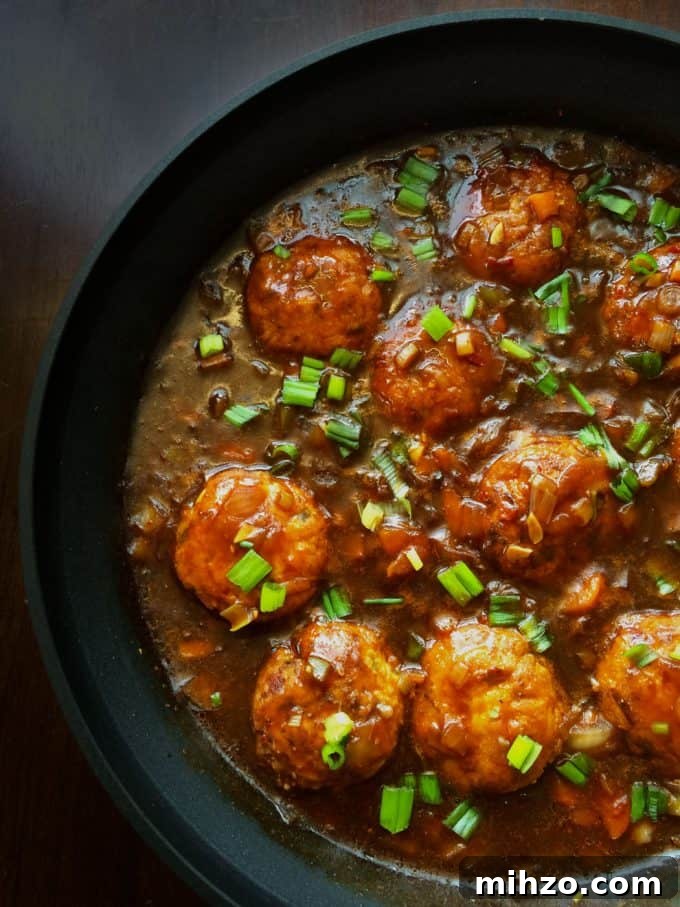
Veg Manchurian is one of the most popular Indo-Chinese dishes and a frequent order at restaurants. Traditionally, Manchurian are vegetable-loaded dumplings that are deep-fried and served in a sweet and spicy sauce. This recipe offers a healthier, no-fry version that keeps all the flavor without the deep frying.
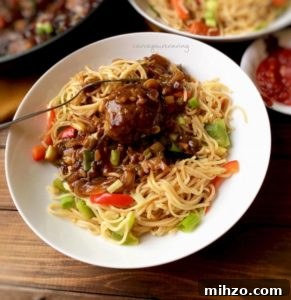
There are two common varieties: dry Manchurian, served as an appetizer, and Manchurian gravy—dumplings in a tangy, sweet-and-sour sauce. This recipe shares an easy, no-fry Veg Manchurian Gravy that is Indo-Chinese, vegan, and gluten-free. Serve it with steamed rice, fried rice, or hakka noodles for a complete meal.
Friends often tell me this version tastes even better than restaurant-style Manchurian. The dumplings are soft and melt-in-the-mouth, while the gravy is packed with balanced flavors. Although it pairs wonderfully with steamed or fried rice or hakka noodles, you can also enjoy it on its own.
Let’s quickly look at the differences
Restaurant style vs my style.
The restaurant version is usually deep-fried and made with all-purpose flour, cornflour and sometimes MSG. My version uses a paniyaram/appe pan to cook the Manchurian balls with just a light brush of oil, and replaces all-purpose flour and cornflour with poha (beaten rice) or steamed rice and rice flour as binders. The rice or poha gives the dumplings a soft, juicy texture and makes them gluten-free.
The health benefits alone make this recipe worth trying, but there’s another advantage: it’s make-ahead friendly.
The Manchurian balls can be prepared ahead and refrigerated for up to 3 days or frozen for up to 2 months, saving time when you need it for potlucks or gatherings.
Below is a step-by-step pictorial followed by the recipe and helpful notes.
Highlights
Vegan
Gluten free
Easy
Delicious
Healthy version
How to make Indo Chinese veg manchurian ?
Print recipe
No fry Vegan and Healthy Veg Manchurian – indo chinese
Ingredients
- For the Manchurian balls
- 2 cups finely chopped vegetables (mix of carrots, cauliflower, bell peppers, beans, cabbage)
- ¼ cup grated carrots
- ½ cup grated cauliflower
- ½ cup chopped or pulsed bell pepper
- 5-6 french beans, finely chopped or pulsed
- ¼ cup finely chopped cabbage
- ¼ cup plus 1 tablespoon poha (beaten rice) or ½ cup boiled rice
- 1 tablespoon rice flour
- 2 teaspoon soy sauce
- ½ teaspoon chili sauce
- 1 teaspoon grated garlic or garlic paste
- 1 teaspoon grated ginger or ginger paste
- ¼ teaspoon black pepper
- Salt to taste
- For the gravy
- 1 tablespoon cooking oil
- 1 cup finely chopped onion or shallots
- ½ cup chopped bell pepper
- ½ cup spring onions, chopped
- 2 tablespoon finely chopped garlic
- 2 teaspoon grated ginger
- 3 tablespoon soy sauce
- 1 tablespoon green or red chili sauce
- 1 teaspoon honey, sugar, or agave
- 2 teaspoon tomato ketchup
- 2 teaspoon vinegar
- 1.5 cups water
- 1 tablespoon rice flour (for slurry)
- Salt to taste*
- ½ teaspoon black pepper
- Handful of chopped spring onion green parts for garnish
Instructions
-
Place poha (beaten rice) in a colander and wash thoroughly under running water. Cover and let it sit for 10 minutes to soften and expand.
-
Meanwhile, dice or pulse the vegetables in a food processor, or finely chop/grate them by hand.
-
In a bowl, combine the prepared vegetables, softened poha or cooked rice, rice flour, soy sauce, chili sauce, garlic, ginger, black pepper, and salt. Mix well to form a cohesive mixture.
-
Shape the mixture into small lime-sized balls. They should be smooth and compact but not overly tight. If needed, add 1–2 tablespoons more flour to help bind.
-
To cook without deep frying, heat a paniyaram/appe pan over low-medium heat. Lightly brush each cavity with oil and place the balls into the cavities. Cook for 5–6 minutes, turning midway, until golden brown. Remove and set aside.
-
For the gravy: heat oil in a heavy-bottomed pan over medium heat. Add ginger and garlic and sauté for about 30 seconds. Add onions and bell peppers and sauté another 30 seconds. Stir in soy sauce, chili sauce, ketchup and vinegar; cook for 10 seconds.
-
Add 1 cup of water and black pepper, bring the gravy to a simmer. Meanwhile whisk rice flour with ½ cup water to make a smooth slurry. Slowly pour the slurry into the simmering gravy while whisking continuously until well incorporated.
-
The gravy will thicken within a minute. Turn off the heat, taste, and adjust salt as needed.
-
Just before serving, reheat the gravy, add the Manchurian balls and garnish with chopped spring onion greens. Serve piping hot with rice or noodles.
Notes
Nutrition
Adjust the spice level to your preference. This recipe rates about a 3 on a 1–5 spice scale (1 mild, 5 very spicy).
A quick update about brands I have used here –
Brand choices don’t change the end result much, but here are the products I’ve used in the past: a Norpro aebleskiver (paniyaram/appe) pan; Ching’s dark soy sauce or tamari; Mitchell’s green chili sauce; Nakano rice vinegar; and thin vegetable noodles from an Asian brand. Use whatever similar products are available to you.
Don’t have a paniyaram pan and still want to make a healthy version?
If you don’t own a paniyaram pan, flatten the Manchurian balls into small tikkis and cook them on a non-stick skillet, brushing lightly with oil until both sides are golden. You can also bake them at 400°F (200°C) for about 20 minutes, flipping halfway. For extra browning, broil on high for 1–2 minutes per side—watch closely to avoid burning.
How to bake manchurian ?
Bake at 400°F / 200°C for 20 minutes, flip halfway. For a golden top, place the tray on the top rack and broil for 1–2 minutes on each side, keeping a close eye to prevent burning.
You might also enjoy these recipes:
easy hakka noodles.
healthy chilly garlic noodles in sesame pepper sauce.
teriyaki paneer stir fry.
I hope you enjoy this recipe—please give it a try and share your feedback in the comments. Happy cooking!
Do share it with the world!
If sharing, please link back to the original post. Reproducing or copying pictures, text, or recipes without credit violates copyright—linking back is appreciated.
Thanks for stopping by.