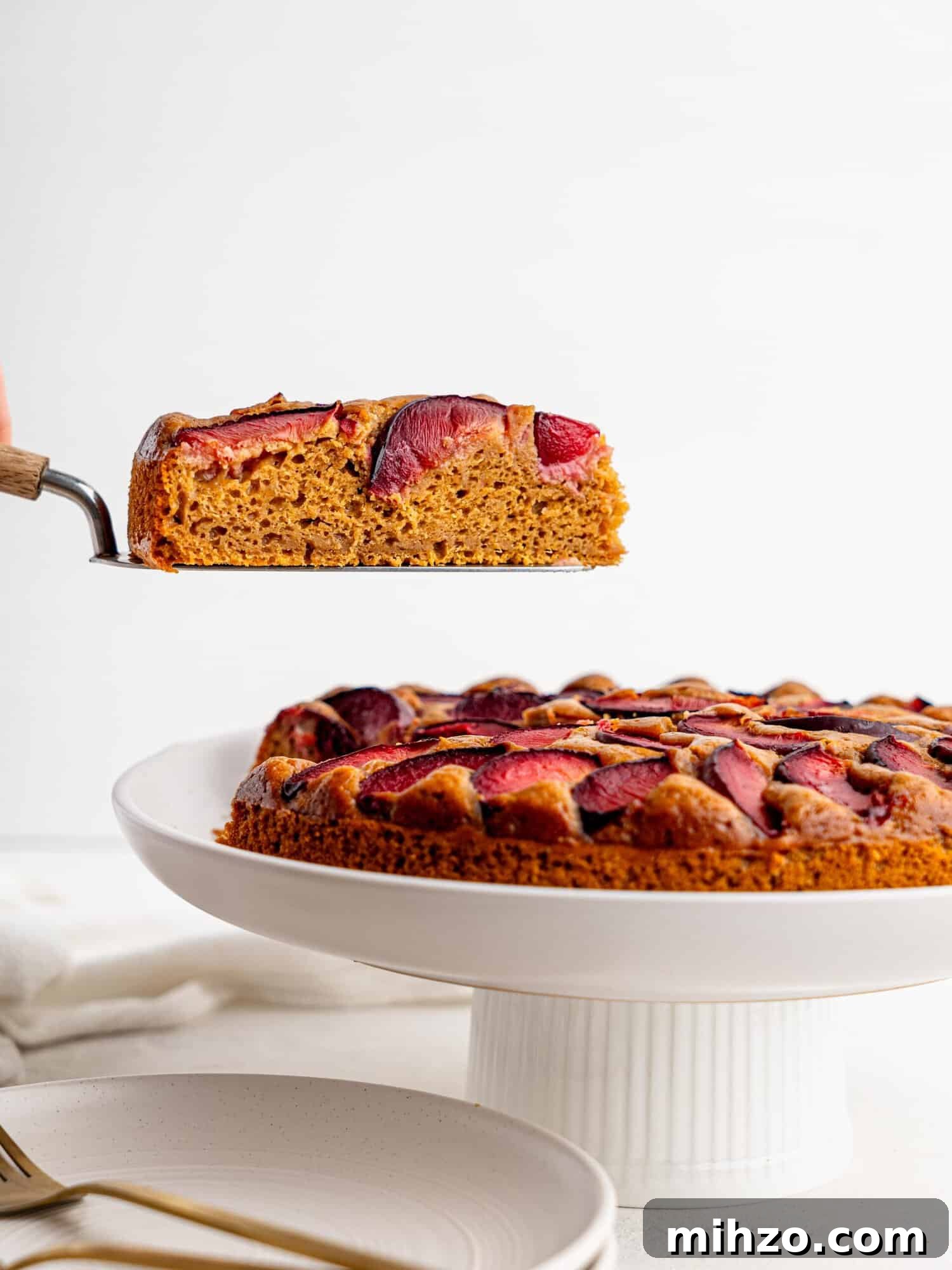
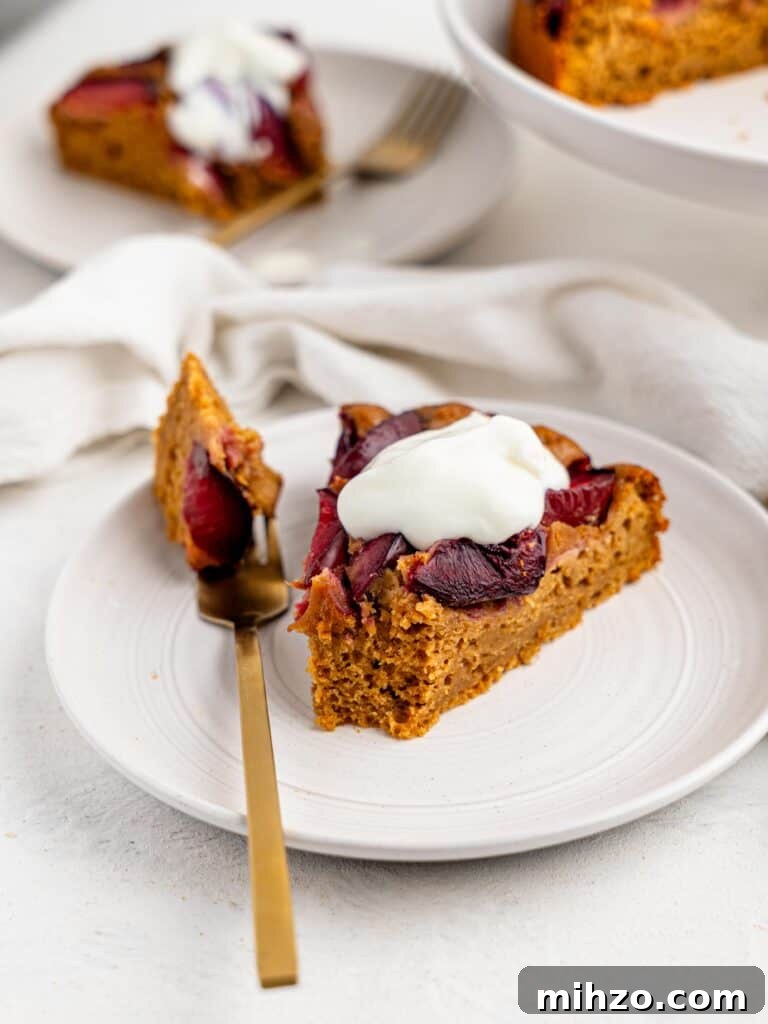
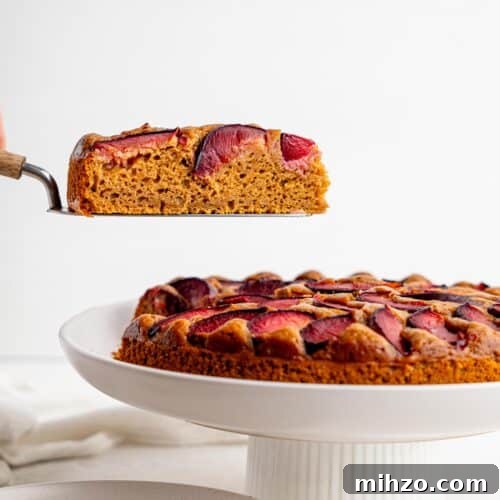
This Yogurt Plum Cake combines a soft, fluffy vanilla sponge with juicy plums for a simply delicious, one‑bowl dessert that’s quick and easy to make.
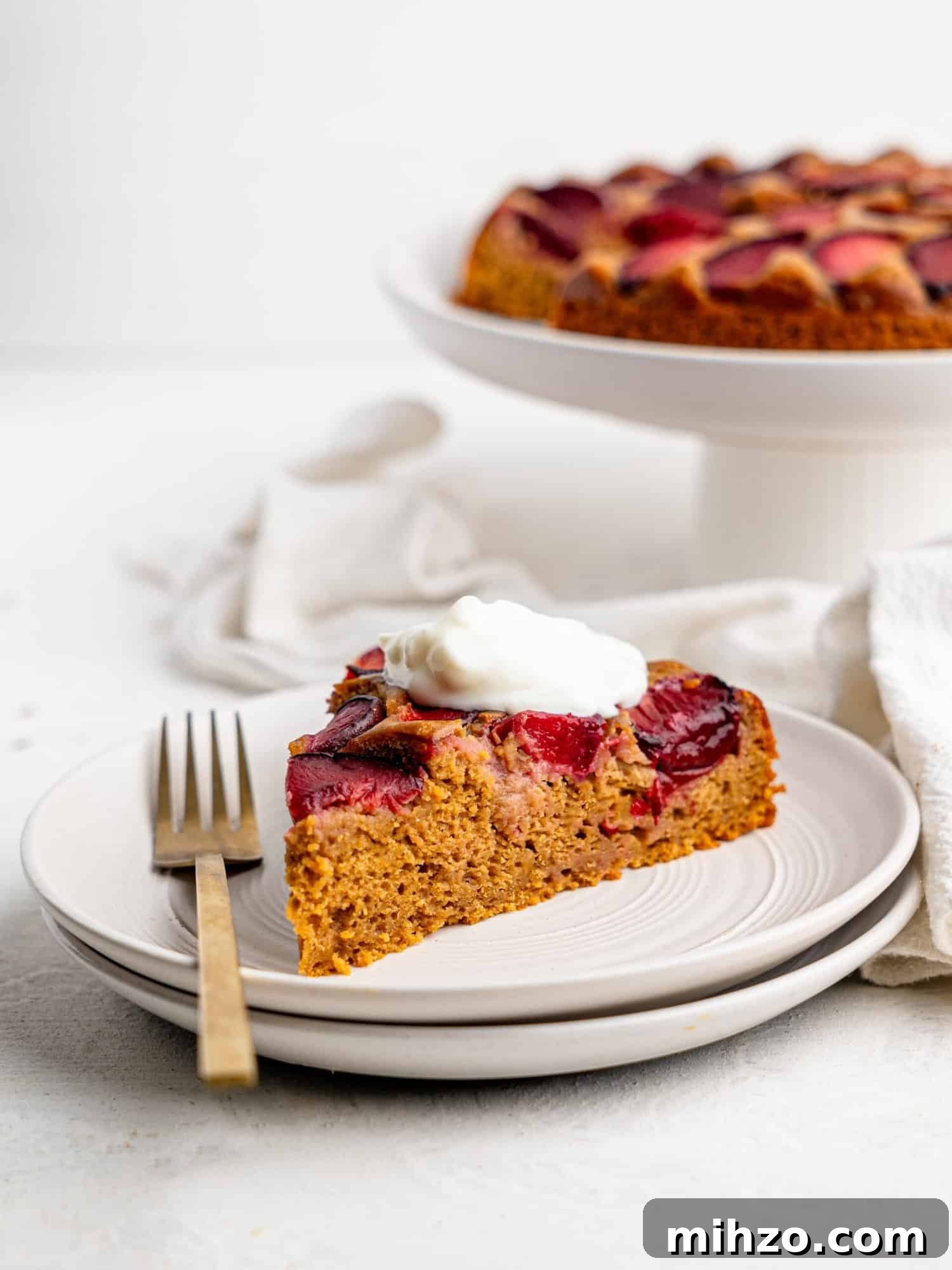
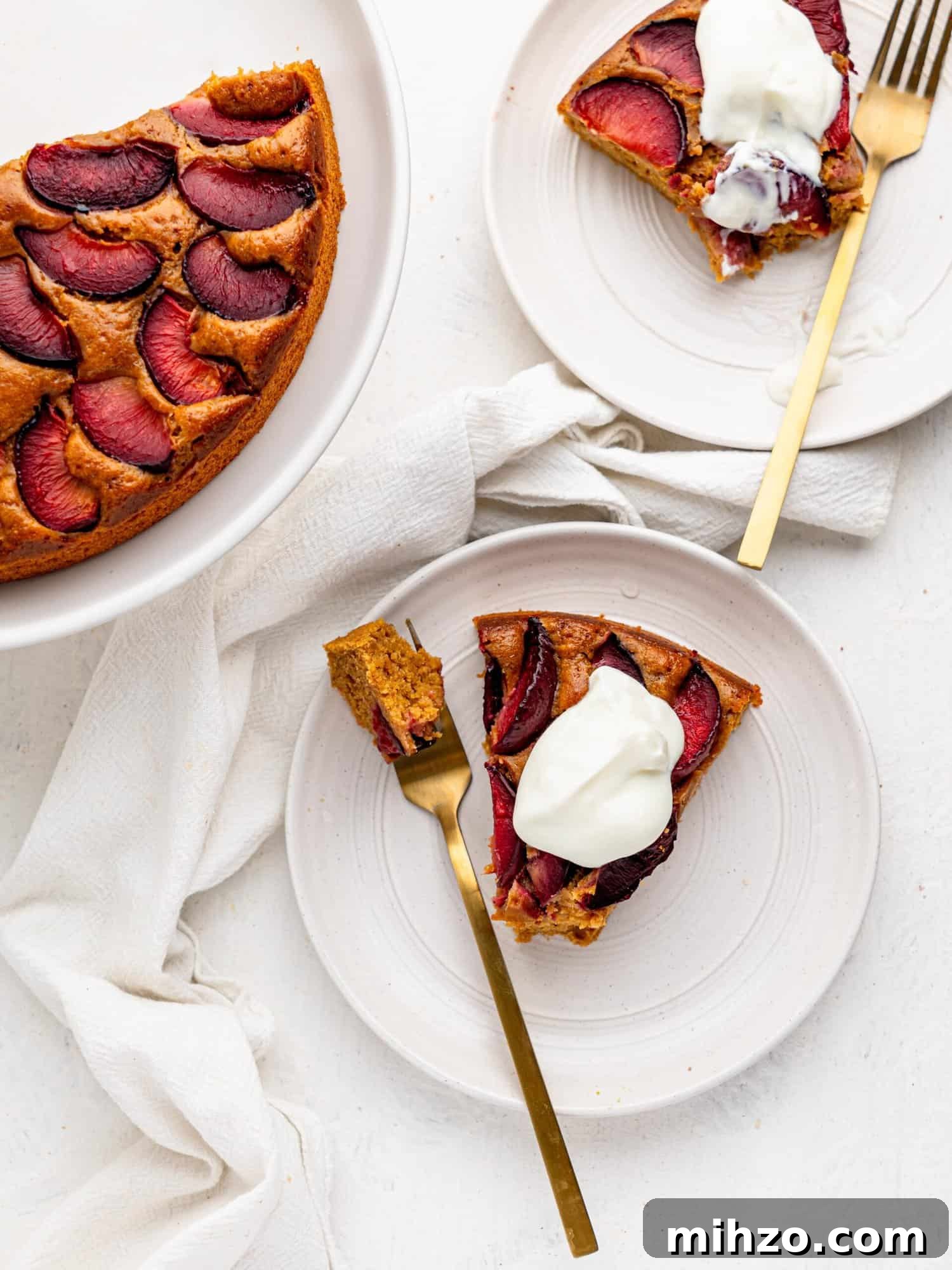
If you prefer lightly sweet, fruit-forward cakes, this yogurt plum cake is for you. It’s not overly sweet, keeps a tender crumb thanks to yogurt, and the fresh plums add bright, juicy flavor. The cake is excellent served with a spoonful of yogurt, cream, or a scoop of ice cream.
Made in a single bowl with no special equipment, this recipe is ideal for beginner bakers or anyone who wants a fuss-free homemade dessert. The steps are straightforward and the result is reliably delicious.
Why You’ll Love This Plum Cake with Yogurt
- One-bowl recipe for minimal washing up.
- Simple technique—no special tools required.
- Great for beginner bakers.
- Uses nourishing ingredients that make it a lighter dessert option.
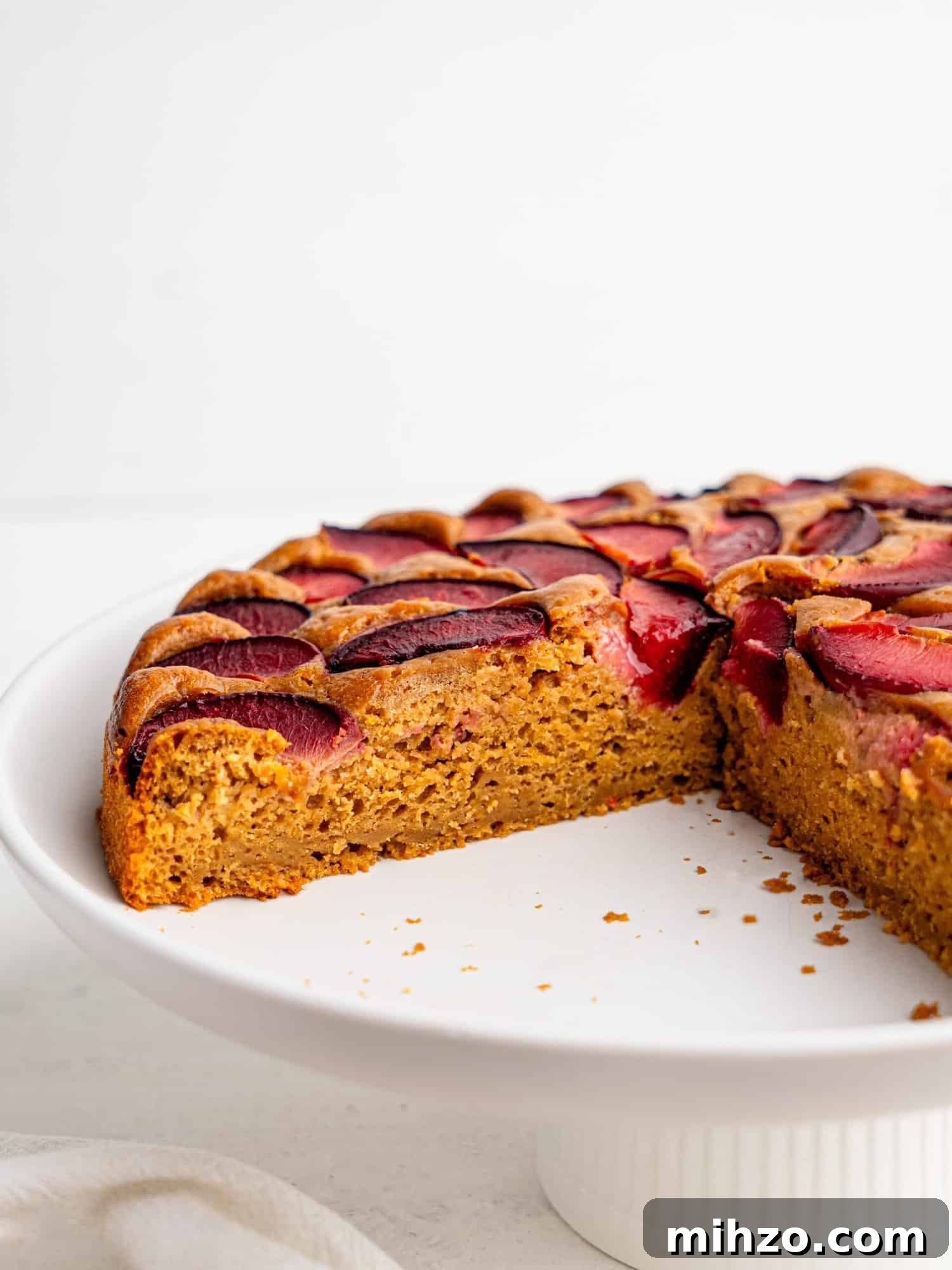
- Soft, fluffy texture with balanced sweetness.
- Versatile: pairs well with yogurt, cream, or ice cream.
What Makes This Cake Healthier
This cake uses simple swaps that keep it moist and flavorful while offering some nutritional benefits:
- Yogurt: Adds moisture and tenderness without excessive oil or butter, and contributes protein and probiotics when using dairy yogurt.
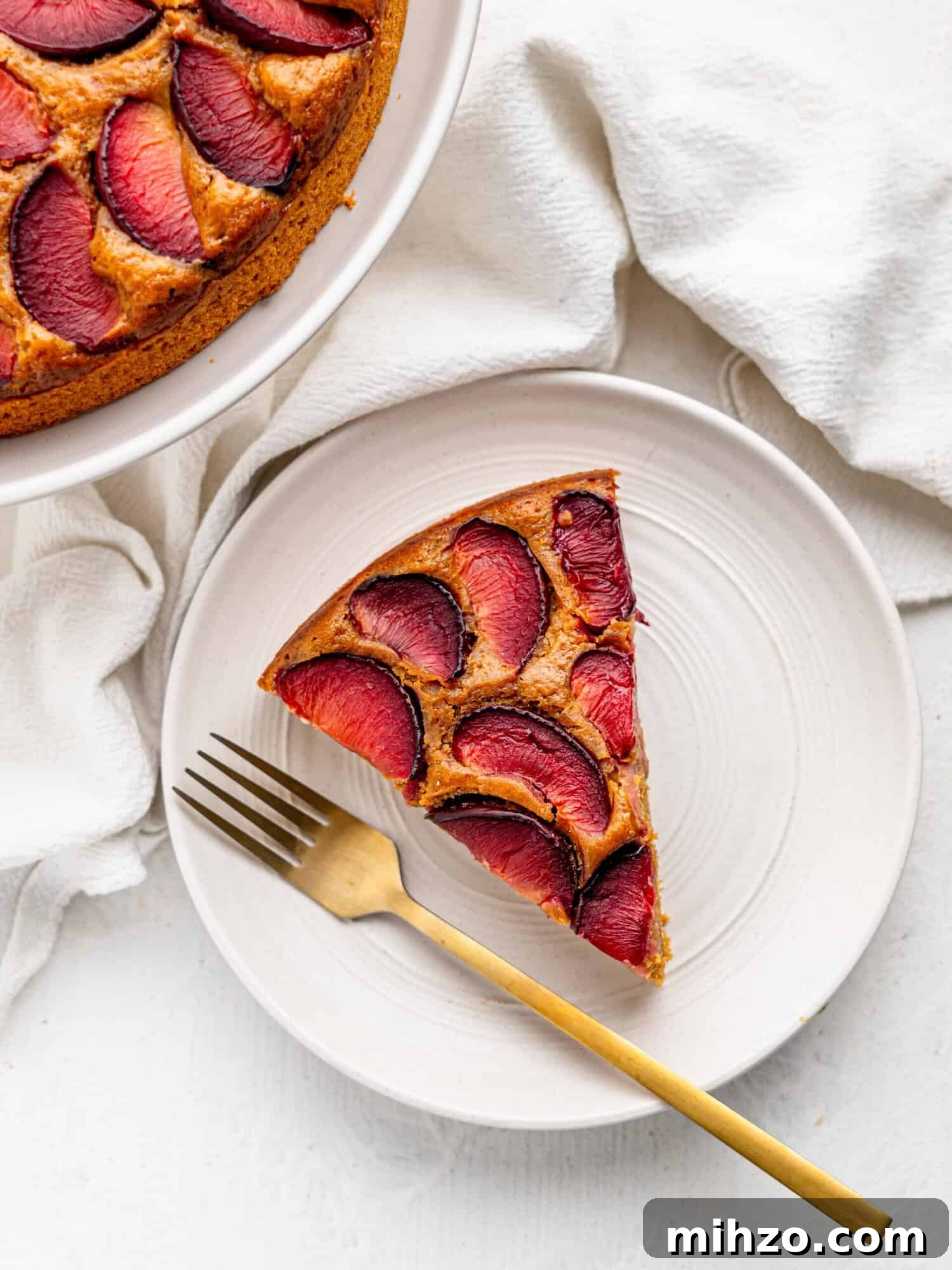
- Plums: Provide natural sweetness, vitamin C and antioxidants, allowing for less added sugar.
- Coconut sugar (optional): A less processed sweetener that can be used instead of refined white sugar.
- Olive oil: A heart‑healthy fat that keeps the cake moist; other neutral oils or melted butter can also be used.
- Wholemeal or fine flours: Using wholemeal flour boosts fiber and makes the cake more filling, though all‑purpose flour works fine too.
Ingredients and Substitutions
Exact measurements are in the recipe card below. Common substitutions are noted so you can adapt the cake to dietary preferences.
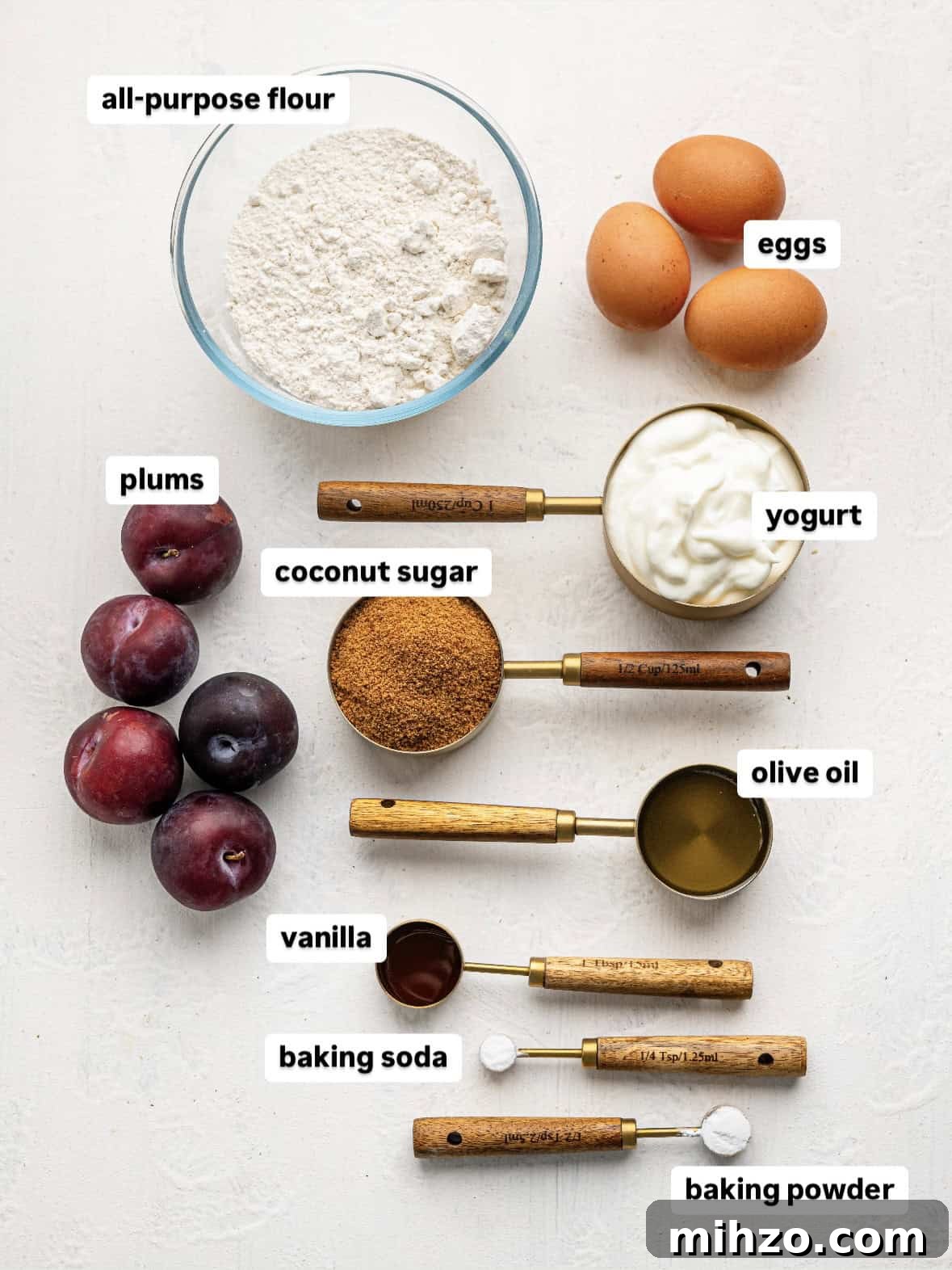
- Yogurt: Use plain dairy yogurt or dairy-free alternatives (soy or coconut) for a vegan option.
- Sugar: Coconut sugar or regular granulated sugar both work; adjust to taste.
- Olive oil: Keeps the cake moist; grape seed oil, melted butter, or coconut oil are fine alternatives.
- Vanilla extract: Enhances the flavor.
- Eggs: Provide structure and lift; not tested with egg substitutes here.
- Flour: Fine wholemeal, all-purpose, or cake flour work. For gluten-free, try a tested gluten-free blend that contains a binding agent.
- Baking powder and baking soda: Ensure a light, tender cake.
- Plums: Use ripe but firm plums for best texture and sweetness.
Equipment Needed
- Mixing bowl, whisk and spatula.
- Sieve for dry ingredients.
- 9-inch (or 8-inch for a thicker cake) cake tin, greased and lined if needed.
- Digital scale for accurate measurements (recommended).
How to Make Yogurt Plum Cake
The full recipe card below includes exact quantities and timings. Here’s a clear summary of the method:
Step One:
Preheat the oven to 350°F (175°C). Grease a 9-inch cake tin (use an 8-inch tin for a thicker cake; start checking earlier).
Step Two:
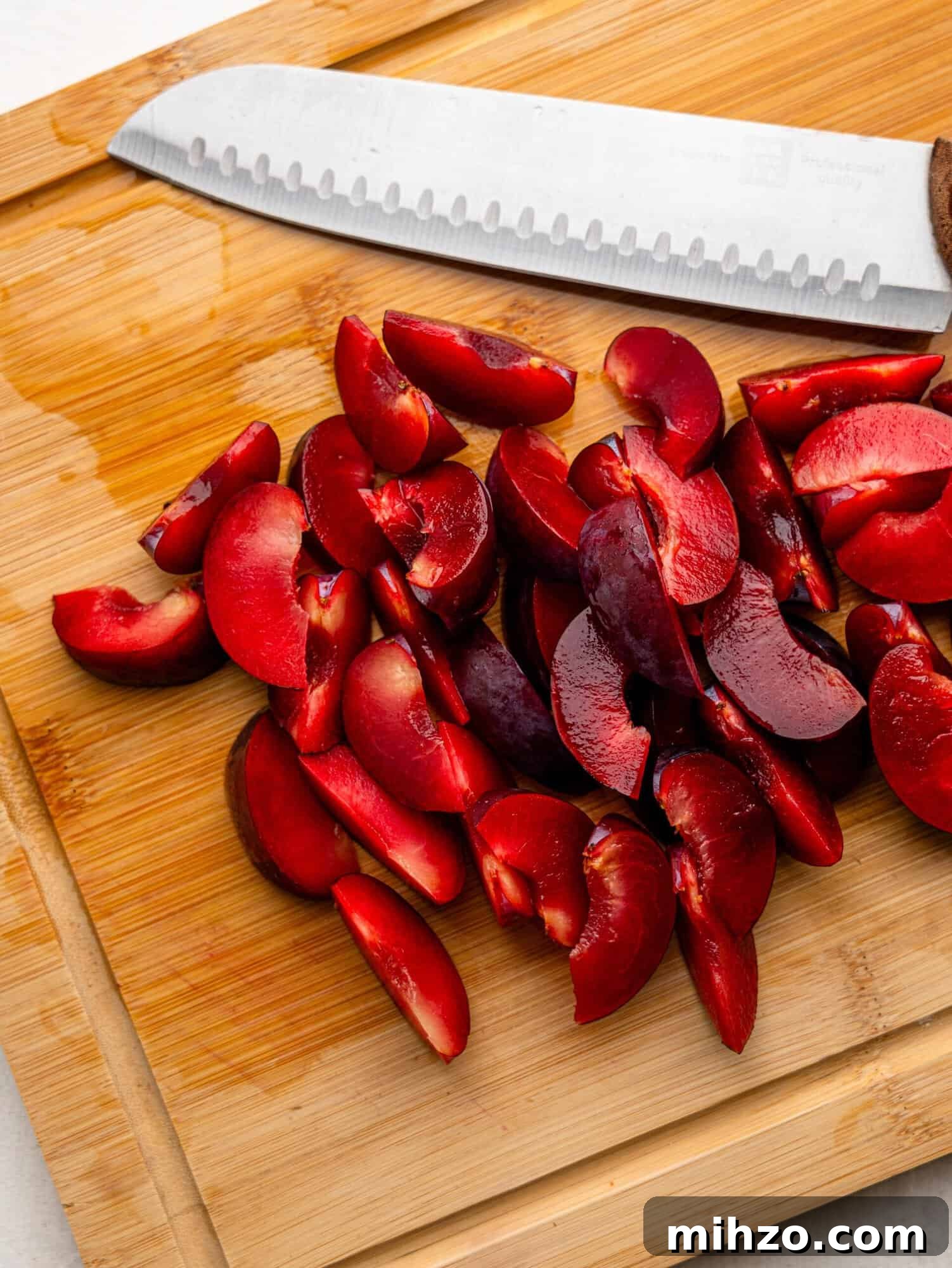
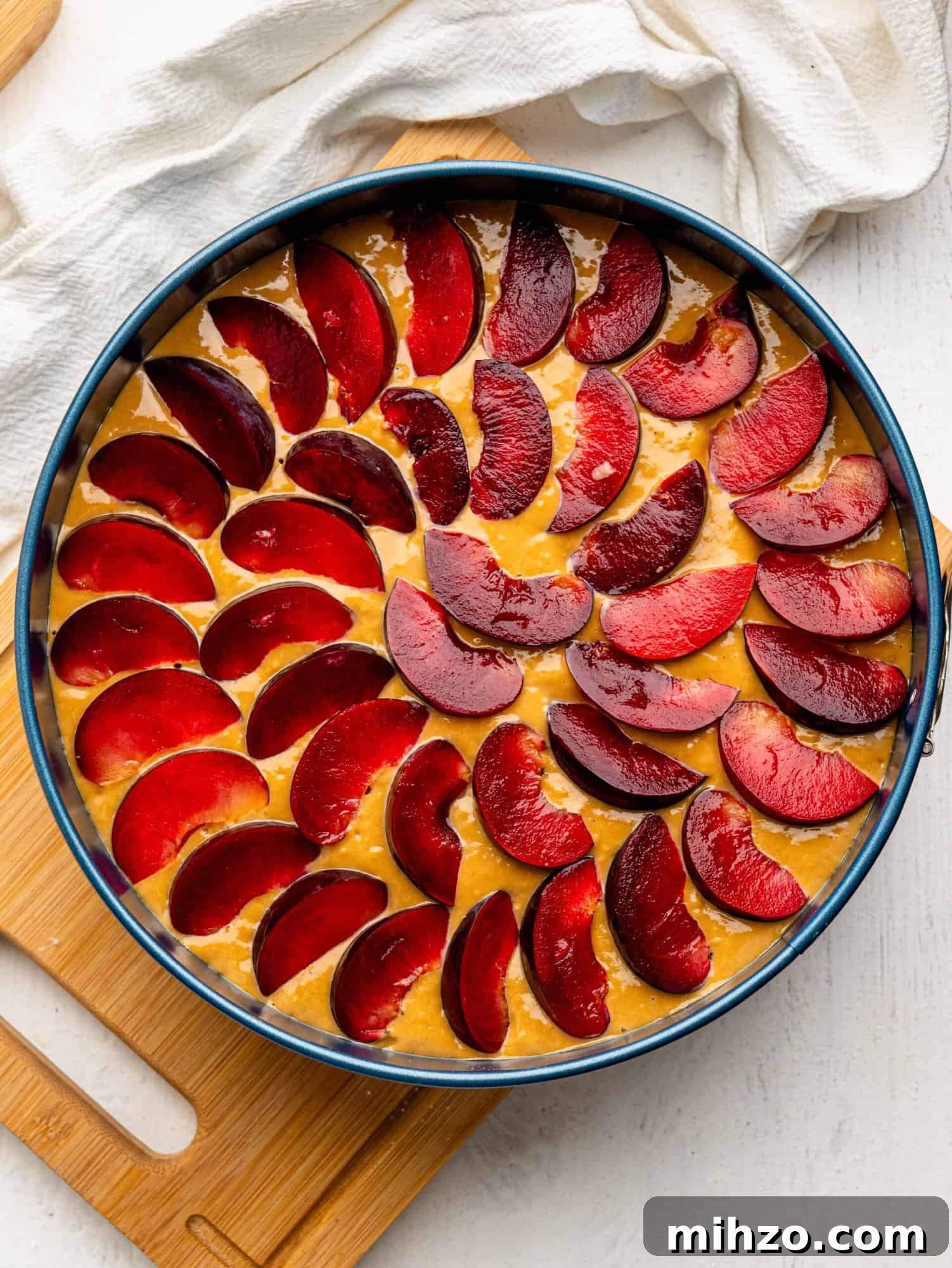
Prepare the plums: halve, pit, then quarter each half.
Step Three:
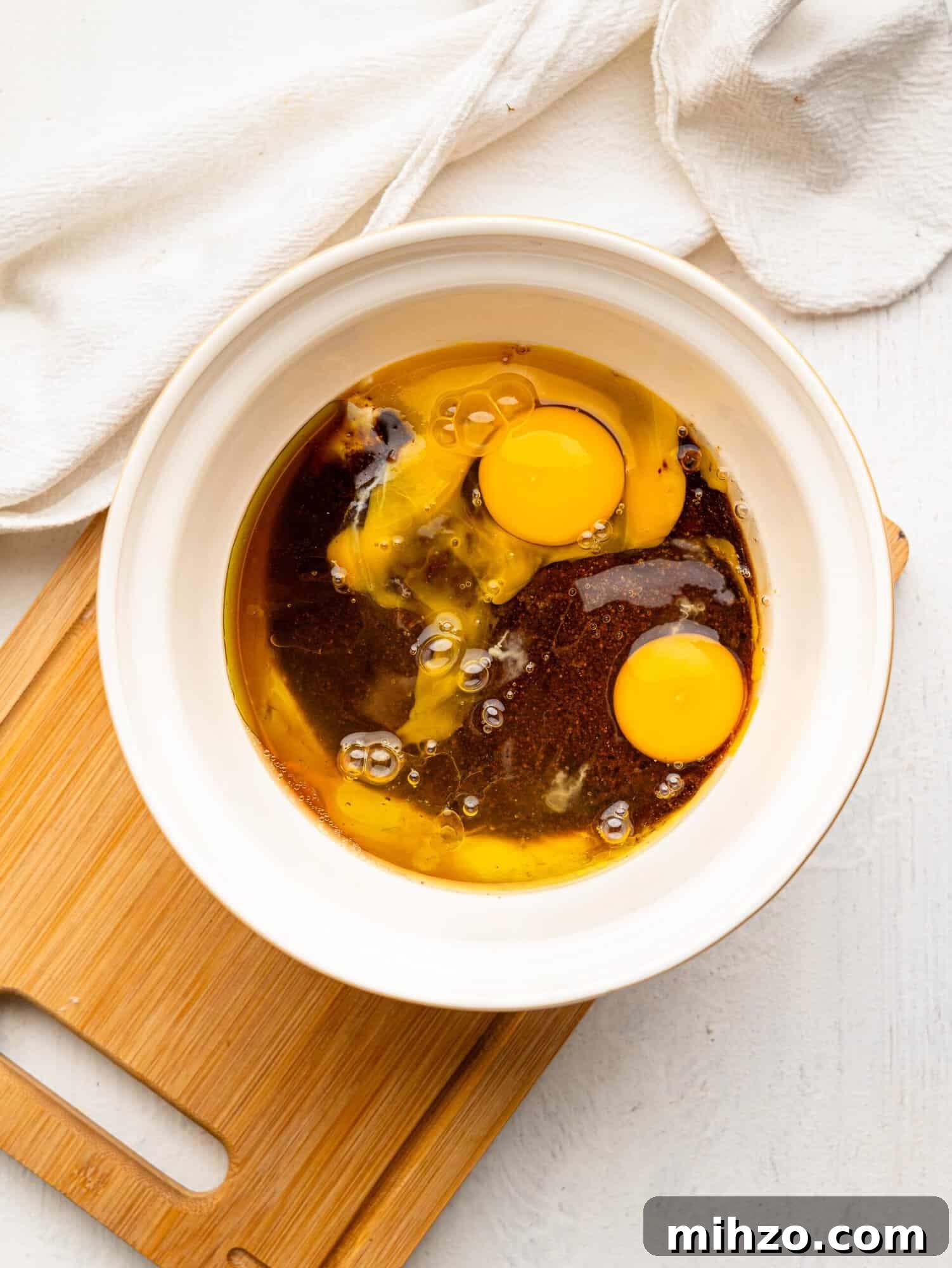
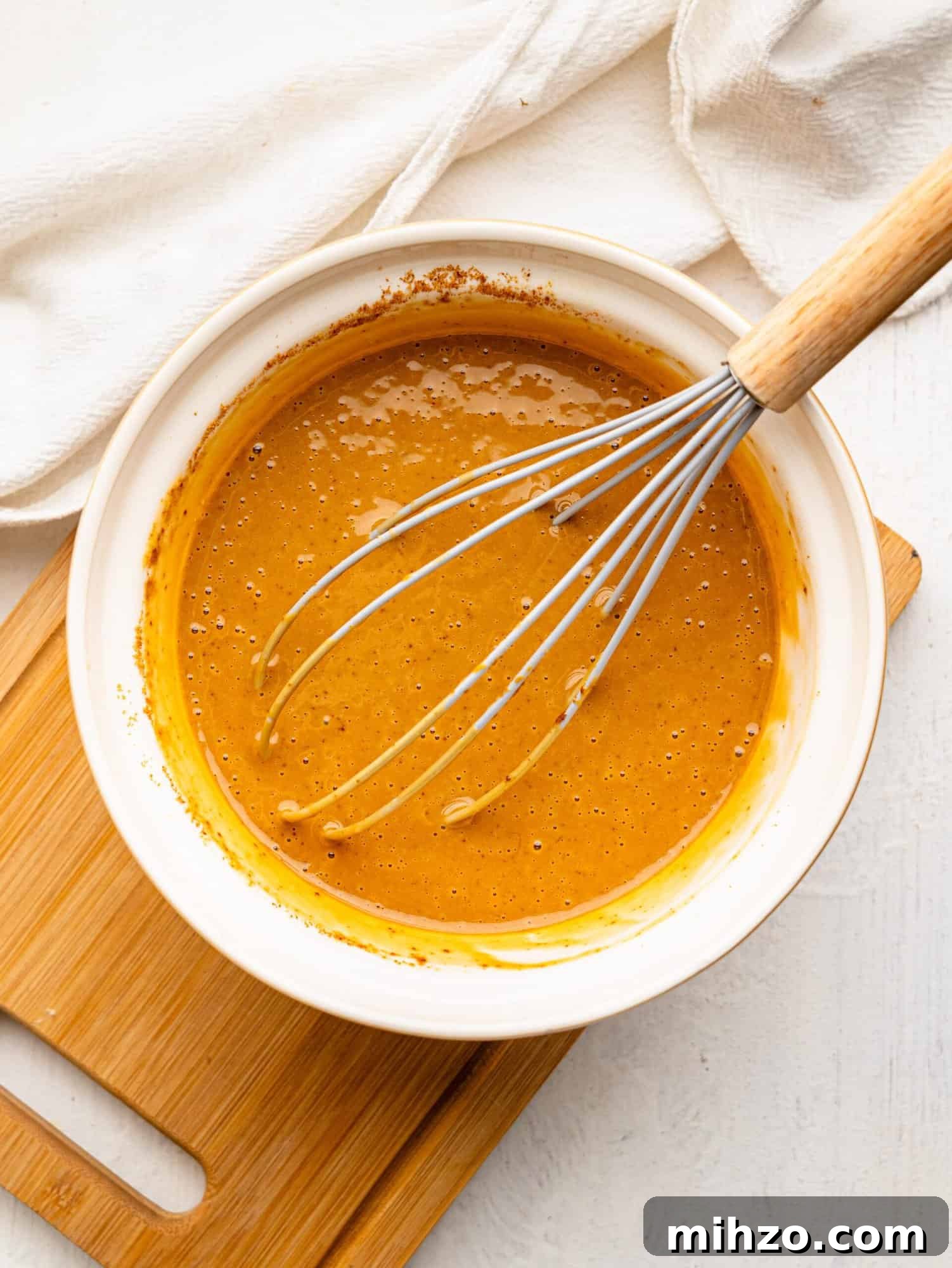
In a bowl, whisk together yogurt, sugar, olive oil, vanilla, and eggs until combined and slightly fluffy.
Step Four:
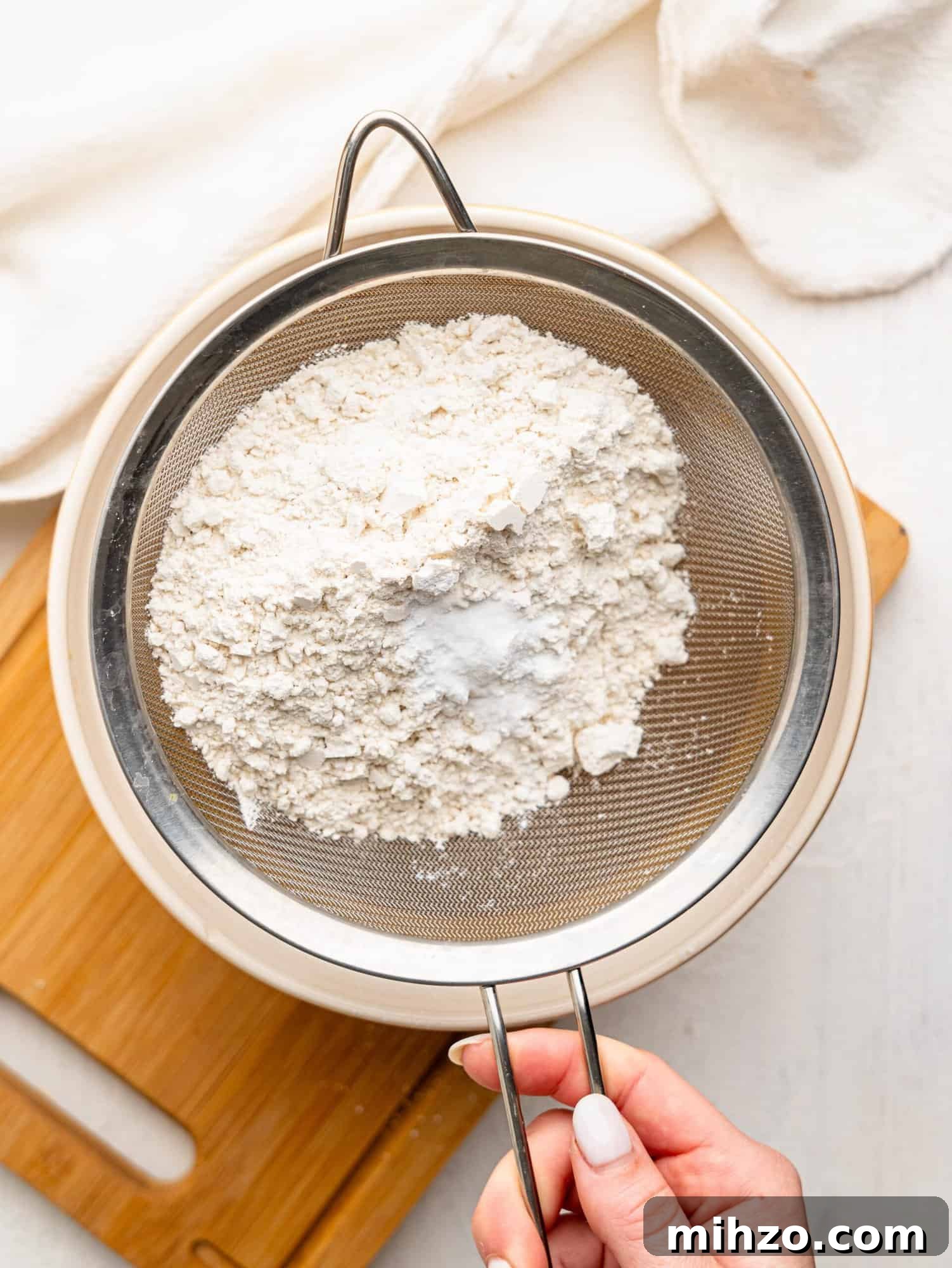
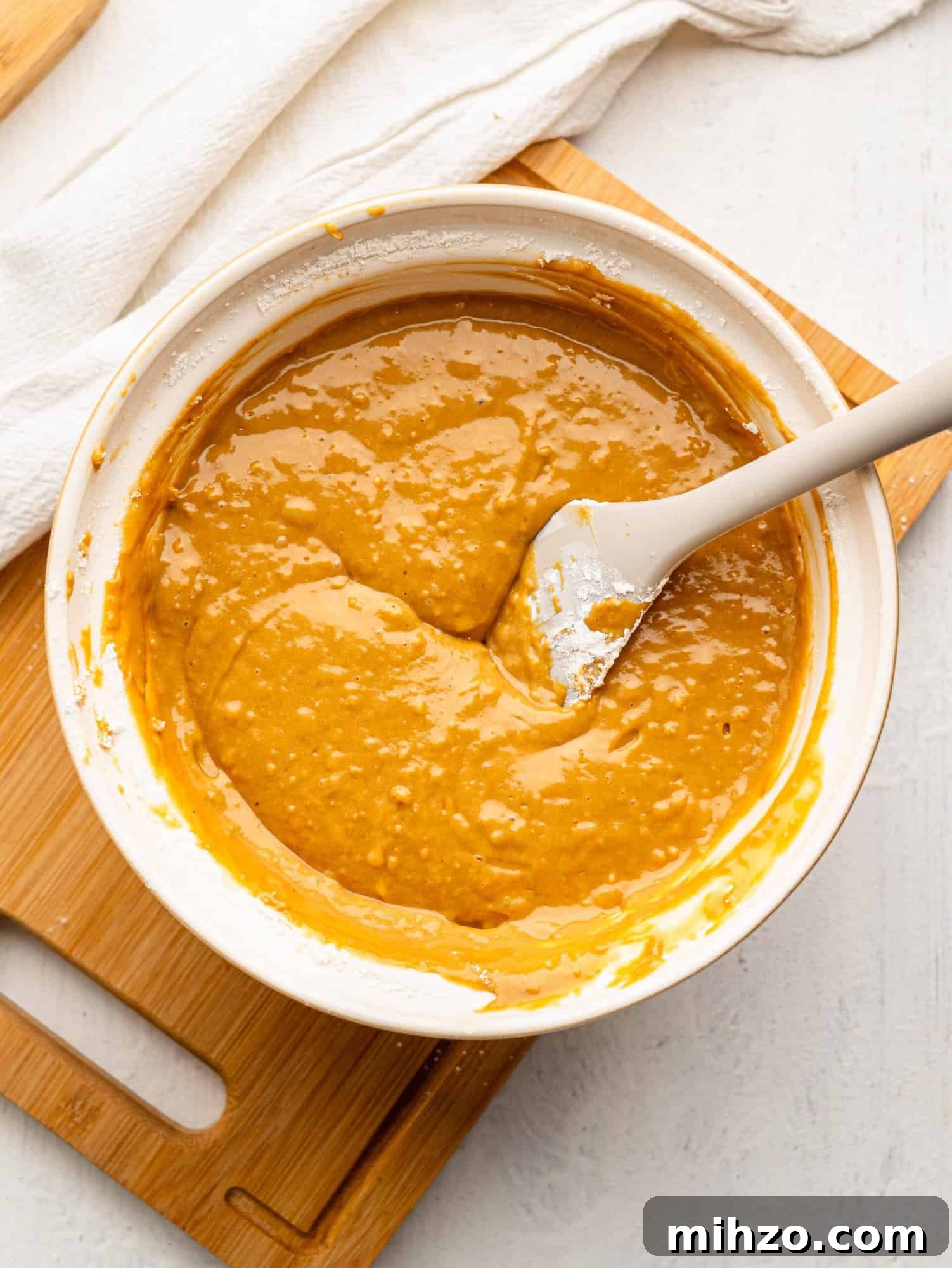
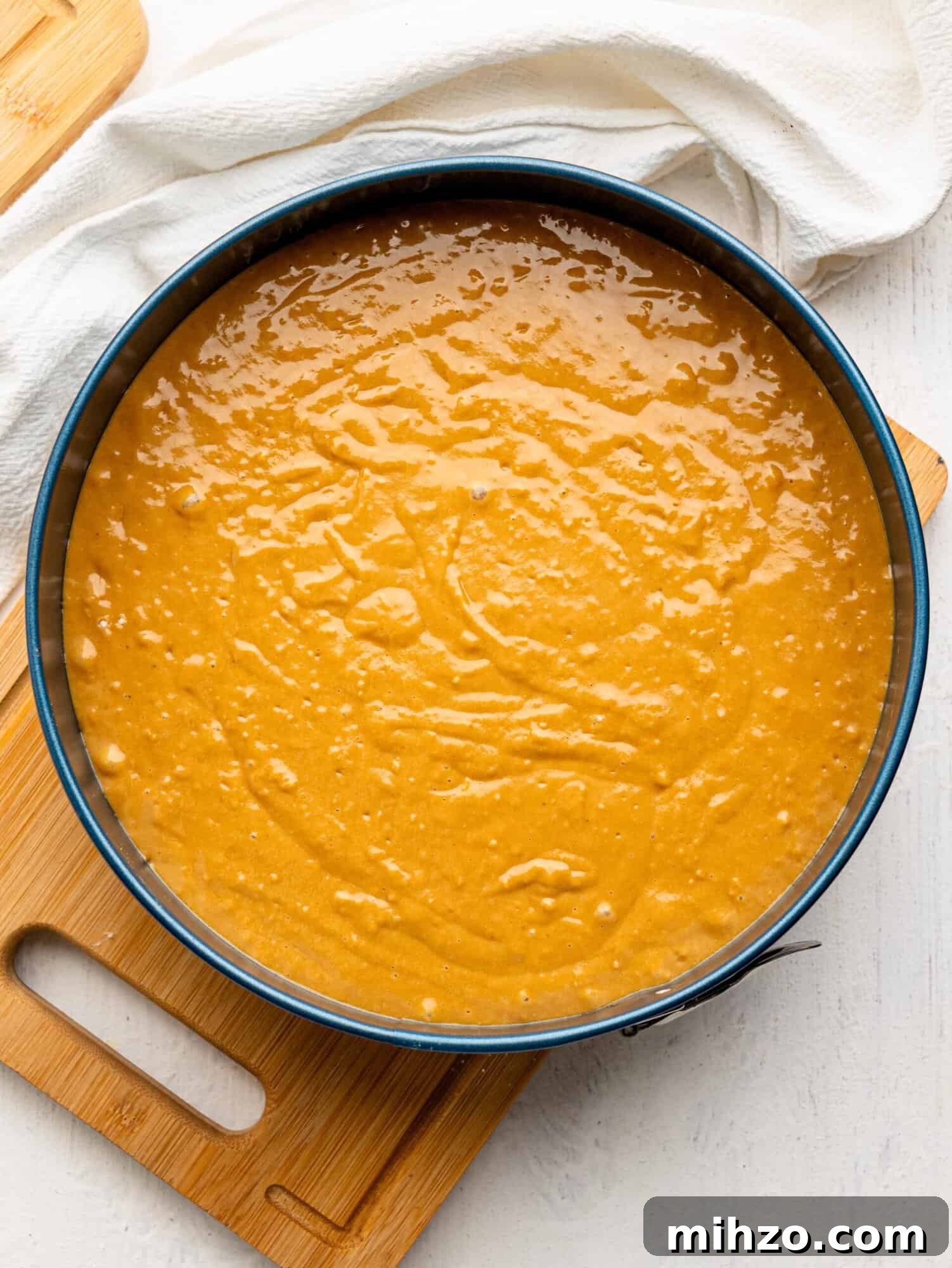
Sift flour, baking powder, and baking soda into the wet mixture and fold gently until just combined—avoid overmixing.
Step Five:
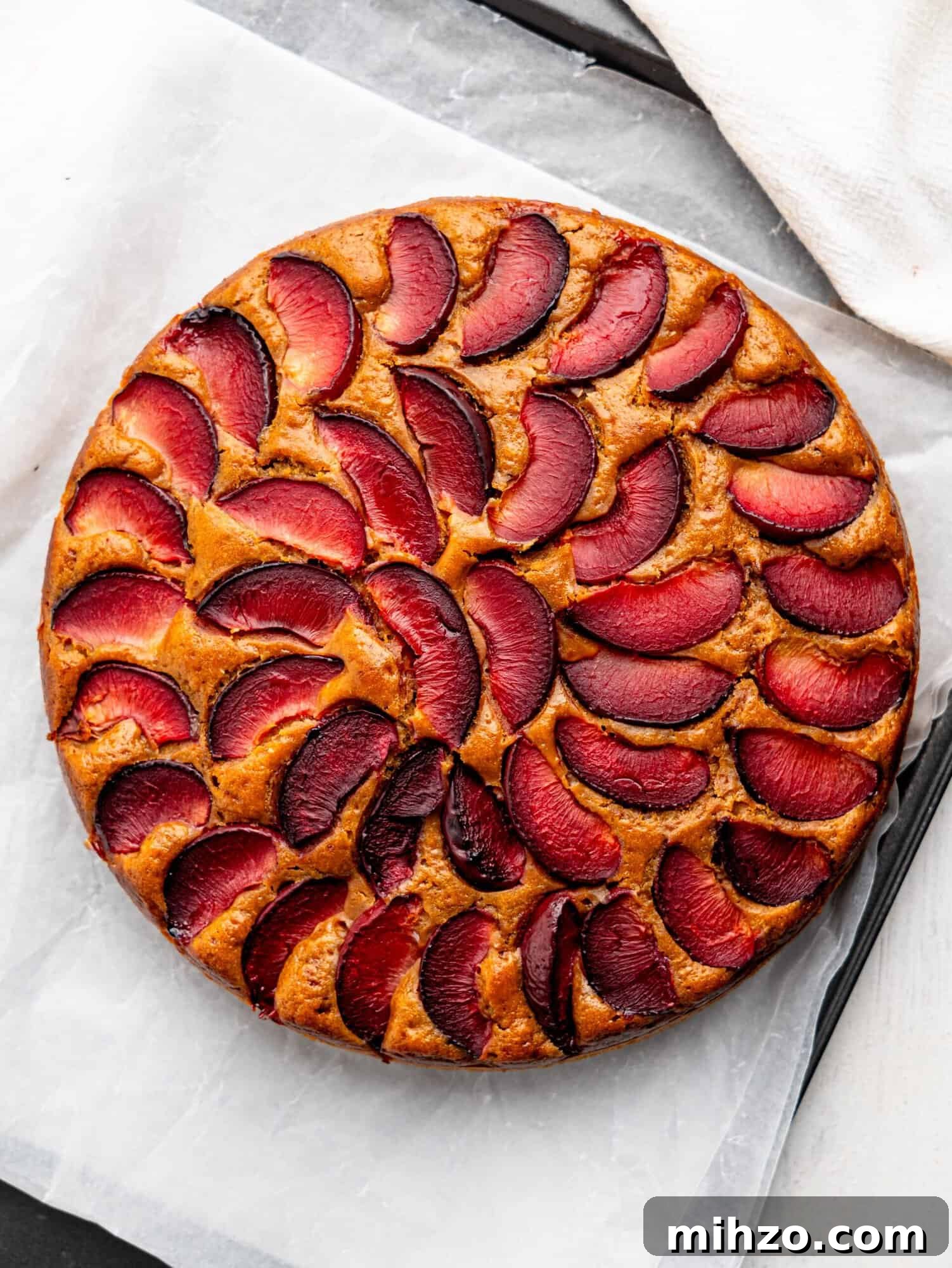
Pour the batter into the prepared tin and arrange the plum slices on top.
Step Six:
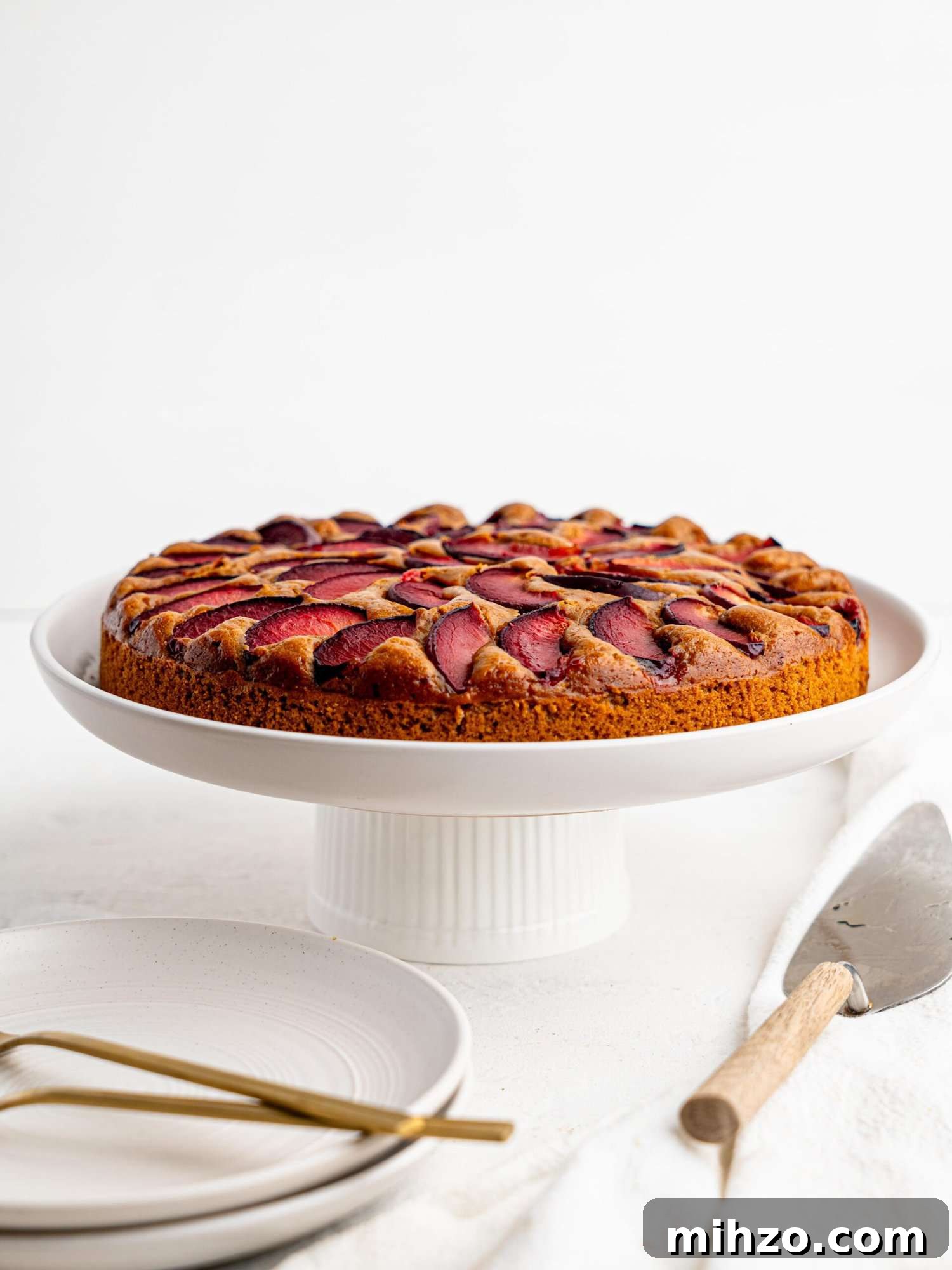
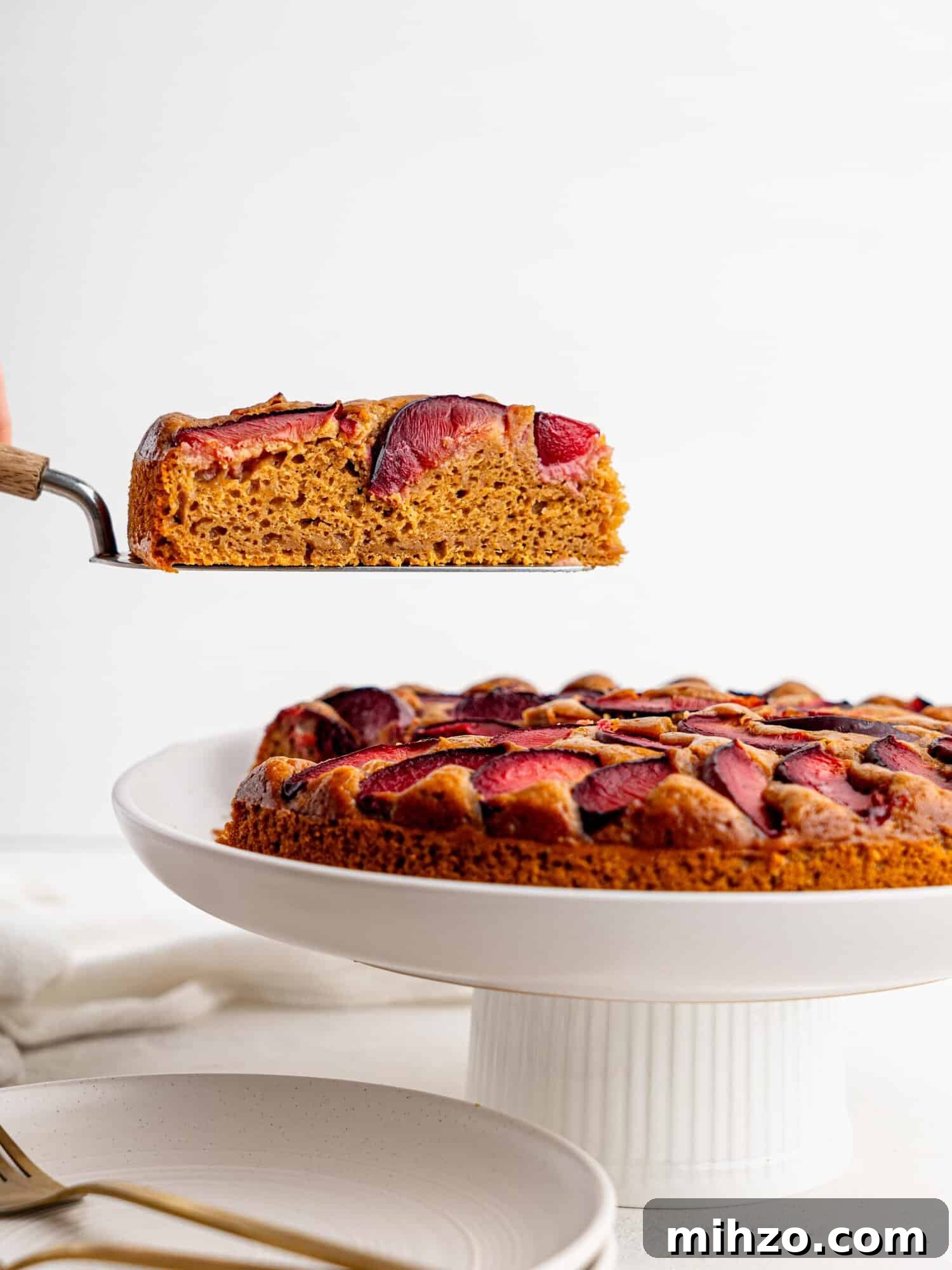
Bake for about 45 minutes. Test with a skewer—the center should come out with a few moist crumbs, not wet batter. If needed, bake an extra 5 minutes and check again.
Step Seven:
Cool the cake in the tin for 15 minutes, then remove and transfer to a wire rack to cool completely before slicing and serving.
Tips and Notes
- Plum selection: Use ripe but firm plums to avoid excess juice that can make the cake soggy. Pat very juicy plums dry before topping the batter.
- Don’t overmix: Fold until the dry ingredients are just incorporated to keep the cake light.
- Check early: Oven temperatures vary—start checking a few minutes before the end of the bake time.
- Cool properly: Allow the cake to set in the tin for 15 minutes before moving to a rack to avoid breaking.
- Variations: Swap plums for peaches, apricots, or firm berries, or add a pinch of cinnamon for a flavor twist.
- Storage: Keep in an airtight container at room temperature up to 3 days, refrigerate up to 1 week, or freeze well-wrapped for up to 3 months.
- Serving: Serve slightly warm or at room temperature with yogurt, cream, or ice cream.
Storage Instructions
Room temperature: Store the cake in an airtight container for up to 3 days to retain moisture and flavor.
Refrigeration: To extend freshness, refrigerate in an airtight container for up to 1 week. Bring to room temperature before serving for the best texture.
Freezing: Cool completely, wrap tightly in plastic wrap and foil, and freeze for up to 3 months. Thaw overnight in the refrigerator and bring to room temperature before serving.
FAQ
Can I use other fruits instead of plums?
Yes—peaches, apricots, or firm berries work well. Avoid overly juicy fruit that could make the cake soggy.
Can I make this cake gluten-free?
Yes—use a reliable gluten-free flour blend that contains xanthan or guar gum for structure.
What can replace yogurt for a dairy-free version?
Use soy or coconut yogurt, or try unsweetened applesauce in a pinch; coconut yogurt gives a thicker texture.
How do I know when the cake is done?
Insert a skewer into the center—there should be a few moist crumbs but no wet batter. If it’s wet, bake a few minutes longer and check again.
Recipe Card
Yogurt Plum Cake
Equipment
- Digital food scale (recommended)
- Chopping board and knife
- Mixing bowl, whisk and spatula
- Sieve
- 9-inch (or 8-inch) springform cake tin
Ingredients
- 250 g Yogurt (1 cup)
- 150 g Sugar (¾ cup) — coconut sugar or granulated
- 50 g Olive oil (¼ cup)
- 3 Eggs
- 1 tbsp Vanilla extract
- 200 g All-purpose flour (1.5 cups) — or fine wholemeal
- ¼ tsp Baking soda
- ½ tsp Baking powder
- 6 Plums, halved, pitted and sliced
Instructions
- Preheat oven to 350°F (175°C). Grease a 9-inch cake tin (use 8-inch for a thicker cake).
- Slice plums in half, remove pits, then cut each half into quarters and set aside.
- Whisk yogurt, sugar, olive oil, vanilla, and eggs in a mixing bowl until combined.
- Sift flour, baking powder, and baking soda into the wet ingredients. Fold gently until just combined.
- Pour batter into the prepared tin and arrange plum slices on top.
- Bake about 45 minutes, or until a skewer inserted in the center comes out with a few moist crumbs.
- Cool in the tin for 15 minutes, then transfer to a wire rack to cool completely. Serve with yogurt, cream, or ice cream if desired.
I hope you love this Yogurt Plum Cake!