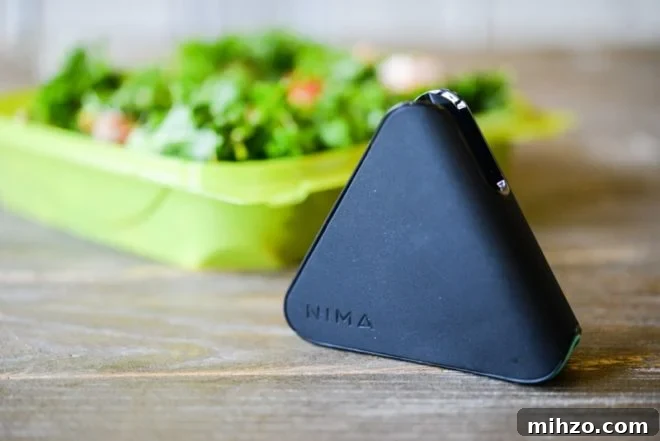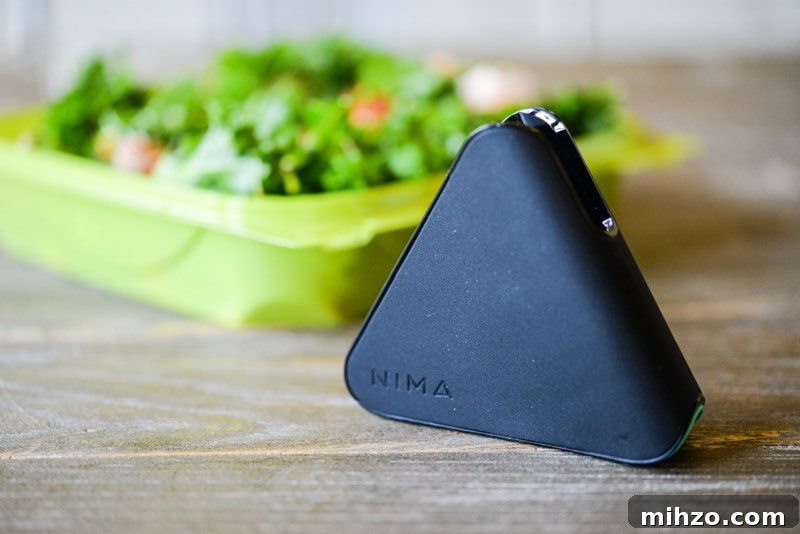
I partnered with Nima to share my experience using the clever, compact, and reliable Nima Gluten Sensor.
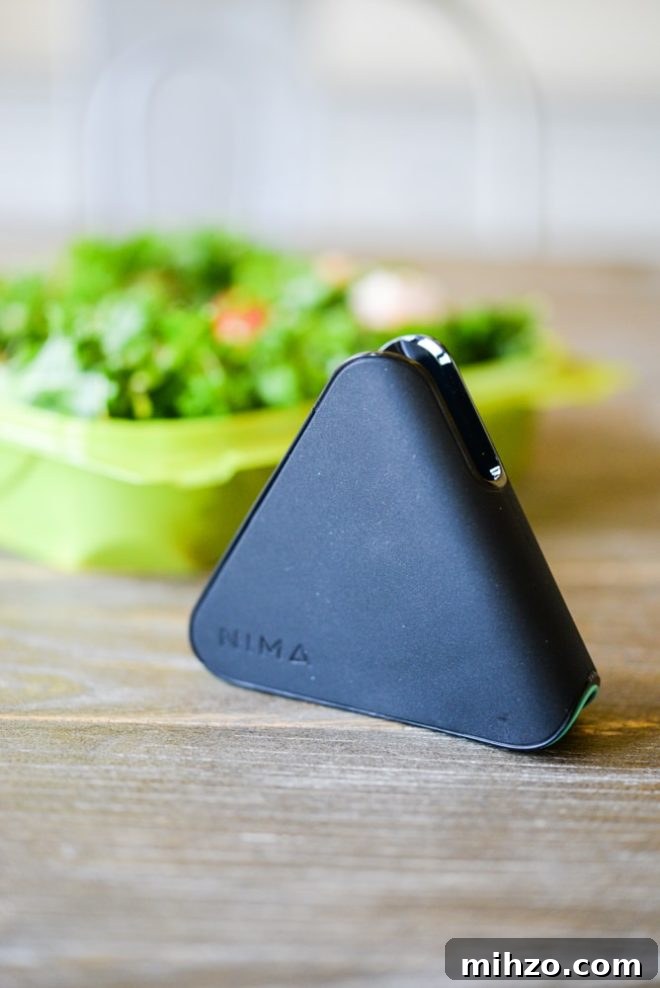
This pocket-sized device is one of the most useful pieces of technology I’ve used recently. I avoid gluten and many other processed ingredients to feel my best, and accidental gluten exposure has been a recurring problem for me when dining out. Even careful restaurant research and asking questions at the table can’t eliminate the risk of cross-contact and human error.
Of all the items I avoid, wheat gluten affects me the most. When I’ve been exposed accidentally, I get immediate abdominal pain, bloating, and mental fog that can last several days. That’s why I was very interested when I first heard about the Nima Gluten Sensor—an easy-to-carry tester that detects wheat gluten in food.
Here’s how the sensor works in practice.

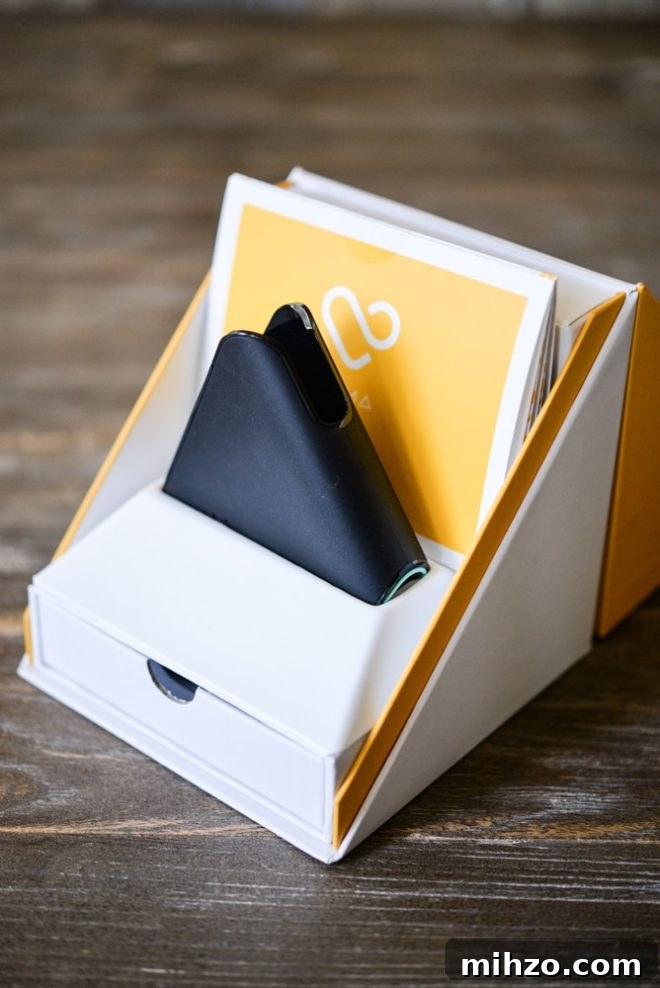
Before your meal, make sure your Nima Sensor is charged and paired with the smartphone app. You’ll also need a Gluten Capsule, which houses the small sample. Take a pea-sized piece of the food you want to test, place it in the capsule’s pronged compartment, and twist the cap until it clicks. That click both secures the capsule and triggers the test preparation.
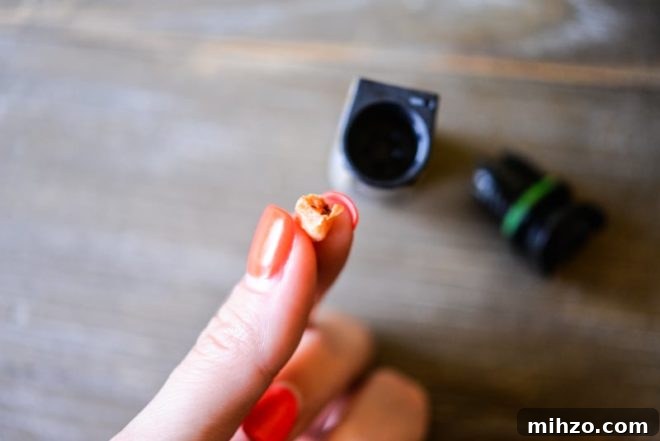
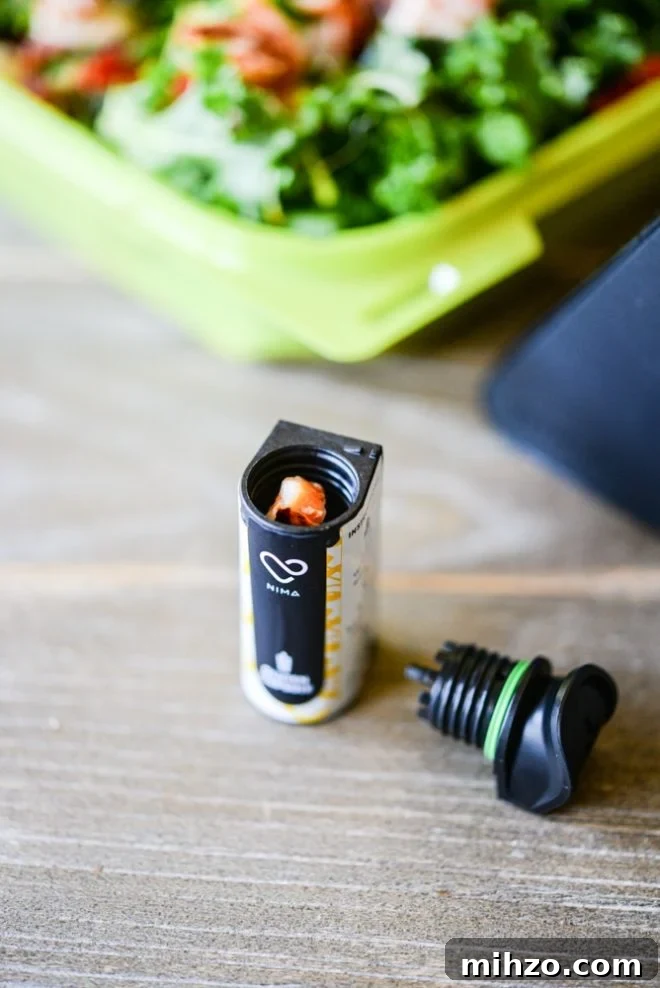
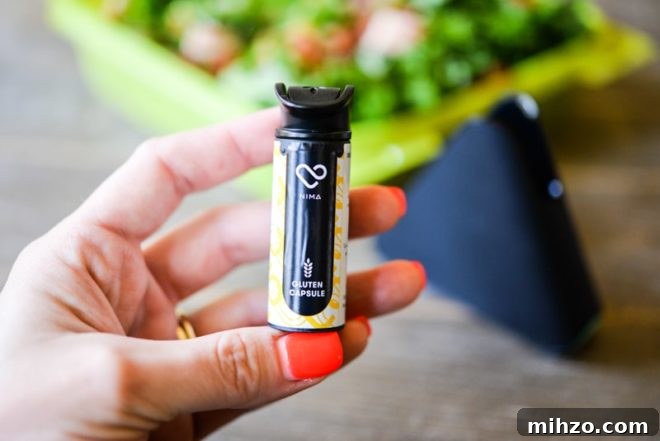
When the capsule clicks closed a couple of things happen:
- The prongs break up and mash the sample, increasing the surface area available for testing.
- An extraction buffer floods the compartment, helping release any gluten from the food into solution.
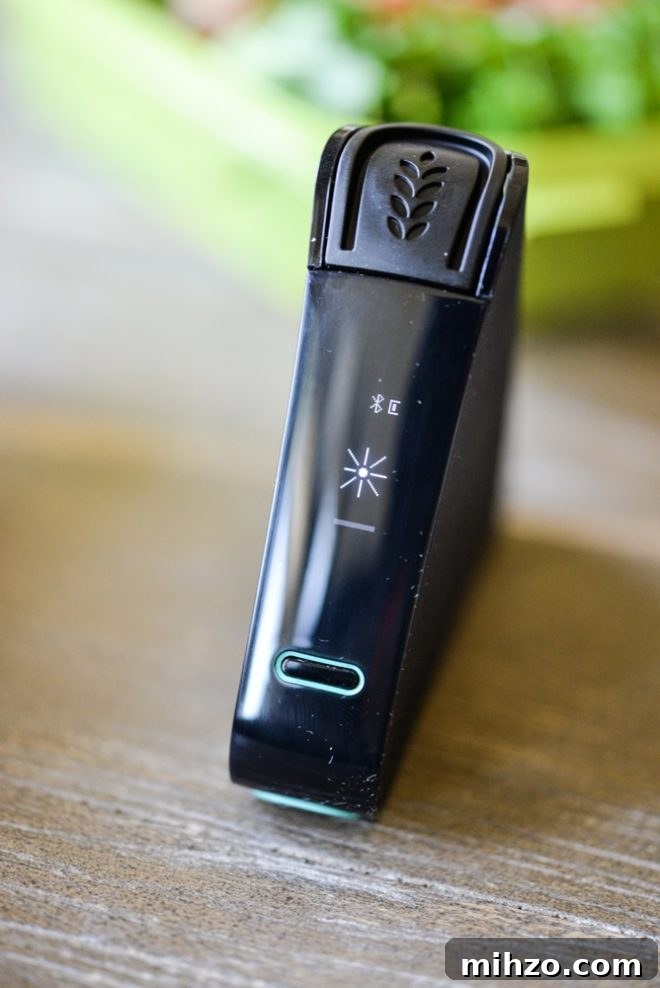
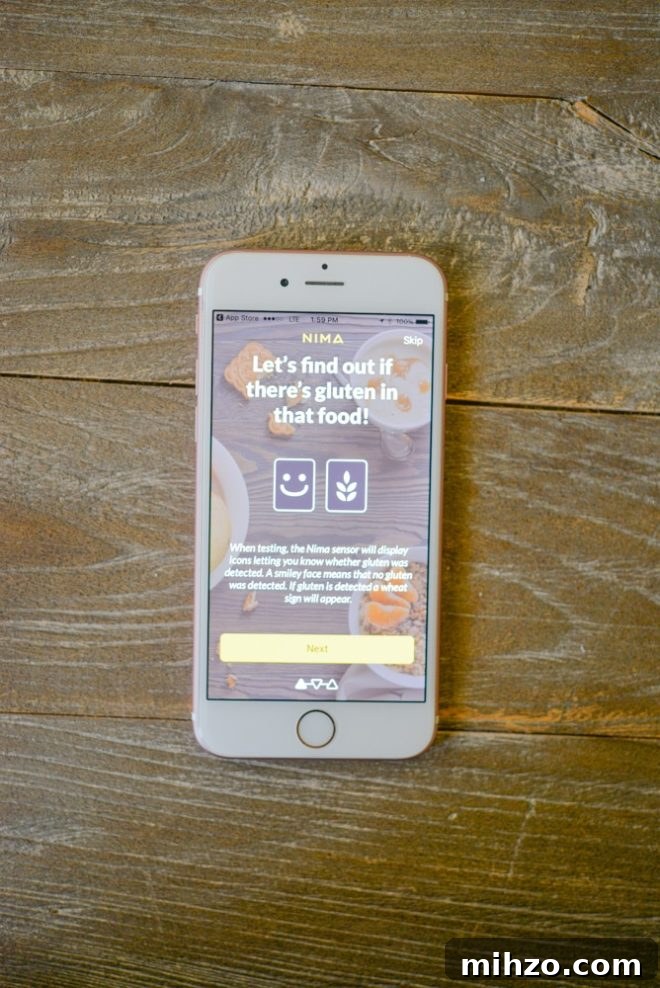
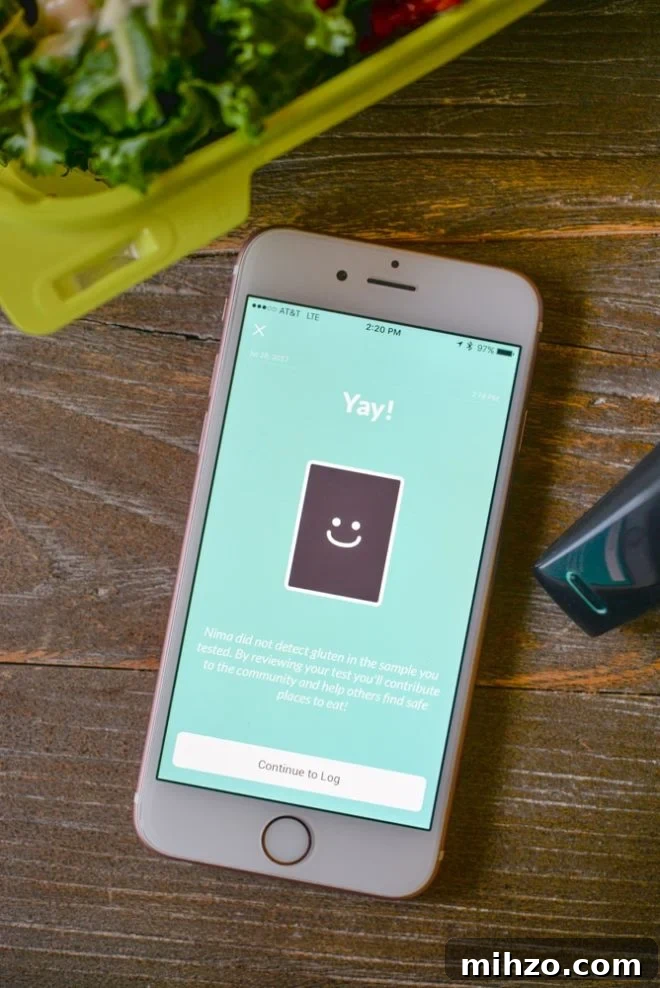
Turn on your triangle-shaped Nima Sensor, insert the prepared capsule, and click it into place. The device mixes the buffer with the food sample, then moves the solution onto a test strip containing antibodies that detect wheat gluten. The full test takes about three minutes, indicated by a flashing icon on the sensor. When the test completes you’ll see either a wheat symbol (gluten detected) or a smiling face (no gluten detected).
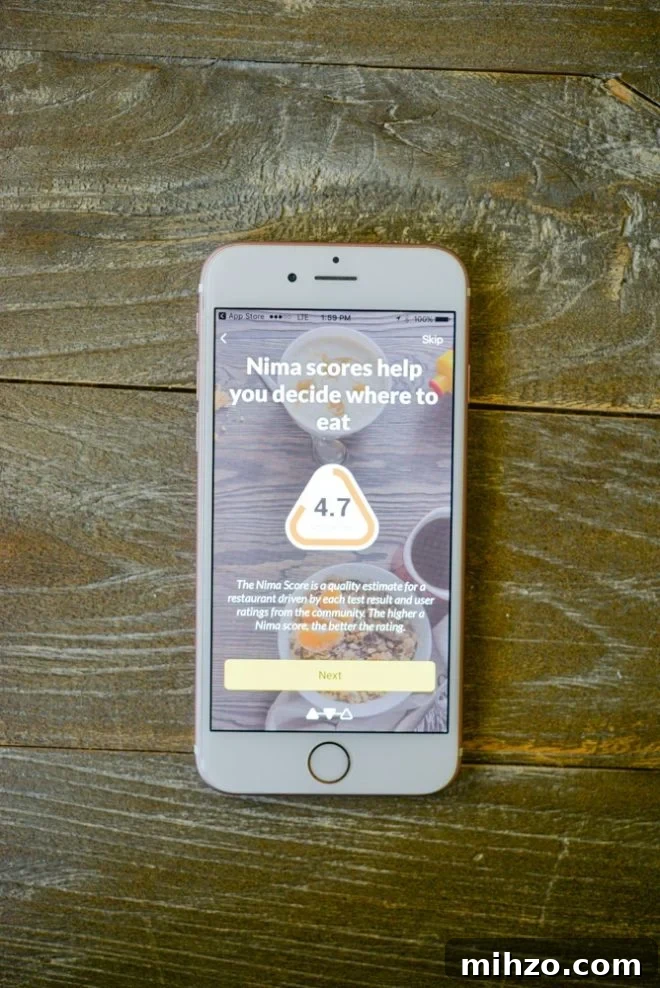
The smartphone app also notifies you of the result and lets you log tests, saving useful information about restaurants and dishes you’ve tried. That log can help you remember which places and menu items have tested safe.
How accurate is it? According to the manufacturer’s information, the Nima Gluten Sensor detects gluten at or above 20 parts per million (ppm) in about 99% of tests. It will occasionally register a positive at very low concentrations (below 2 ppm) in a small percentage of tests.
For people who need to avoid gluten, a portable sensor like this can provide additional confidence when eating out. It’s not a replacement for careful communication with restaurant staff, but it’s a practical tool for reducing risk and documenting results.
To learn more or order your own Nima Gluten Sensor, visit the manufacturer’s site.
Enter the code “FEDANDFIT” at checkout for a discount.