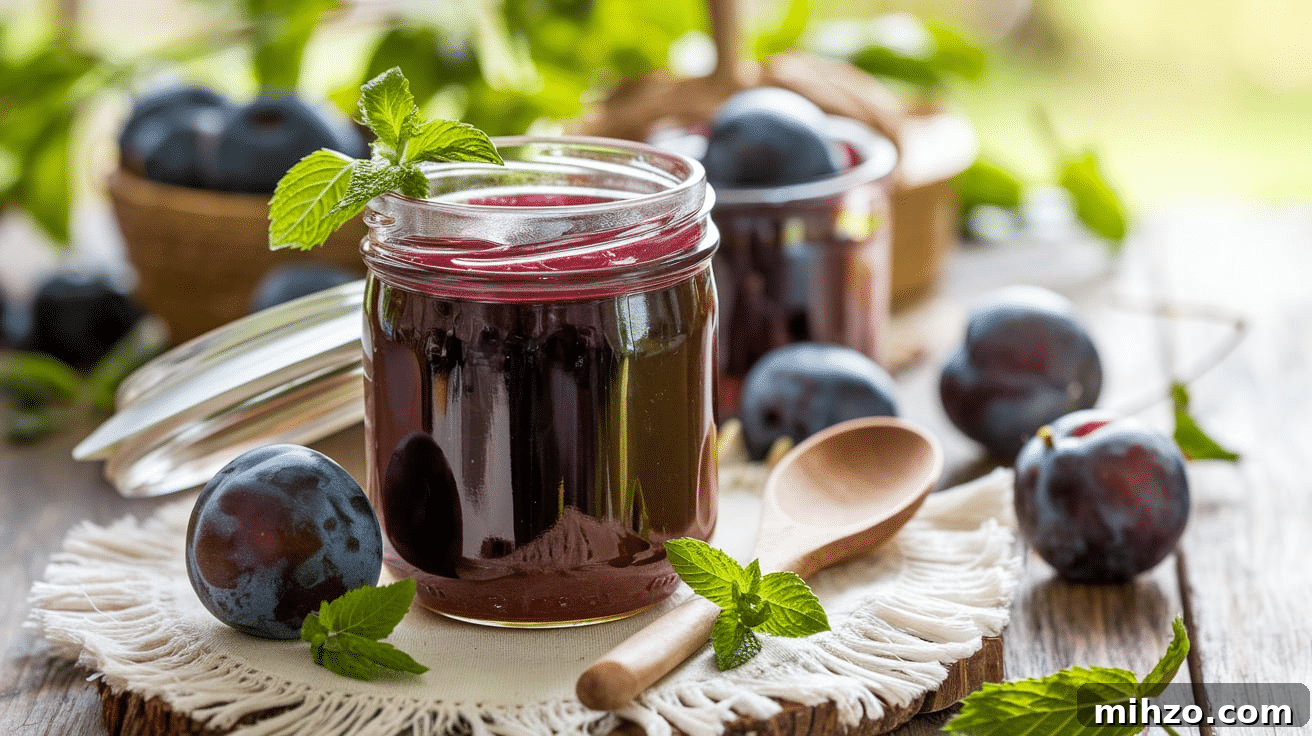
Plum jelly is a delightful homemade preserve that captures the vibrant flavor of ripe plums in a glossy, ruby-colored spread.
When made at home, plum jelly brightens breakfast toast, elevates sandwiches, and makes a lovely topping for ice cream or yogurt.
Preparing your own jelly lets you control the ingredients, avoiding excessive sugar and artificial additives found in many commercial products.
With a handful of simple ingredients and straightforward steps, you can make a flavorful, clear jelly that showcases the natural sweetness and subtle tartness of plums.
Why Plum Is an Excellent Fruit for Jelly
Plums break down into a syrupy, aromatic liquid that blends natural sugars and acids to create a well-balanced jelly. The result is a clear, shiny preserve with a deep red-purple hue that looks attractive in jars and on the table.
Flavor-wise, plum jelly offers complexity: it is sweet without being cloying and carries a gentle tang that brightens the palate. Unlike some single-note jellies, plum develops layered flavors as you taste it.
Plum jelly also pairs beautifully with a wide range of foods. It complements bread and cheese, adds a fruity contrast to savory meats, and spreads smoothly without tearing delicate pastries or toast.
Essential Ingredients for Plum Jelly
To make plum jelly, you need a few basic ingredients that contribute to its color, texture, and preservation:
- Plums
- Sugar
- Pectin (type depends on your recipe)
- Water
- Butter (optional, to reduce foaming)
- Honey (optional, for added depth of flavor)
- Low-sugar pectin (if following a reduced-sugar method)
- Lemon juice (for acidity and helping the set)
Step-by-Step Plum Jelly Recipe
Step 1: Prepare the Plums
Start by washing about 5 pounds of ripe plums to remove dirt and residues. Cut each plum in half and remove the pits, but keep the skins on—plum skins contain natural pectin that helps the jelly set.
Step 2: Extract the Juice
Place the pitted plum halves in a large stockpot with roughly 1½ cups of water. Bring to a boil, reduce heat, cover, and simmer about 10 minutes until the fruit softens and releases its juice.
Strain the cooked plums through a colander lined with cheesecloth set over a large bowl. Let the juice drain naturally for about 30 minutes. For the clearest jelly, avoid squeezing the cloth; gentle pressing is okay if you want to recover more juice. Expect approximately 5½ cups of plum juice.
Step 3: Prepare for Canning (if preserving)
While the juice drains, prepare your jars and lids. Sterilize jars by washing in hot, soapy water or running them through the dishwasher, and keep them warm until you fill them. Wash lids and bands and set up your water bath canner if you plan to preserve the jelly.
Step 4: Make the Jelly
Return the strained juice to a clean, large pot. Add one tablespoon of butter if you prefer to minimize foaming. Stir in one box (1.75 oz) of powdered pectin until it dissolves completely.
Bring the mixture to a full rolling boil over high heat, stirring constantly to prevent scorching. Add 6½ cups of sugar all at once and stir until it dissolves. Return to a full rolling boil and boil hard for exactly one minute while stirring. Remove from heat and skim off any foam with a metal spoon.
Step 5: Test for Set (Optional)
Place a small plate in the freezer before you begin cooking. When you think the jelly is ready, drop a spoonful onto the cold plate and let it sit for one minute. Push the surface with your finger—if it wrinkles and doesn’t flow back together, it is set. If still runny, boil for another minute and test again.
Step 6: Fill and Process Jars
Ladle the hot jelly into warm jars, leaving 1/4 inch of headspace. Wipe rims clean with a damp cloth, apply lids, and screw on bands fingertip tight. Process jars in a water bath canner for 10 minutes, adjusting time for altitude as needed. Remove jars and let them cool undisturbed for 24 hours to ensure a proper seal.
Tips for Perfect Plum Jelly Consistency
- Avoid overcooking; excessive heat can break down pectin and yield a runny jelly.
- Use the freezer plate test to check doneness reliably.
- If the jelly is too soft after cooling, you can re-cook it with additional pectin following package instructions.
- For the clearest jelly, don’t squeeze the cheesecloth while straining—the natural settling produces clarity.
- Measure ingredients precisely; jelly-making is more chemistry than guesswork.
- At higher altitudes, increase processing and boiling times according to guidelines for safe preservation.
Common Mistakes to Avoid
Small errors can affect the final result. Avoid these pitfalls:
Temperature control is crucial—overheating can destroy natural pectin and impart a cooked taste, while undercooking prevents a proper set. Follow the recipe’s boiling times closely.
Use pectin according to its type and package directions. Powdered, liquid, and low-sugar pectins are not interchangeable without adjusting the method.
Properly sterilize jars and lids to prevent spoilage. Wash and then boil jars for 10 minutes before filling when preserving long-term.
Preserving and Storing Plum Jelly
You have three primary storage options:
Canning: For long-term storage, fill sterilized jars with hot jelly, leave 1/4 inch of headspace, secure lids, and process in a boiling water bath for the recommended time. Store sealed jars in a cool, dark place.
Refrigeration: Keep opened or small batches in clean containers in the fridge for up to three weeks, using clean utensils each time.
Freezing: Use freezer-safe containers with room for expansion, label with the date, and store for up to 12 months. Always inspect stored jelly for mold, off-odors, color changes, or swollen lids before use.
Conclusion
Making plum jelly at home yields a beautiful, flavorful spread that highlights the best qualities of fresh plums. With careful preparation—measuring ingredients, monitoring temperatures, and following proper canning steps—you can produce a clear, ruby jelly perfect for toast, sandwiches, or dessert toppings.
Whether you choose to can, freeze, or refrigerate your jelly, proper handling and storage will help you enjoy the taste of plum season throughout the year.