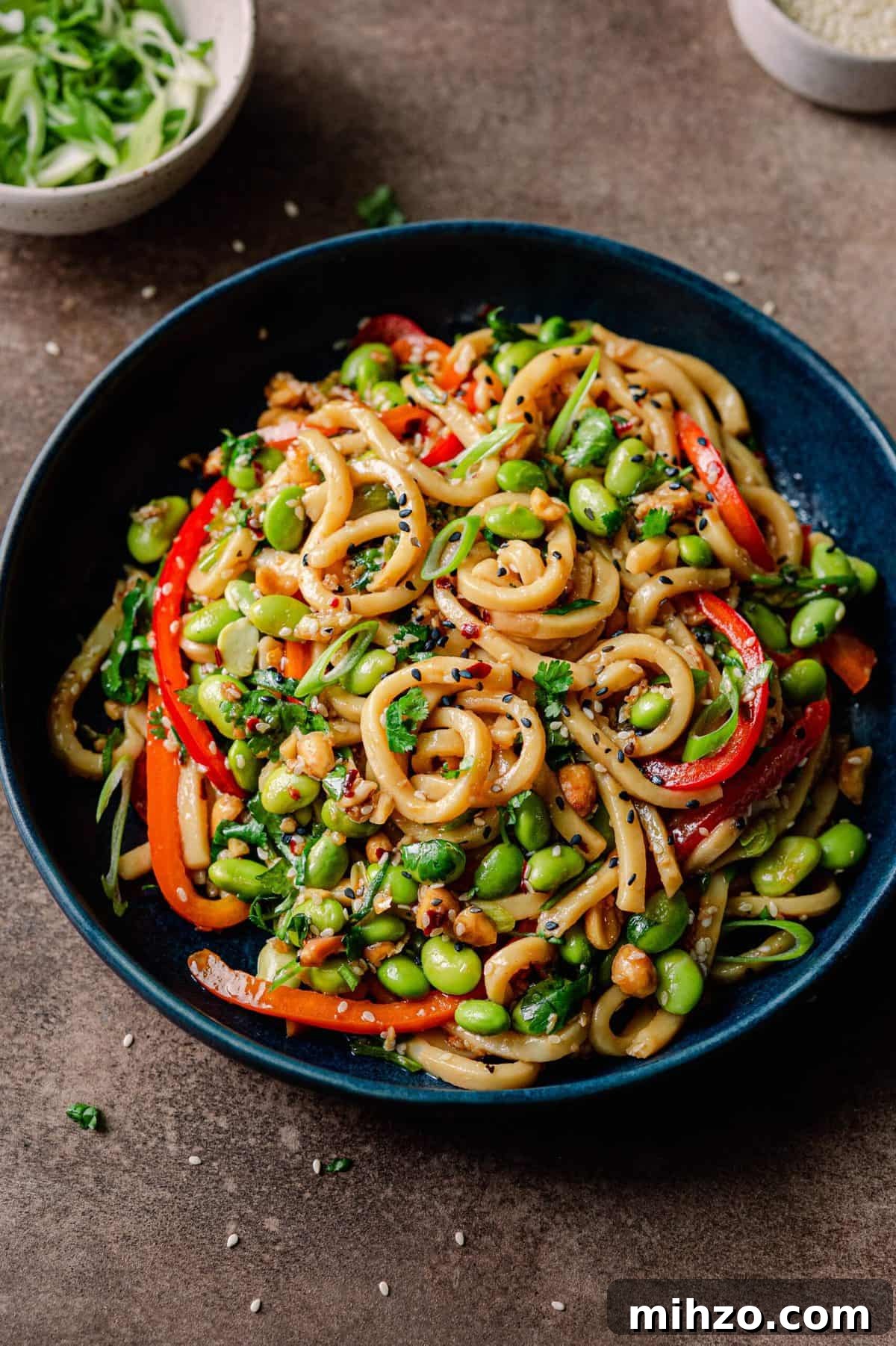
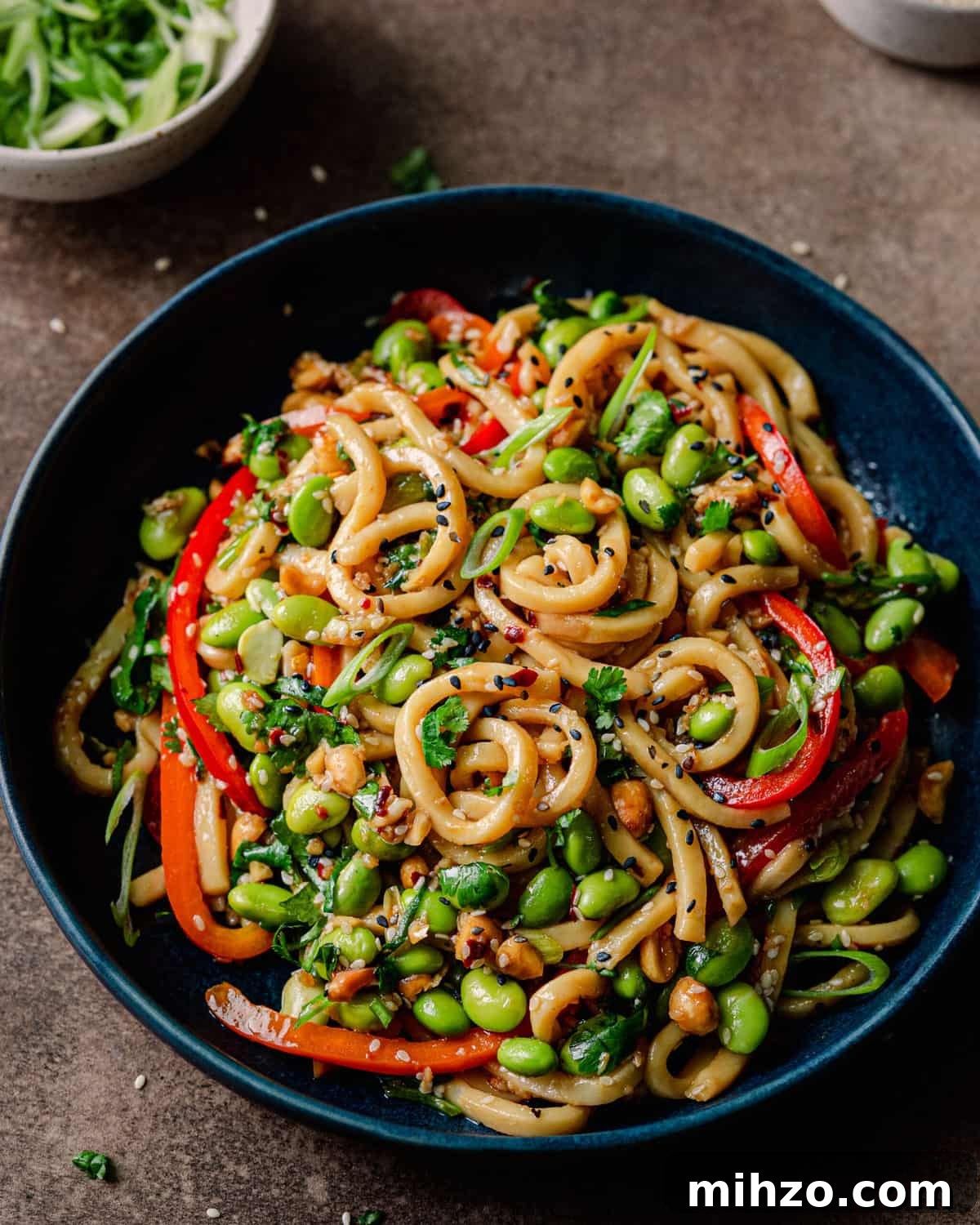
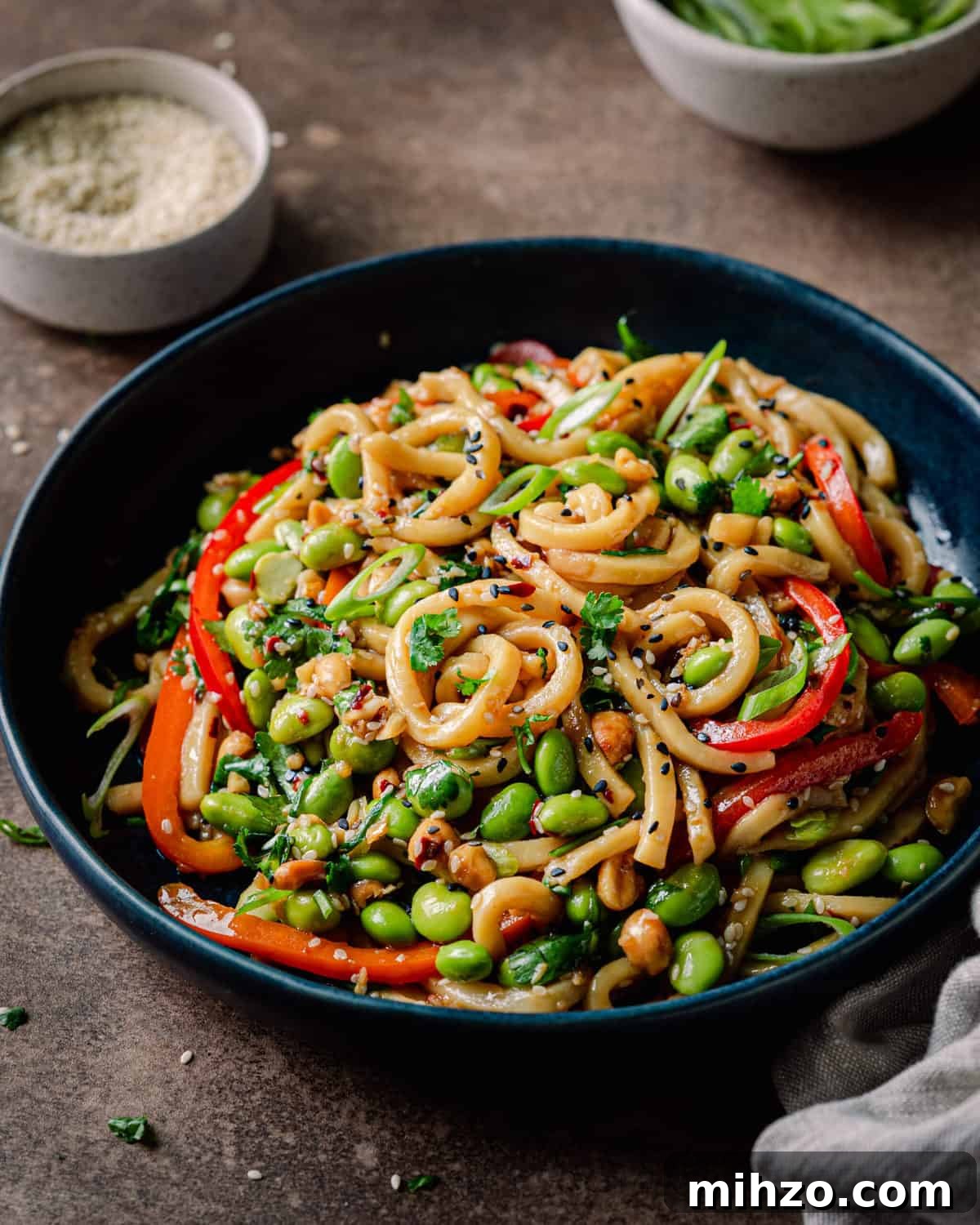
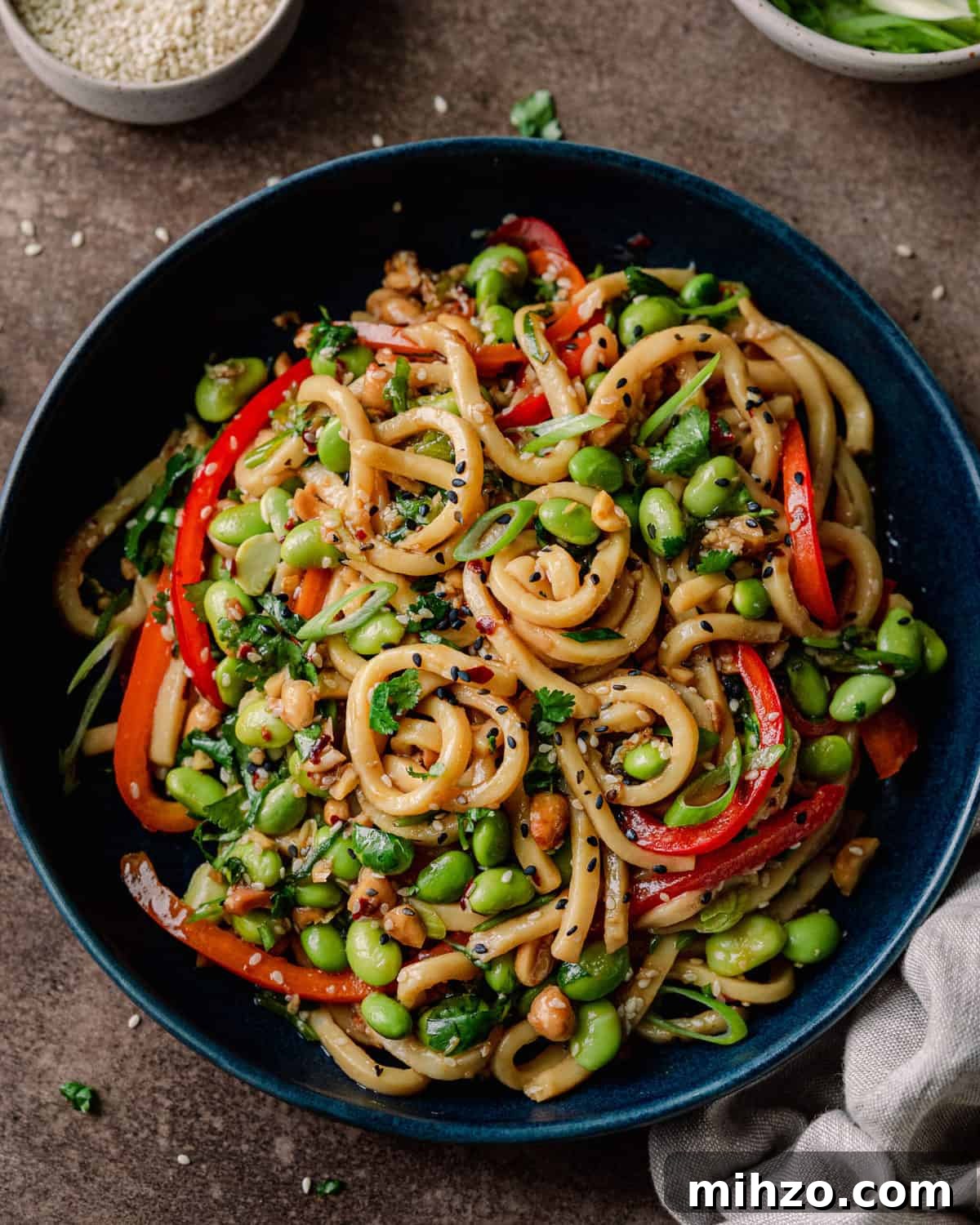
If you’ve ever struggled to get dinner on the table on busy weeknights, these chili garlic noodles are about to become a go-to. They’re an Asian-inspired, vegan noodle dish that comes together faster than ordering takeout and delivers big on flavor—spicy, garlicky, tangy, and texturally satisfying with chewy noodles, crunchy peanuts, and bright vegetables.
The chili-garlic oil makes a double batch, so once you’ve made it the first time, subsequent meals are even quicker.
Table of Contents:
1. Ingredient Notes
2. Step-by-step Instructions
3. Tips and Substitutes
4. Frequently Asked Questions
5. Video: How to Make Chili Garlic Noodles
6. Full Recipe
Ingredient notes
This recipe blends Chinese flavors and techniques with thick Japanese udon noodles for an approachable, craveable result. A mix of vegetables, herbs, nuts, and edamame keeps the bowl balanced and wholesome.
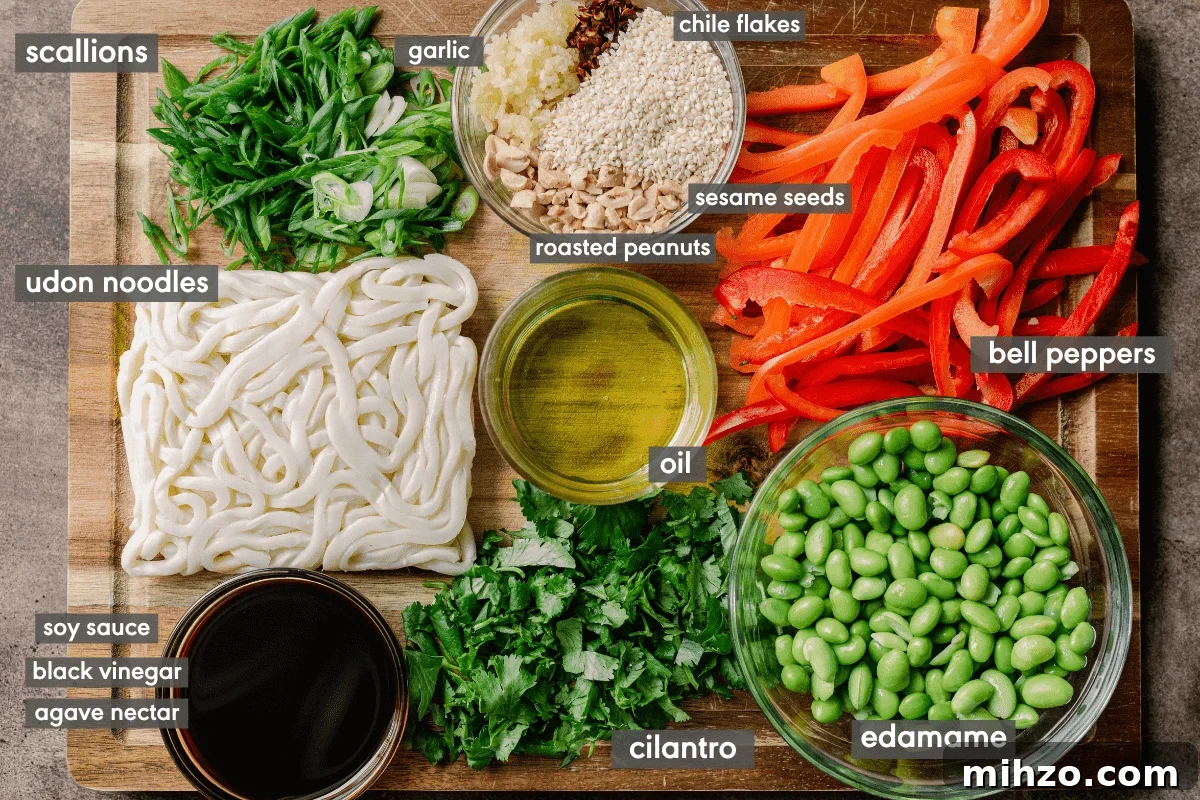
Key components:
- Noodles: Fresh or frozen udon noodles are ideal for their chewy, bouncy texture and 2-minute cook time. Shelf-stable udon or ramen can substitute if needed.
- Sauce: Soy sauce or tamari, maple syrup or agave, and Chinese black vinegar form the sweet‑salty‑tangy base. Black vinegar adds complexity; see the Tips section for substitutions.
- Garlic chili oil: Neutral oil (grapeseed, avocado, or canola), Sichuan chile flakes or red pepper flakes, white sesame seeds, garlic, and peanuts create a nutty, spicy, aromatic oil.
- Veggies and herbs: I like red or orange bell pepper, cilantro, and scallions for color and brightness.
- Protein: Shelled edamame (frozen) is quick, high in protein, and pairs perfectly with the flavors here.
Common Substitutions
This dish is flexible—swap ingredients to suit what you have on hand:
- Noodles: If you can’t find fresh/frozen udon, use shelf-stable udon or ramen. Avoid very thin rice vermicelli, which won’t provide the same chew.
- Vinegar: Rice vinegar works in a pinch, though it won’t match the depth of Chinese black vinegar. A small splash of good aged balsamic combined with rice vinegar can mimic some of the richness.
- Nuts: Substitute cashews for peanuts if you have an allergy or preference.
- Veggies: Add shredded red cabbage, Napa cabbage, carrots, snap peas, steamed broccoli, or bok choy for variety.
- Protein: Pre-cooked tofu or store-bought prepared tofu are quick alternatives to edamame.
Step-by-step instructions
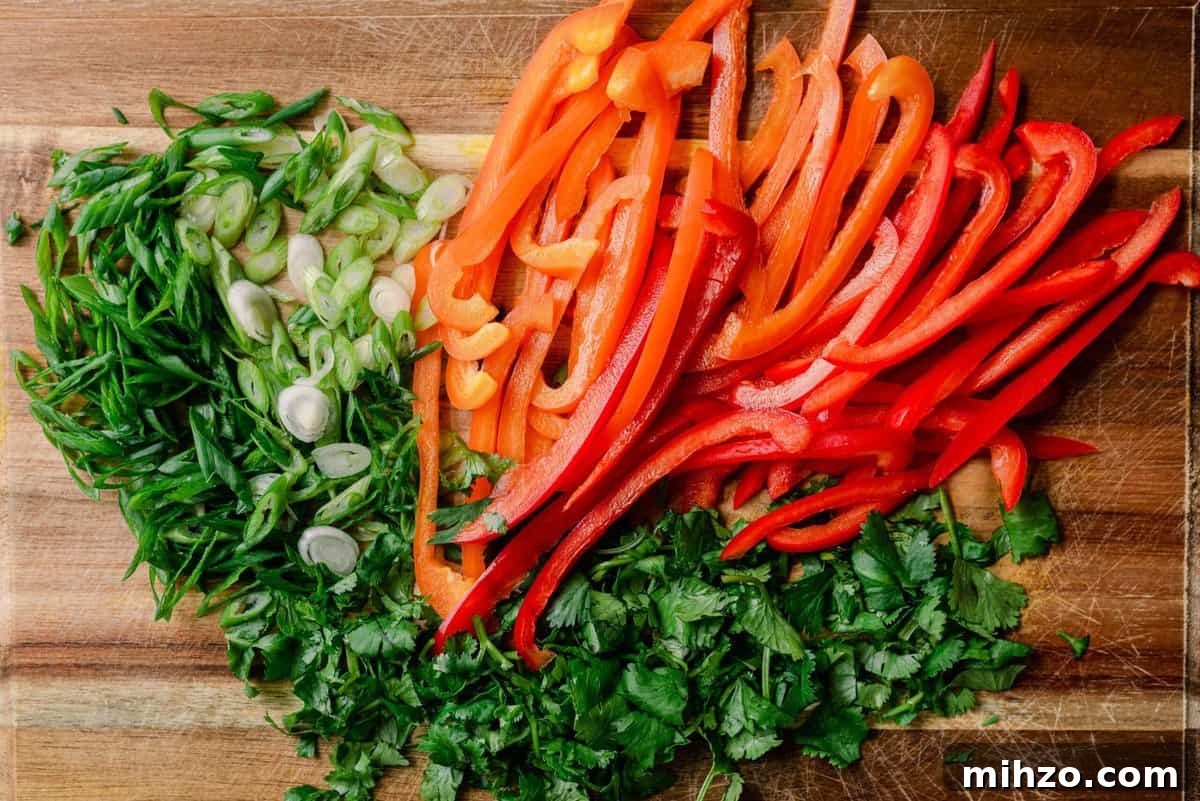
Gather and prep everything before you start: slice the bell pepper and scallions, chop the cilantro, mince garlic, and roughly chop the peanuts. Defrost edamame and toss with a pinch of salt.
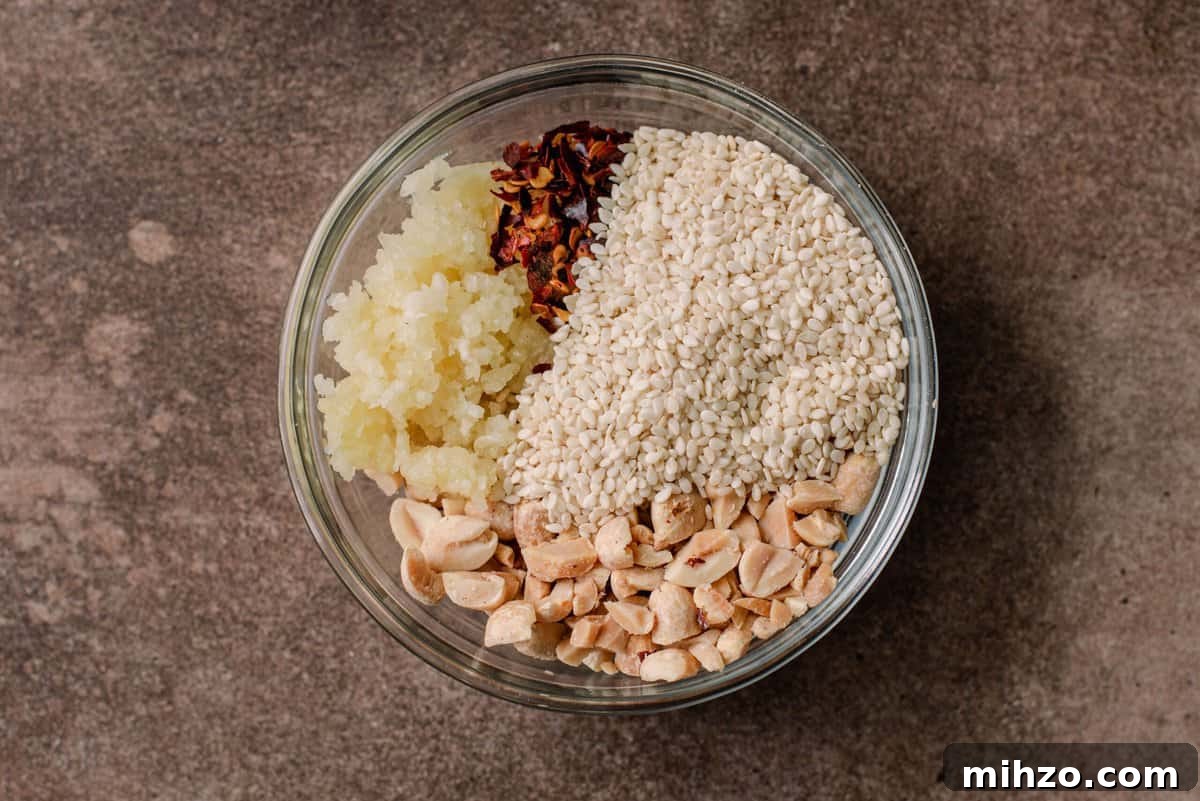
Combine chile flakes, sesame seeds, garlic, and chopped peanuts in a heatproof bowl. Heat neutral oil in a small saucepan until hot (about 350ºF/175ºC) and carefully pour over the mixture—the oil should sizzle and bloom the aromatics. After a minute, stir in soy sauce, black vinegar, and maple syrup or agave to finish the sauce.
Cook fresh or frozen udon noodles in a large pot of generously salted boiling water. Fresh udon only needs about 2 minutes—use chopsticks or tongs to separate the bundles after the first minute. Drain and rinse under cool water to stop cooking, then transfer to a large bowl.
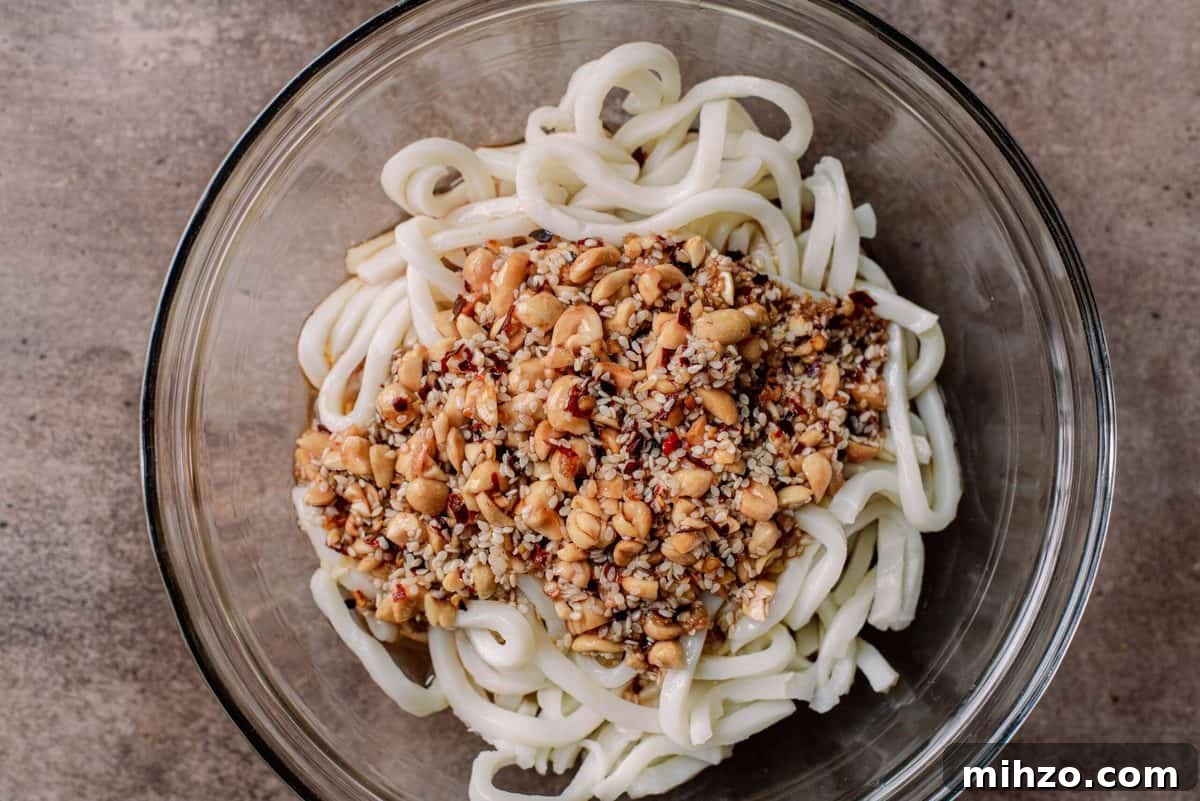
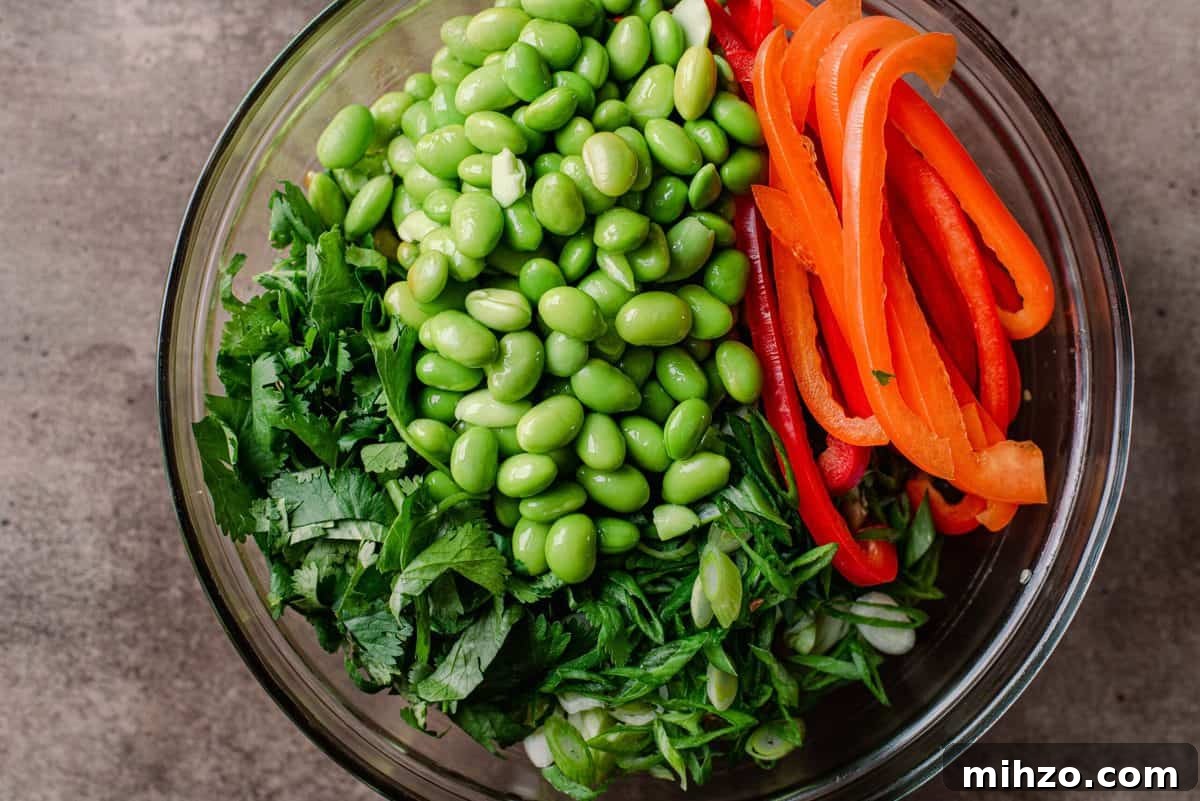
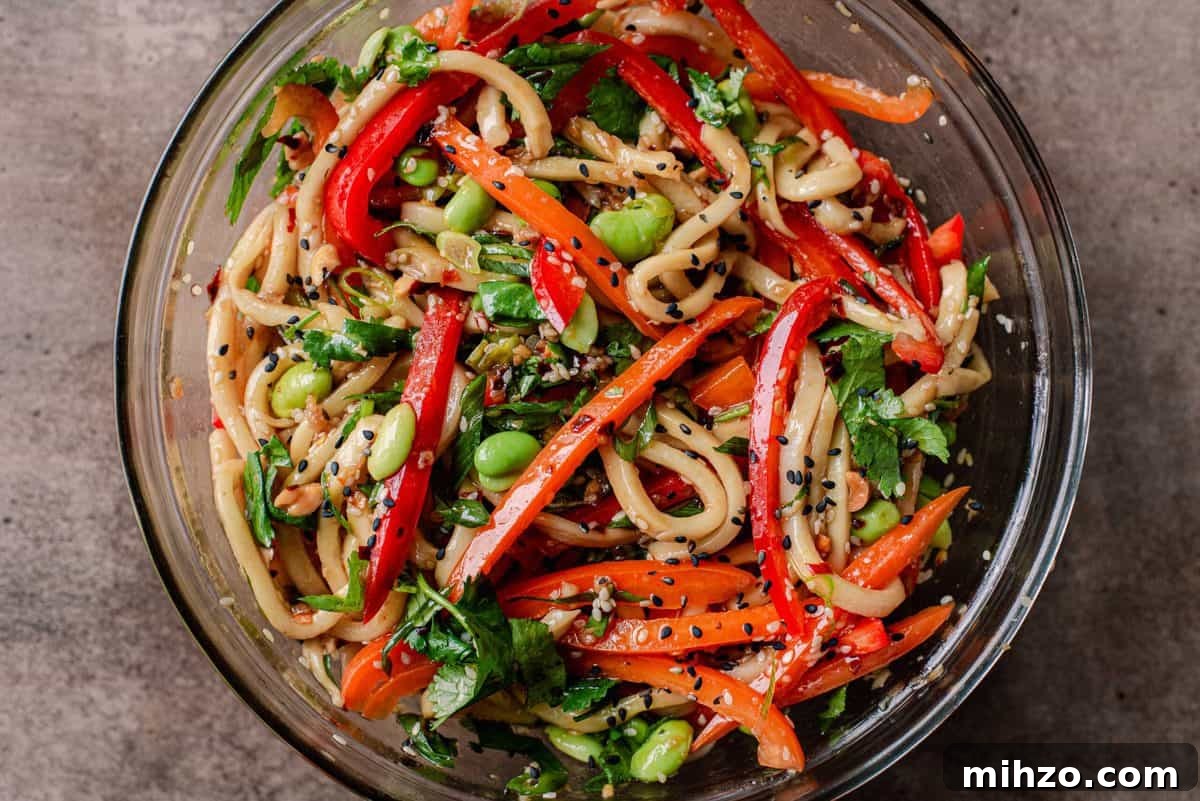
Pour HALF of the garlic-chili oil and sauce over the noodles, saving the remainder for later (it keeps in the refrigerator for several days). Add bell pepper, scallions, cilantro, and edamame, then toss thoroughly so the dressing coats everything. Serve at room temperature or chilled.
Tips and Substitutes
Multitask for maximum efficiency
To hit the 15-minute mark, multitask: while water comes to a boil, prep aromatics and vegetables; while oil heats, finish slicing and chopping. Fresh/frozen udon cooks in about 2 minutes, so timing matters.
Don’t skip Chinese black vinegar
Chinese black vinegar adds fermented, umami-rich, slightly sweet and earthy notes that deepen the sauce. The most common variety is Chinkiang (Zhenjiang) black vinegar, typically available at Asian grocery stores.
Adjust the spice to taste
Increase or decrease chile flakes to control heat. Sichuan chile flakes bring a toasty, nutty flavor; red pepper flakes work well too.
Make sure the oil is hot enough
This method relies on pouring hot oil over raw aromatics rather than cooking them in the pan. Heat the oil until shimmering (or to about 350ºF/175ºC). If you don’t have a thermometer, heat the oil for 3–5 minutes and test by adding a small piece of garlic; it should sizzle immediately.
Frequently Asked Questions
Find fresh or frozen udon at East Asian grocery stores in the refrigerated or freezer sections. Add bundled noodles to boiling, salted water, loosen them with chopsticks, and cook about 2 minutes total for a chewy but tender texture. Drain, rinse with cool water, and shake well to drain before using.
Both are commonly sold at East Asian grocery stores. If you can’t source black vinegar locally, rice vinegar is an acceptable substitute, and Sichuan chile flakes can often be ordered online or found in specialty spice sections.
Use rice vinegar as a substitute. To mimic more of the black vinegar’s depth, mix 2 tablespoons rice vinegar with 1/2 tablespoon aged balsamic if you have it.
If nothing sizzled, the oil wasn’t hot enough. Transfer the mixture to a small pan and cook over medium heat until the garlic just starts to turn golden, then remove from heat.
Try these East Asian recipes next
- Restaurant-Style Tofu Stir Fry
- Marinated Tofu
- Chinese Braised Tofu
- Gochujang Noodles
- Spicy Korean Cucumber Salad
- Creamy Umami Noodle Soup with Crispy Mushrooms
Watch: How to Make Vegan Noodles
That’s it for these quick and flavorful vegan chili garlic noodles. If you try the recipe, consider rating it and share a photo of your version on Instagram!
15-Minute Vegan Chili Garlic Noodles
Ingredients
- 10 ounces (285g) fresh or frozen udon noodles
- 1 small or medium red/yellow/orange bell pepper, thinly sliced
- 3/4 cup (12g) fresh cilantro leaves and tender stems, chopped
- 3 scallions, sliced on a bias
- 6 ounces (170g) frozen edamame, defrosted
- 1/8 teaspoon sea salt
Garlic Chili Oil (makes extra)
- 1/3 cup (75g) neutral-flavored oil (grapeseed, avocado, or canola)
- 2 teaspoons Sichuan chile flakes or red pepper flakes
- 2 tablespoons white sesame seeds
- 6 garlic cloves, minced or crushed
- 1/2 cup (70g) dry-roasted peanuts, roughly chopped
Sauce
- 3 tablespoons soy sauce or tamari
- 2 1/2 tablespoons Chinese black vinegar
- 1 tablespoon maple syrup or agave nectar
Instructions
- Cook the udon noodles. Bring a large pot of water to a boil, salt generously, add udon bundles, cook 1 minute, then loosen and separate the noodles and cook another minute (about 2 minutes total). Drain and rinse with cold water; transfer to a large bowl.
- While the water is boiling, mince garlic, chop peanuts and cilantro, and slice bell pepper and scallions. Toss edamame with the sea salt.
- Make the garlic chili oil. Combine chile flakes, sesame seeds, garlic, and peanuts in a heatproof bowl. Heat oil in a small saucepan until hot and shimmering (about 350ºF/175ºC). Carefully pour the hot oil over the mixture—it should sizzle. Stir and let sit 1 minute. Stir in soy sauce, black vinegar, and maple syrup or agave.
- Pour only HALF of the chili oil-sauce mixture over the noodles; reserve the rest for later. Add bell peppers, edamame, cilantro, and scallions, and toss well. Serve at room temperature or chilled.
Notes
1. Fresh or frozen udon is sold in East Asian grocery stores in refrigerated or freezer sections. If unavailable, shelf-stable udon or ramen will work.
2. To make a single smaller batch of chili oil for just this recipe: 2 tablespoons + 2 teaspoons (37g) neutral oil, 1 teaspoon chile flakes, 1 tablespoon sesame seeds, 3 garlic cloves, and 1/4 cup (35g) dry-roasted peanuts.
3. Chinese black vinegar can be found at Asian grocery stores. Rice vinegar is a passable substitute; to mimic more depth, add 1/2 tablespoon aged balsamic to 2 tablespoons rice vinegar.
Nutrition
Nutrition information is an approximation.