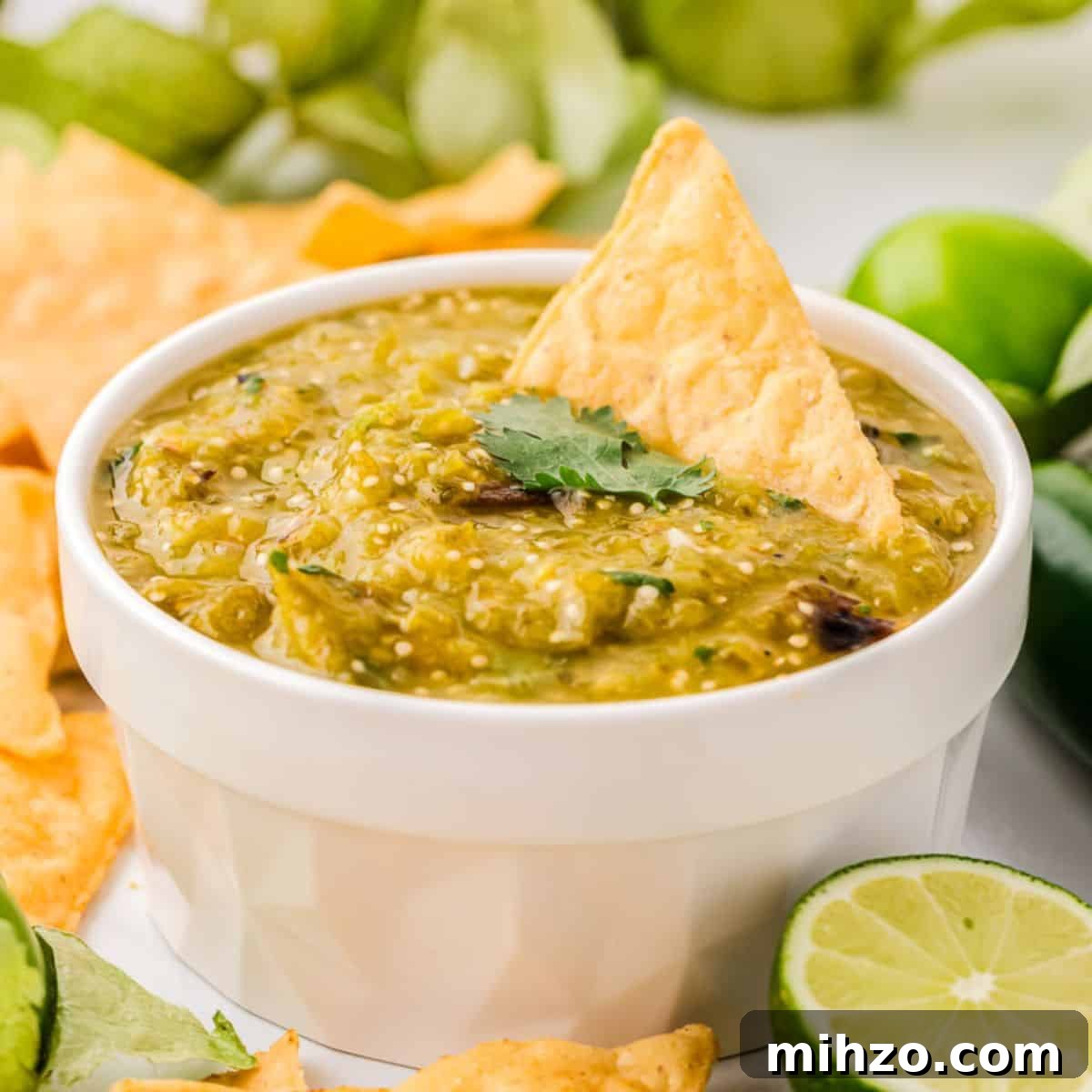
Homemade salsa verde far surpasses store-bought jars. With only six fresh ingredients and minimal effort, you can recreate the bright, tangy green salsa you enjoy at Mexican restaurants right at home.
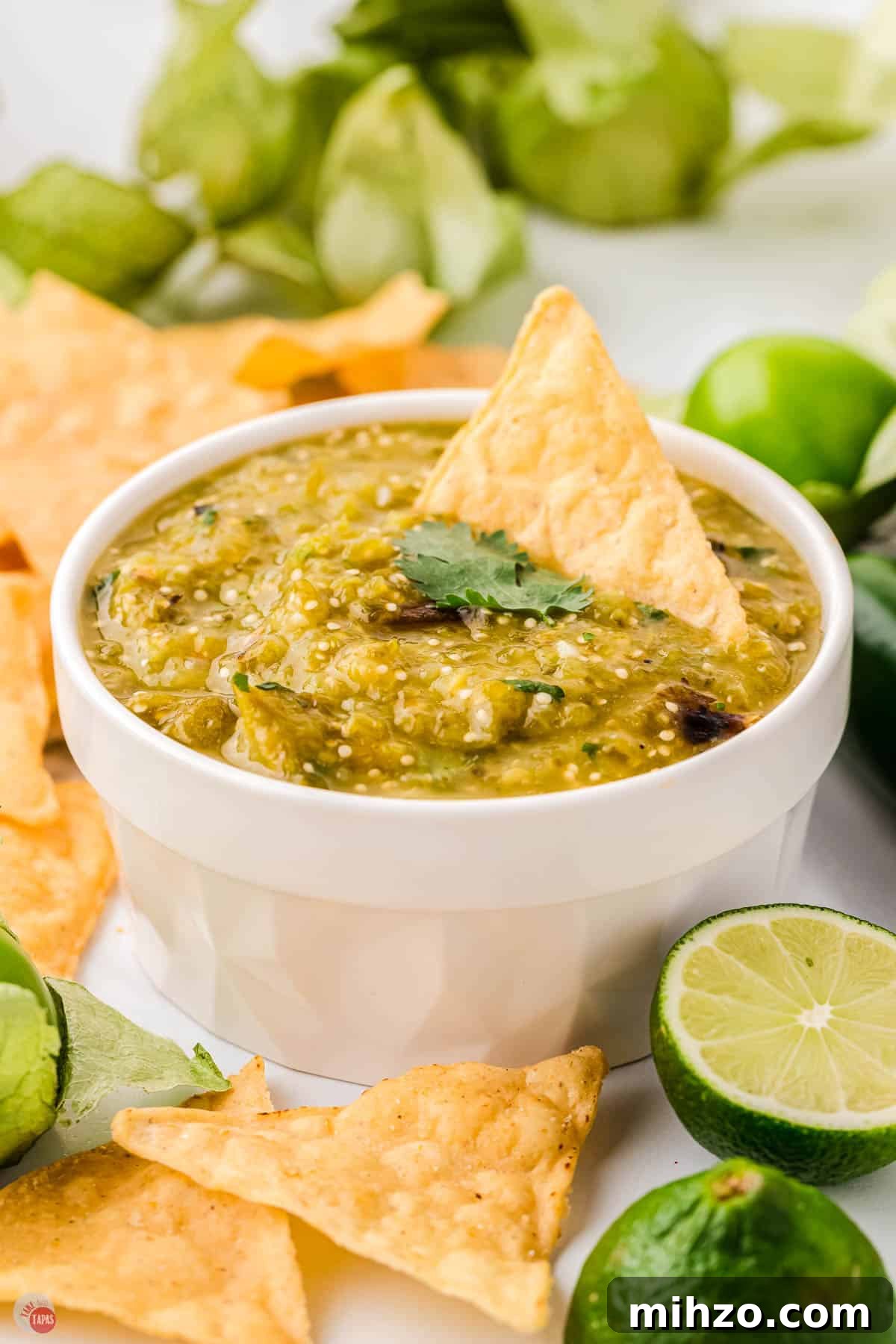
I’ll admit I wasn’t a fan of salsa verde as a child — it seemed tart and unfamiliar. Over time my palate changed, and after tasting my mother-in-law’s version, I became hooked.
This recipe is a tribute to her. While traditional tomatillo salsa often uses raw tomatillos, I roast mine briefly to bring a subtle smoky depth that mellows the acidity and adds complexity.
Roasting makes a noticeable difference. Before we dive into the recipe, let’s clarify what sets salsa verde apart from regular red salsa.
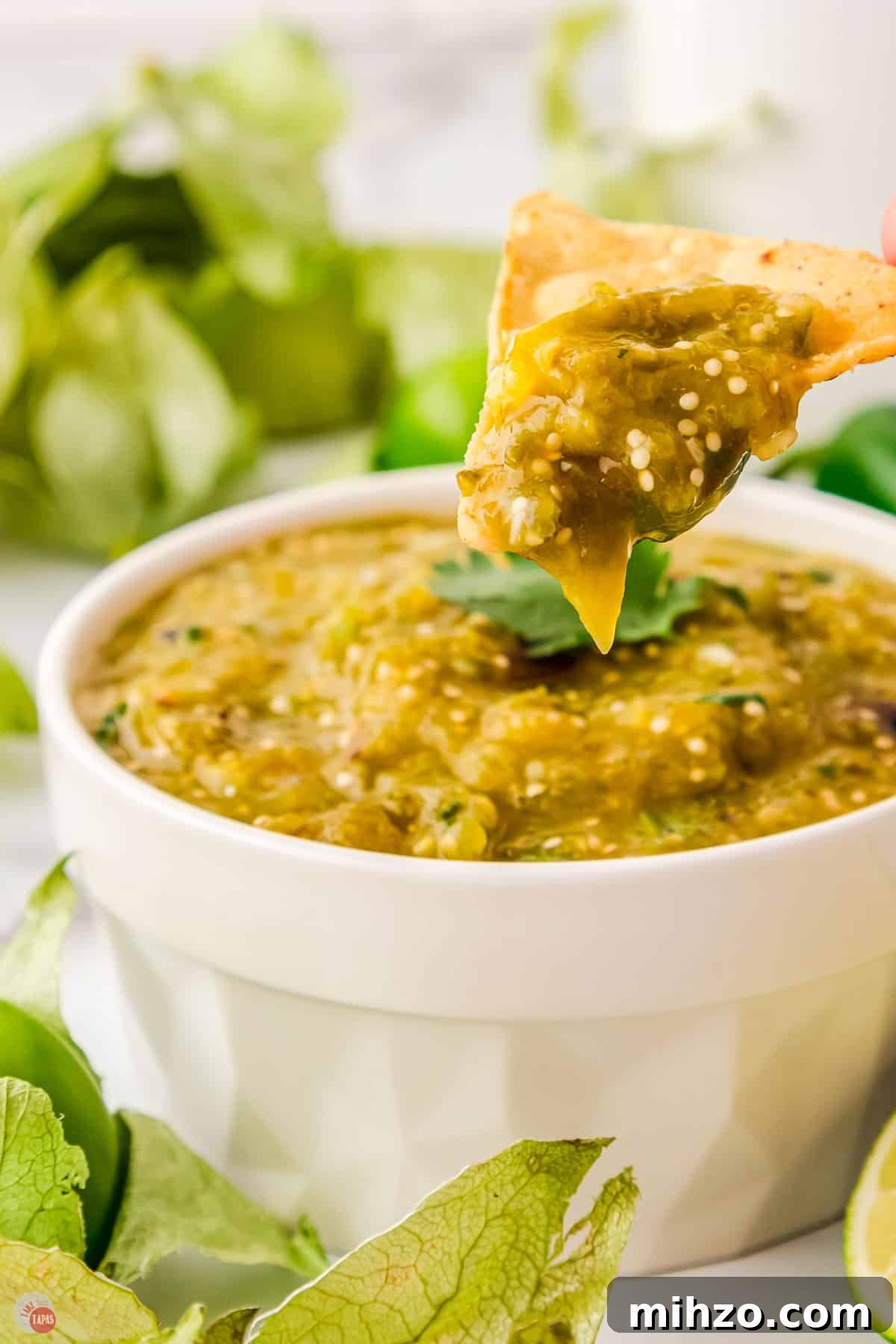
Salsa vs Salsa Verde
Red salsa (salsa roja) is tomato-based, while salsa verde uses green tomatillos as its foundation. Tomatillos look like small green tomatoes but remain green as they ripen and have a distinctive tang.
You can make a green tomato salsa, but tomatillos are more commonly available and yield the classic flavor associated with salsa verde. Besides the main fruit, both green and red salsas share similar supporting ingredients like onion, garlic, chili, cilantro, lime, and salt.
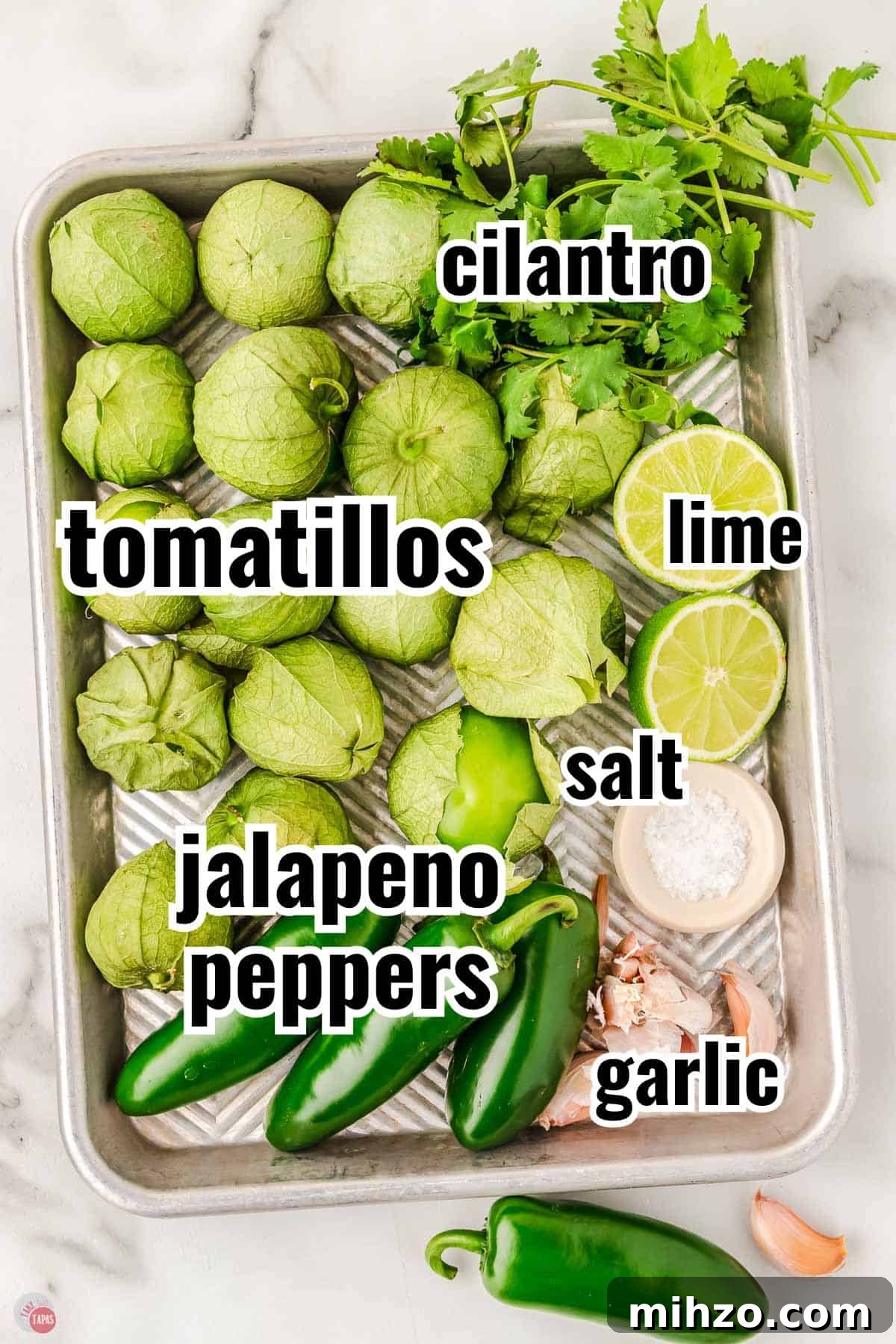
Ingredient Notes
Tomatillos – Choose firm, round tomatillos. Remove the papery husks and rinse away the sticky residue before using.
Onion – A small white onion works best for a clean, sharp flavor; yellow onion is an acceptable substitute.
Jalapeño – Fresh jalapeños provide balanced heat. Swap in serrano peppers for more intensity.
Garlic – Fresh garlic delivers the brightest flavor; garlic powder can be used in a pinch.
Cilantro – Use fresh cilantro leaves and tender stems for that classic herbaceous note.
Lime – Fresh lime juice brightens and balances the salsa — avoid bottled if possible.
This post may contain affiliate links. As an Amazon Associate, I earn from qualifying purchases at no additional cost to you.
How to make Salsa Verde
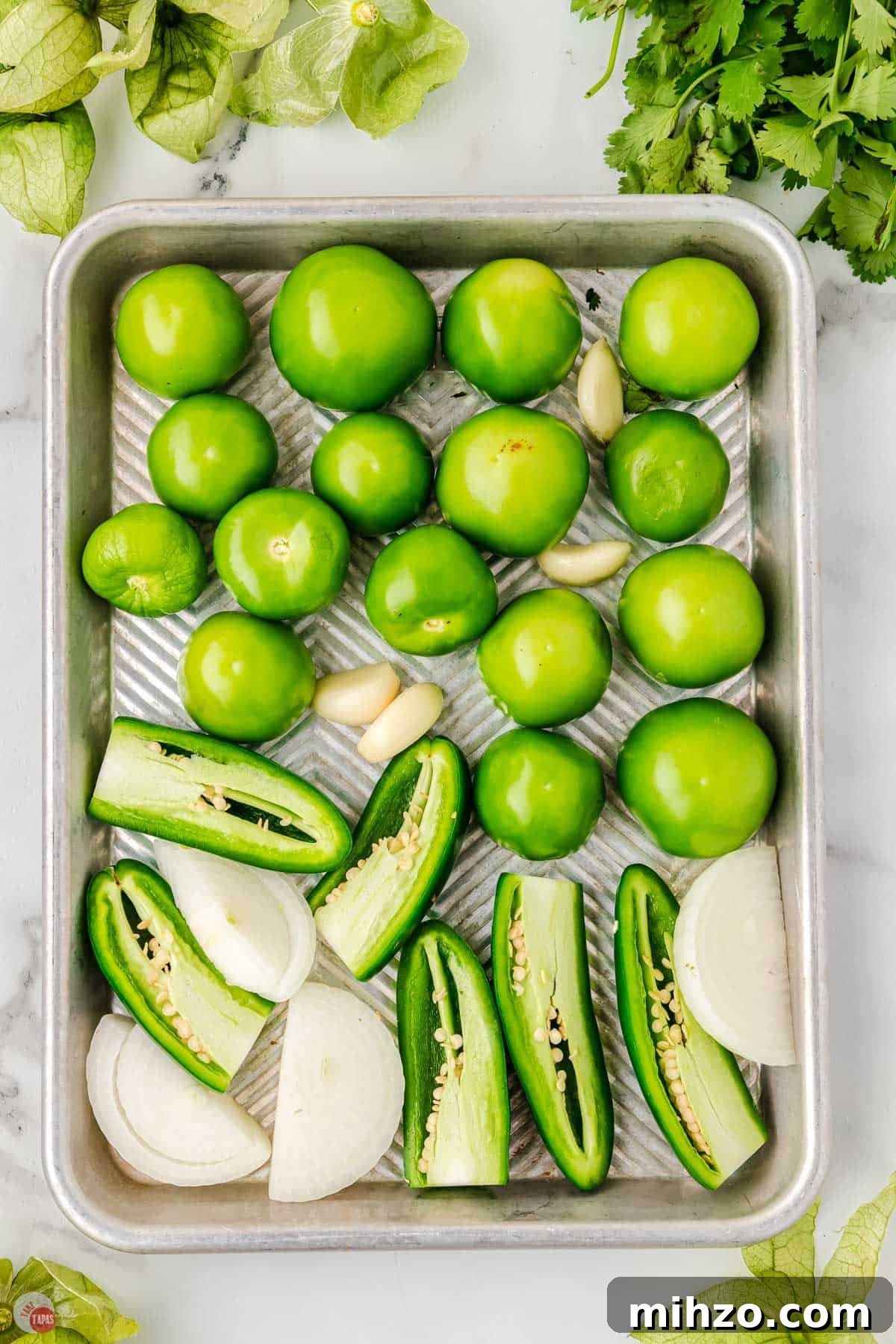
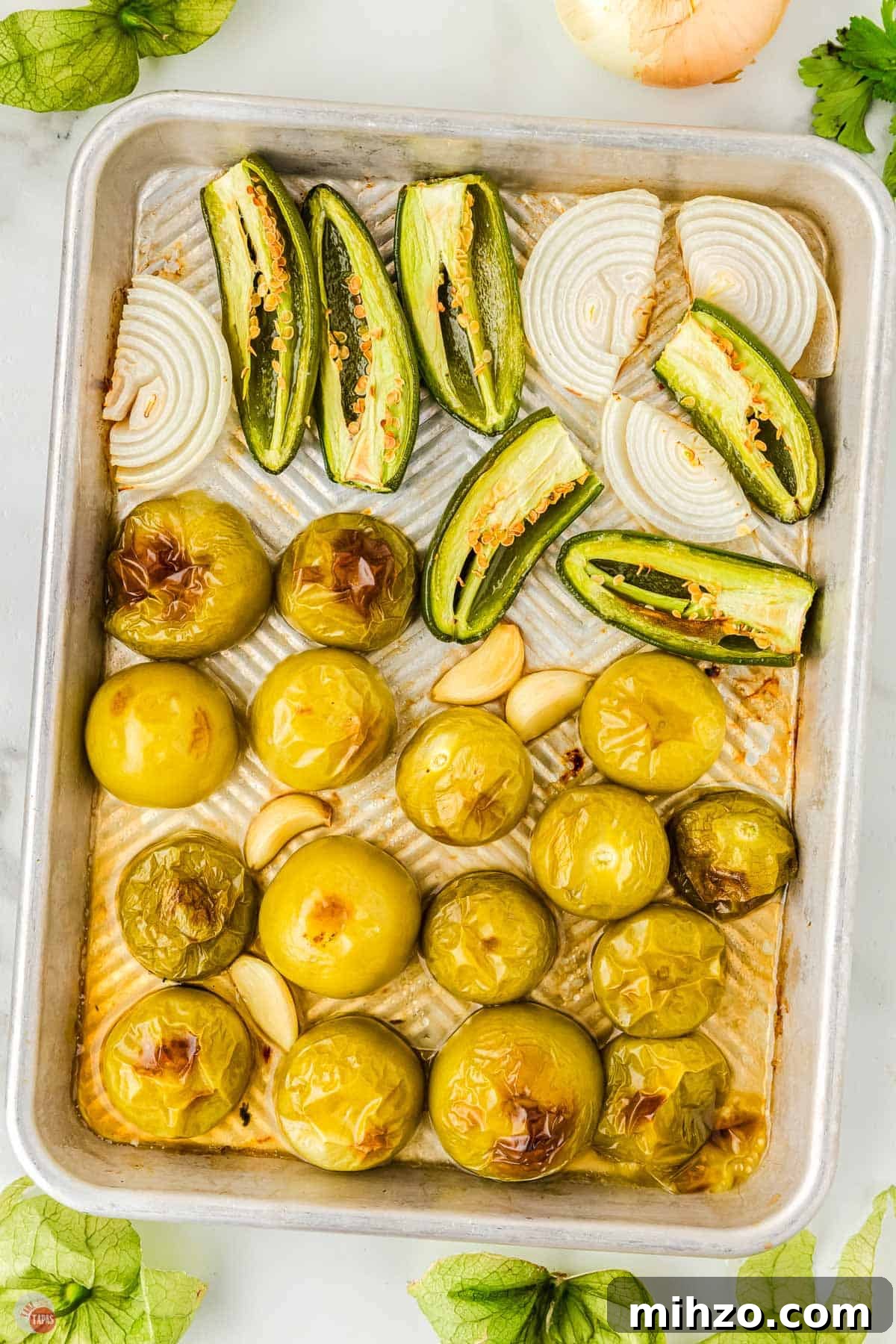
First: Preheat the oven to broil. Arrange rinsed tomatillos (husks removed), onion, garlic, and jalapeño on a rimmed baking sheet. Broil or roast until the vegetables brown slightly and become tender, then remove from the oven.
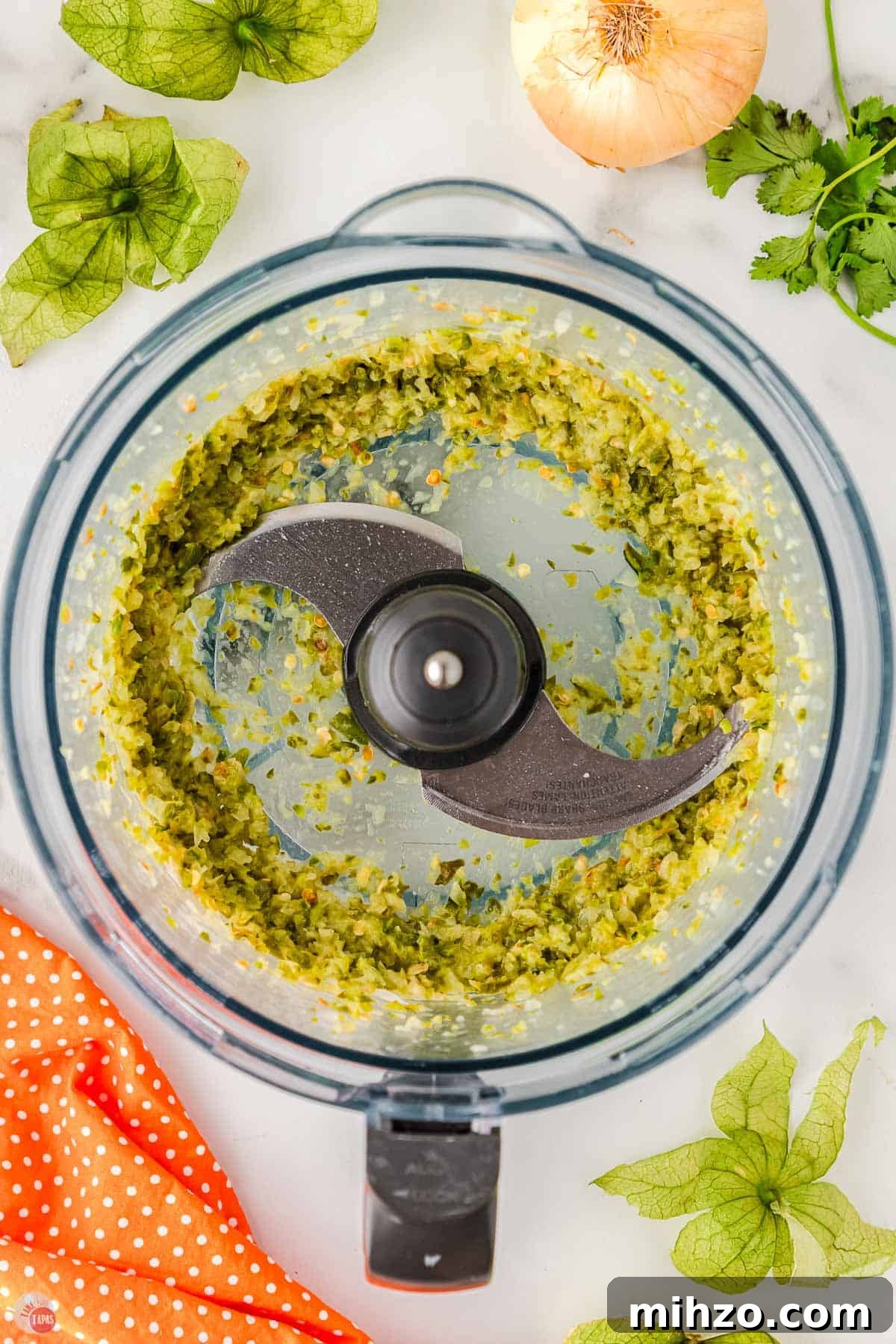
Second: Add the roasted onion, jalapeño, garlic, and cilantro to a food processor or blender. Pulse until the ingredients are finely chopped.
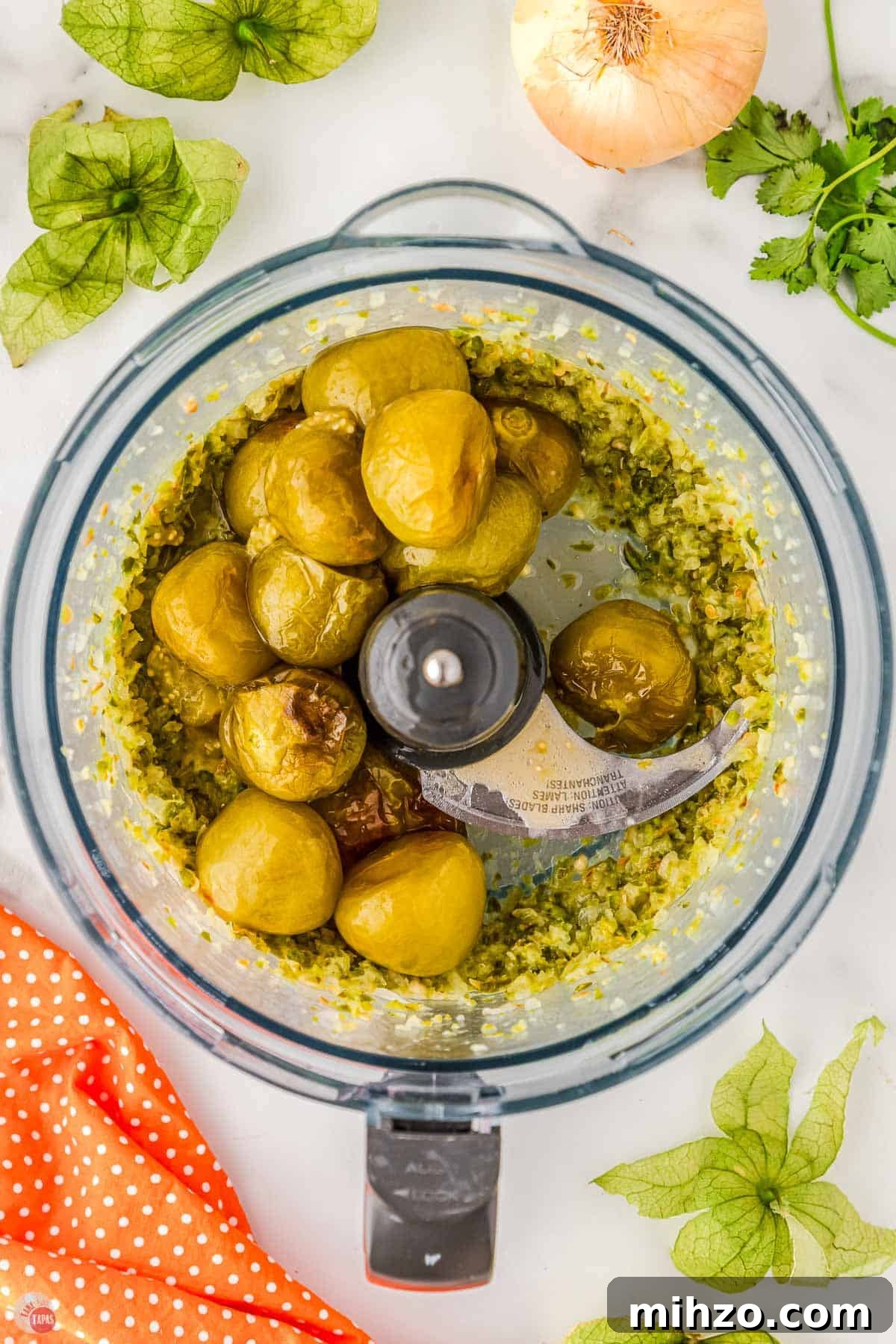
Third: Add the roasted tomatillos and pulse until you reach your desired consistency — chunky or smooth.
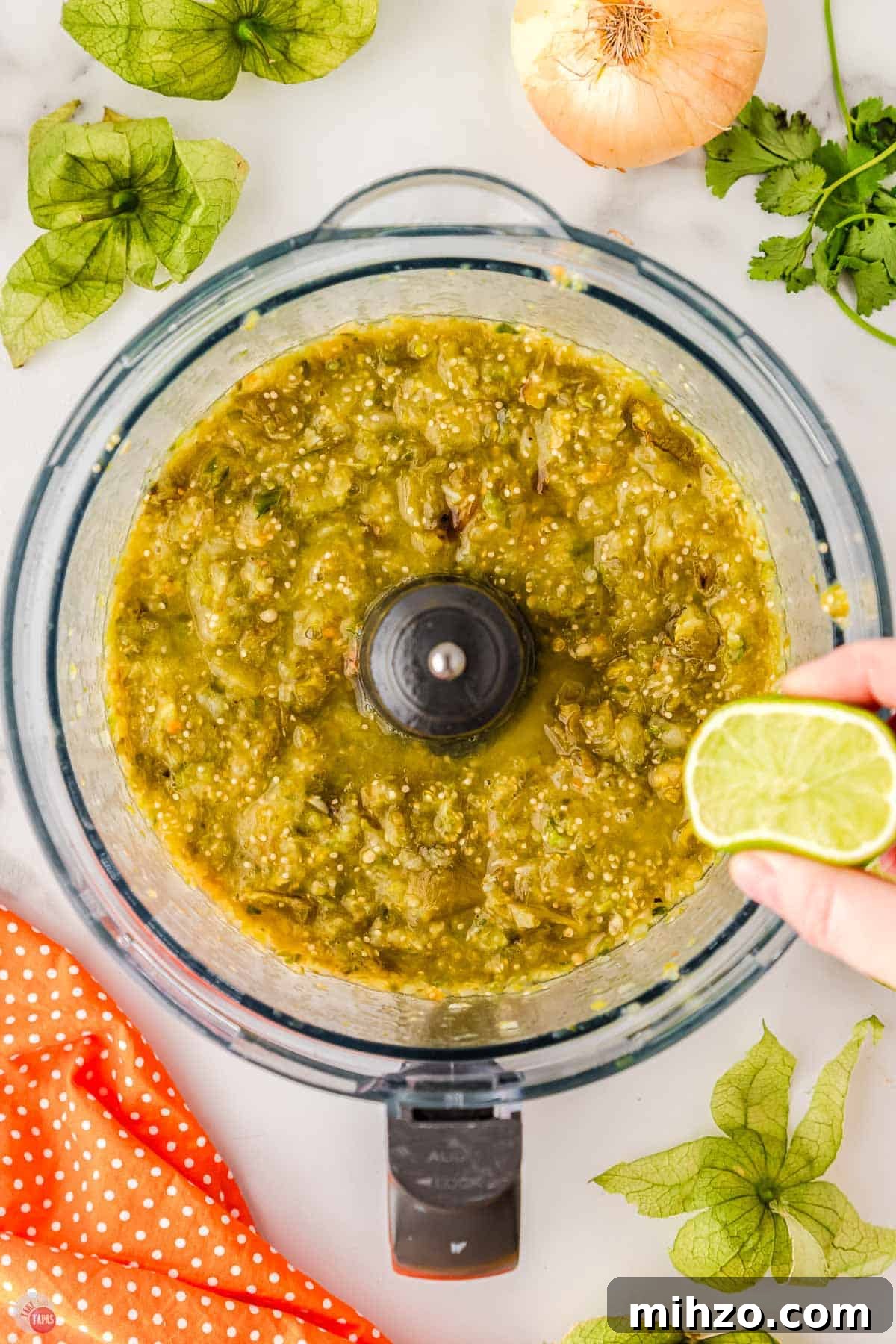
Fourth: Season with salt and squeeze in fresh lime juice. Pulse once or twice more, taste, and adjust seasoning.
For the full recipe card, ingredient amounts, and nutrition information, see the recipe section below.
How long does it last?
Store salsa verde in an airtight container in the refrigerator for up to 5 days. Keep it chilled to preserve the fresh flavor and texture.
Can I freeze it?
Yes. Freeze in a freezer-safe container or bag for up to 6 months. Note that thawed salsa may be slightly watery; it still works well as a sauce for soups, enchiladas, or blended into a creamy dressing with avocado or sour cream.
Uses for Salsa Verde
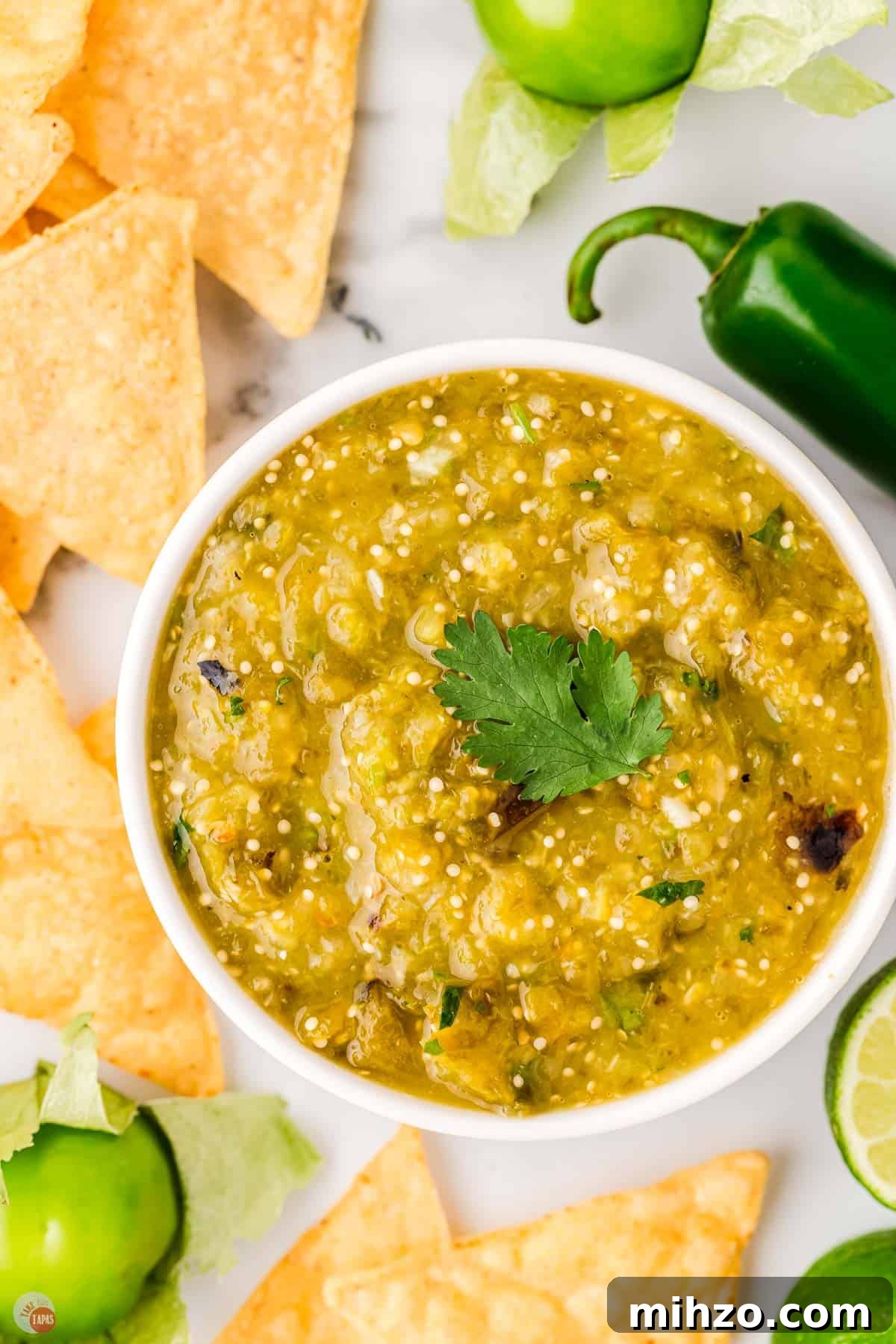
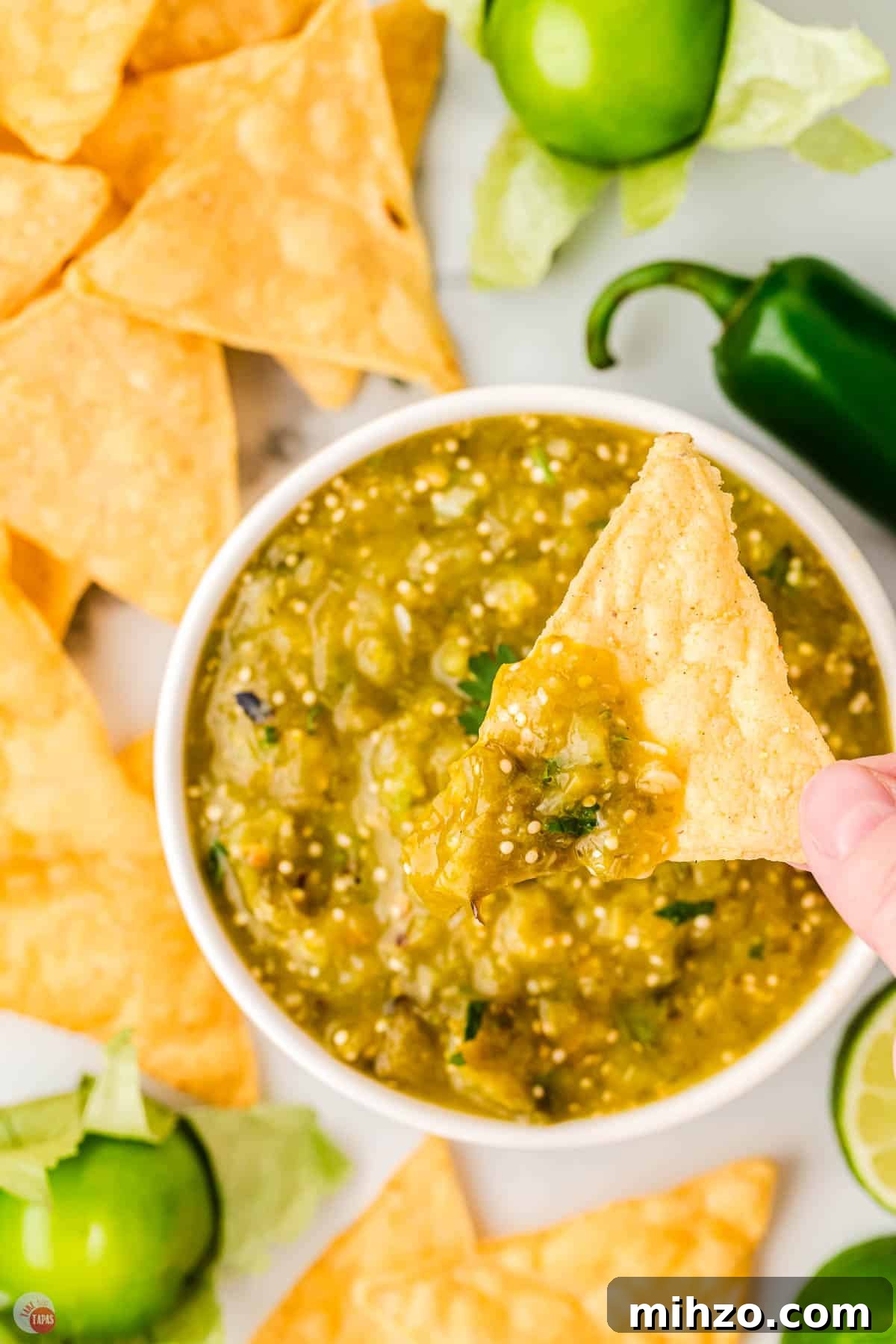
Salsa verde is incredibly versatile. Serve it with crispy tortilla chips, spoon it over tacos, burritos, nachos, enchiladas, or use it as a vibrant topping for grilled chicken, steak, or pork.
It also makes a great addition to burrito bowls, walking taco toppings, or as a flavorful dip for a quesadilla ring. Mix with crema or avocado for a creamy green sauce.
Other Mexican Food Favorites
If you love Mexican flavors, try this salsa with chimichangas, quesos, or fresh pico de gallo. Fruit salsas, like pineapple-mango or a cinnamon-sugar fruit salsa, also offer fun contrasts to savory dishes.
How to Pick the Best Tomatillos
- Choose firm tomatillos with bright green color; avoid soft, shriveled, or spotted fruit.
- Prefer medium to large tomatillos — smaller ones can be seedier and less meaty.
- Look for an intact, fresh papery husk that isn’t dried out.
- Pick tomatillos that feel heavy for their size; they usually have denser flesh and fewer seeds.
- Tomatillos are at their best in summer, when flavor is most pronounced.
- A slight sticky residue on the husk is normal; just rinse the fruit and dry before roasting.
- If the taste is very sharp and lemon-like, the tomatillo is less ripe; a slightly sweet, tomato-like flavor indicates ripeness.
Can you eat raw tomatillos?
Yes. Raw tomatillos can be used in salsa if you enjoy a brighter, sharper flavor. Roasting, boiling, or frying reduces acidity and softens the flavor, but raw tomatillos are perfectly fine for a more tart salsa verde.
What’s the difference between green sauce and salsa verde?
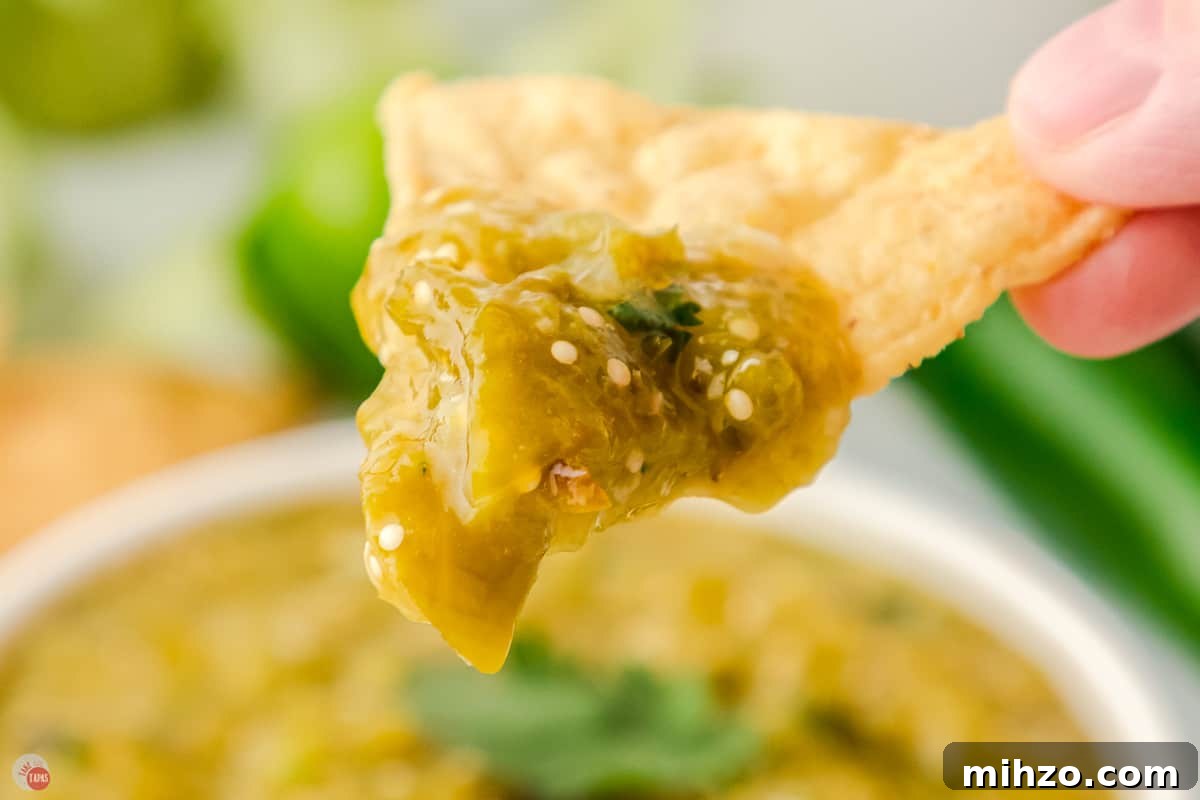
Green sauce often refers to a cooked enchilada-style sauce made from tomatillos that are boiled and blended with water or broth to a saucy consistency. Salsa verde is typically made from fresh or roasted ingredients, served as a condiment or dip. You can also make a creamy salsa verde by blending in sour cream or avocado.
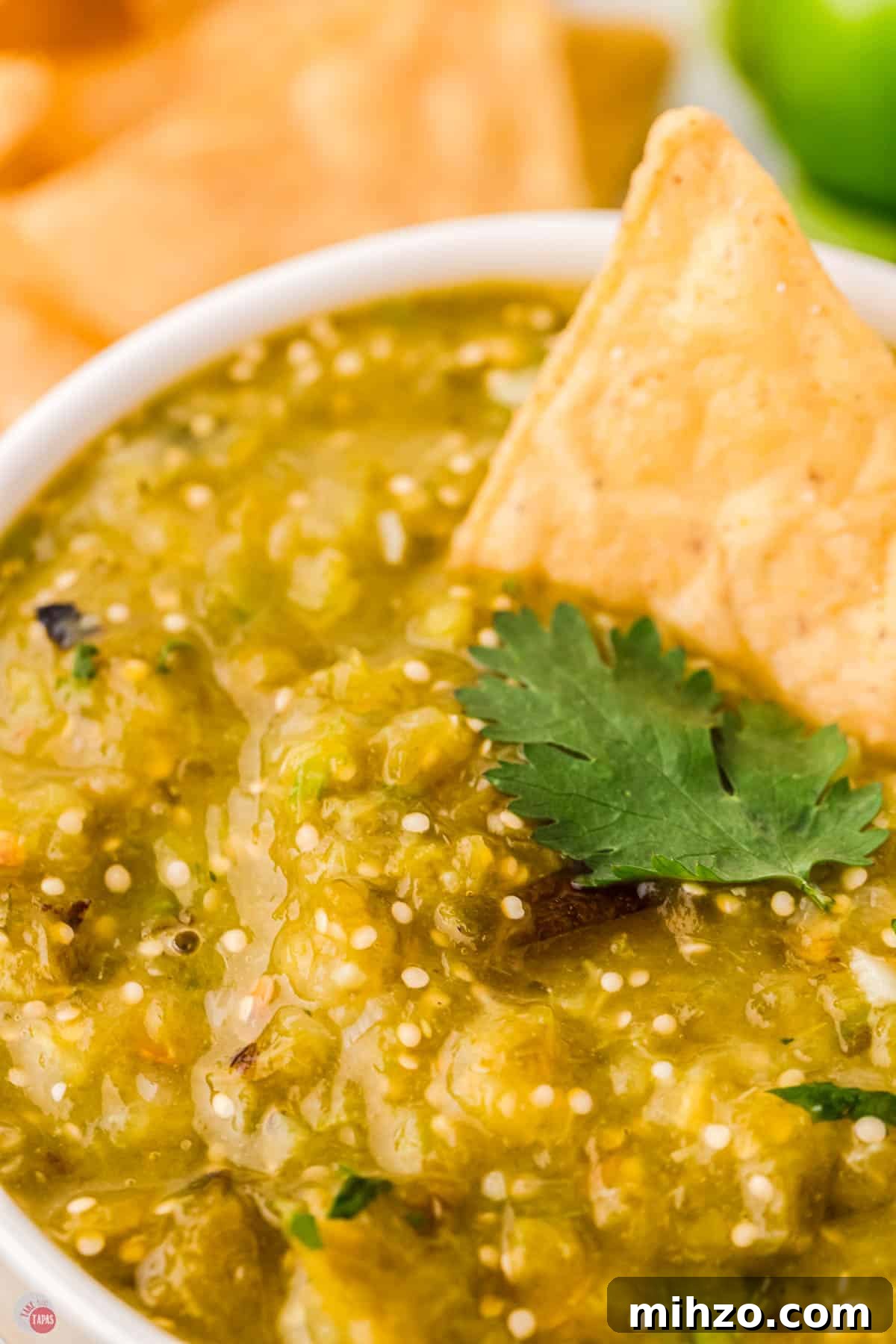
Tapas Tips & Tricks
- Use firm, in-season tomatillos for the best flavor.
- Roast dry or toss with a little olive oil if needed for browning.
- Let roasted ingredients cool to room temperature before blending to avoid splatters.
- Pulse onions, garlic, jalapeño, and cilantro first, then add tomatillos — they’re soft and can be over-processed if added too early.
- For extra heat, include serrano or habanero peppers or a pinch of your favorite chili seasoning.
If you enjoy this recipe, please leave a five-star review in the comments — thank you!
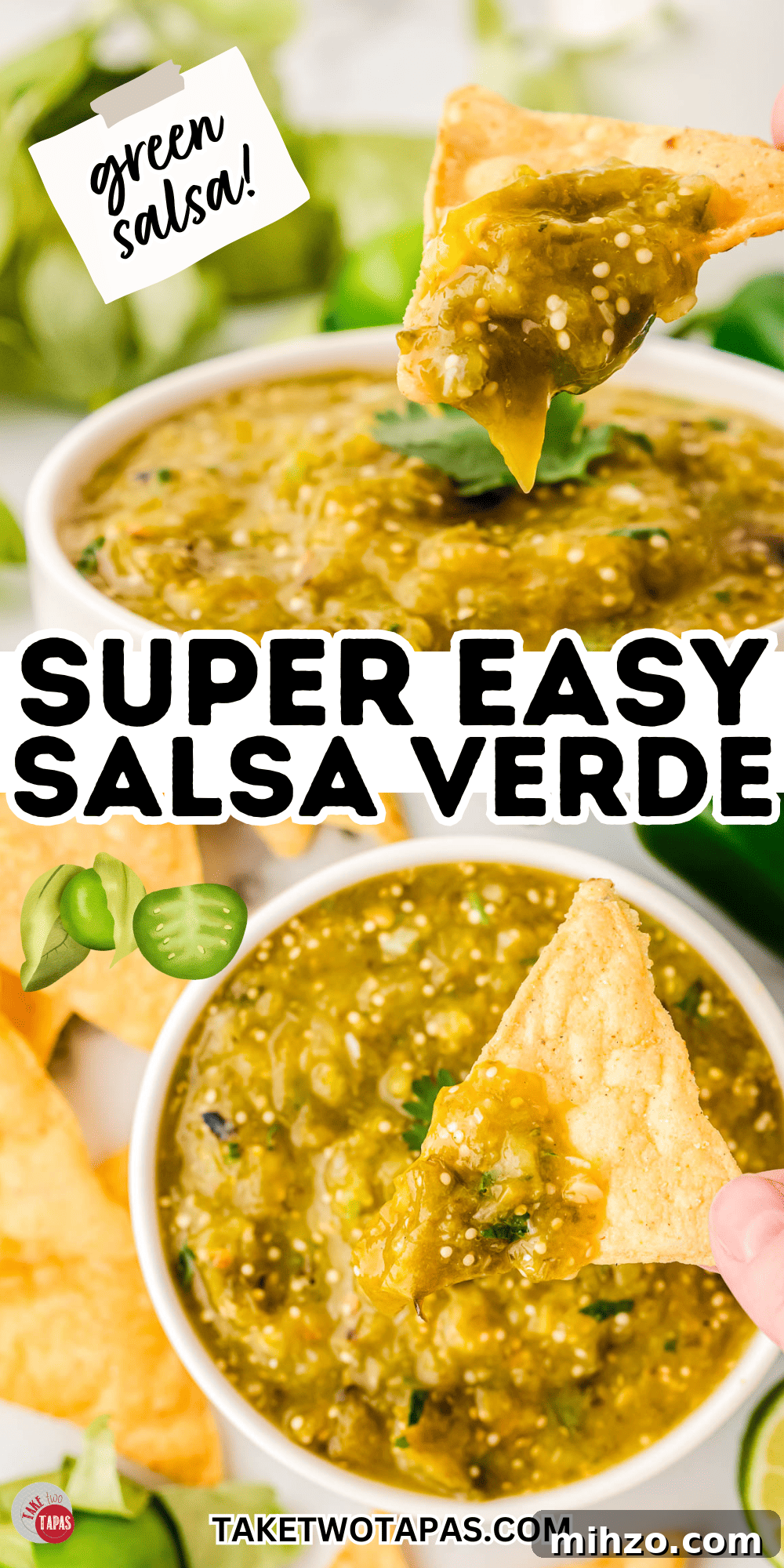
This roasted tomatillo salsa is perfect for snacks, parties, and celebrations like Cinco de Mayo.
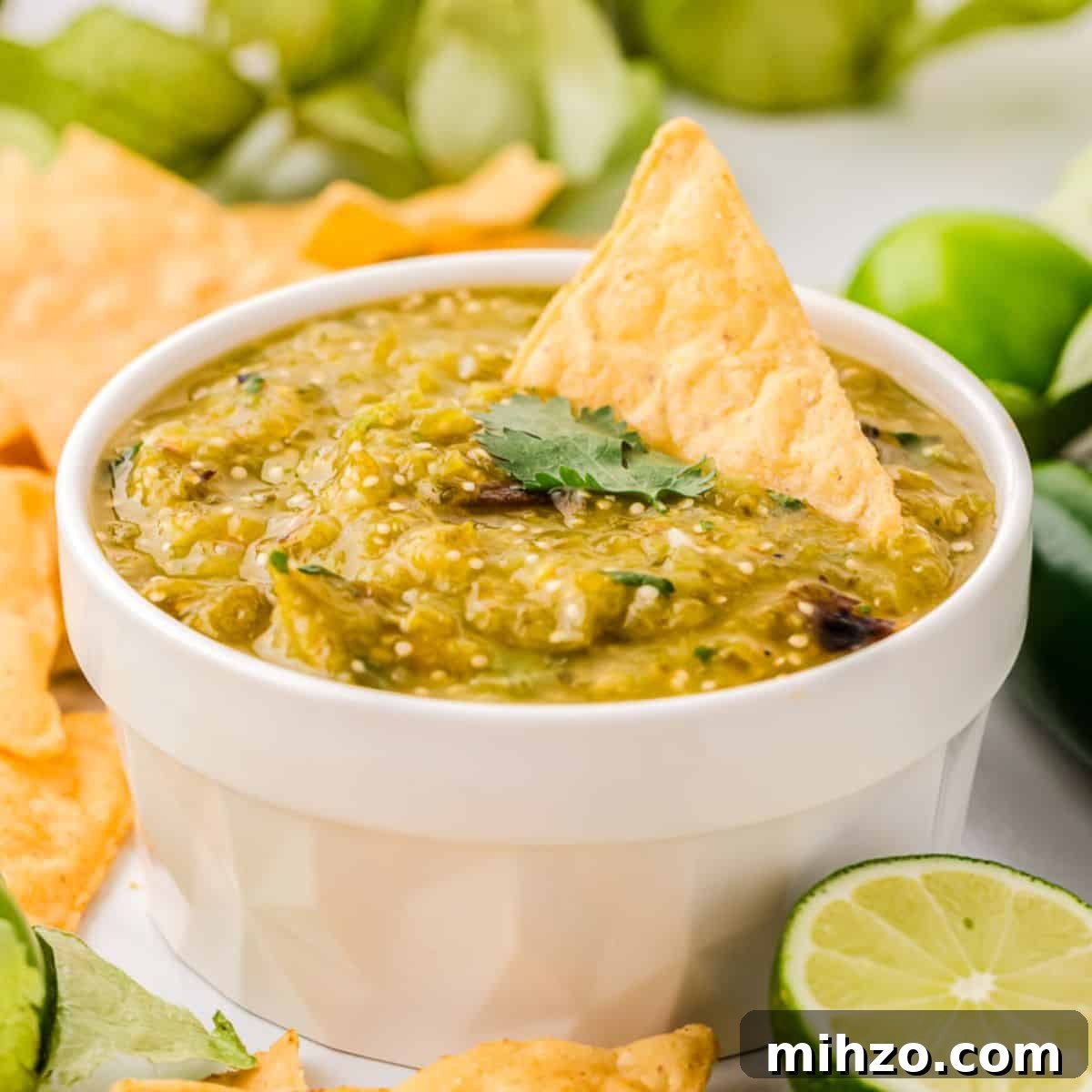
Salsa Verde Recipe
Equipment
-
Food processor or blender (10-cup recommended)
-
Rimmed baking sheet
Ingredients
- 1.5 pounds tomatillos about 10–12 medium, husks removed and rinsed
- 1/2 cup cilantro
- 1 small white onion
- 3 jalapeños
- juice of 1 lime
- salt to taste
- 4 cloves garlic
Instructions
-
Broil or roast tomatillos, onion, garlic, and jalapeño on a baking sheet until they brown and soften. Remove from oven and let cool slightly.
-
Place onion, jalapeño, garlic, and cilantro in a food processor or blender and pulse until finely chopped.
-
Add the roasted tomatillos and pulse until the salsa reaches your preferred texture.
-
Season with salt and lime juice, pulse once or twice, then taste and adjust seasoning as needed.
-
Serve immediately or chill for a fresher, slightly milder flavor.
Notes
- Choose firm tomatillos in season for best flavor.
- Roast them dry or with a light drizzle of olive oil to promote browning.
- Let roasted ingredients cool to room temperature before processing to avoid splatters.
- Pulse the larger ingredients first, then add tomatillos — they’re softer and can be overworked.
- For more heat, use serrano or habanero peppers.
Nutrition
{Originally published 2/27/20 – photos and recipe notes updated 02/23/24}
©TakeTwoTapas.com. Content and photographs are copyright protected. Sharing this recipe is encouraged and appreciated; copying entire recipes to social media is prohibited.