If the grime behind your oven door makes you wince but the self-clean cycle feels like overkill, you’re not alone. My older oven had a self-clean option I tried once and then avoided for years. It did remove debris, but the intense heat, lingering smells, and the long time commitment put me off.
This guide shows how to steam clean your oven using simple items you likely already have. No harsh chemicals, no extreme temperatures, and no specialized steam setting required — just distilled water, a little time, and some elbow grease.
Why Steam Cleaning Is a Better Alternative to Self-Clean
My double oven is original to the house and the top chamber had accumulated splatters and baked-on messes. I tried the self-clean cycle once: it worked, but the kitchen got very hot, the process took hours, and I didn’t like it. That experience, plus advice from appliance experts, pushed me to try a gentler method.
Steam cleaning is a middle ground: it softens burned-on food using normal baking temperatures and a pan of distilled water, so you can wipe away grime without subjecting the oven to extreme heat. This approach is safe for most older ovens and can be repeated as often as needed.
This method is especially useful if:
- Your oven does not have a built-in steam-clean setting.
- You prefer not to run the self-clean cycle.
- You want a gentle, repeatable cleaning method.
If your oven has a manufacturer steam-clean feature, follow the manual — built-in programs may differ from this technique.
Benefits of steam cleaning:
- Less hands-on scrubbing compared with cleaning a completely dry oven.
- Uses regular baking temperatures (about 450°F) rather than extreme heat.
- Safe to repeat — it’s no harsher than normal cooking heat.
- No harsh or expensive chemical cleaners — just distilled water and baking soda.
Think of it as a long, steamy soak that loosens grime before you scrub.
What You’ll Need
This method requires no specialty tools. The one essential purchase is distilled water.
Distilled water prevents mineral deposits (scale) that tap water can leave behind when boiled. It dries without white streaks or chalky residue. You can find distilled water at most grocery stores and pharmacies.
Basic Supplies
- Distilled water — about 2 cups per steam cycle.
- An oven-safe container — large enough to hold the water well below halfway so it won’t boil over.
- Baking soda — to make a thick paste for stubborn spots.
- Sponge and microfiber cloth — for wiping and scrubbing; old cotton rags are fine for bulky debris.
- Vinegar — for a final wipe to remove any remaining paste or streaks.
Step-by-Step: Prep Your Oven
Before steaming, do a quick tidy so the steam targets baked-on residue instead of loose crumbs. This prep takes only a few minutes.
Remove Racks and Clear Loose Debris
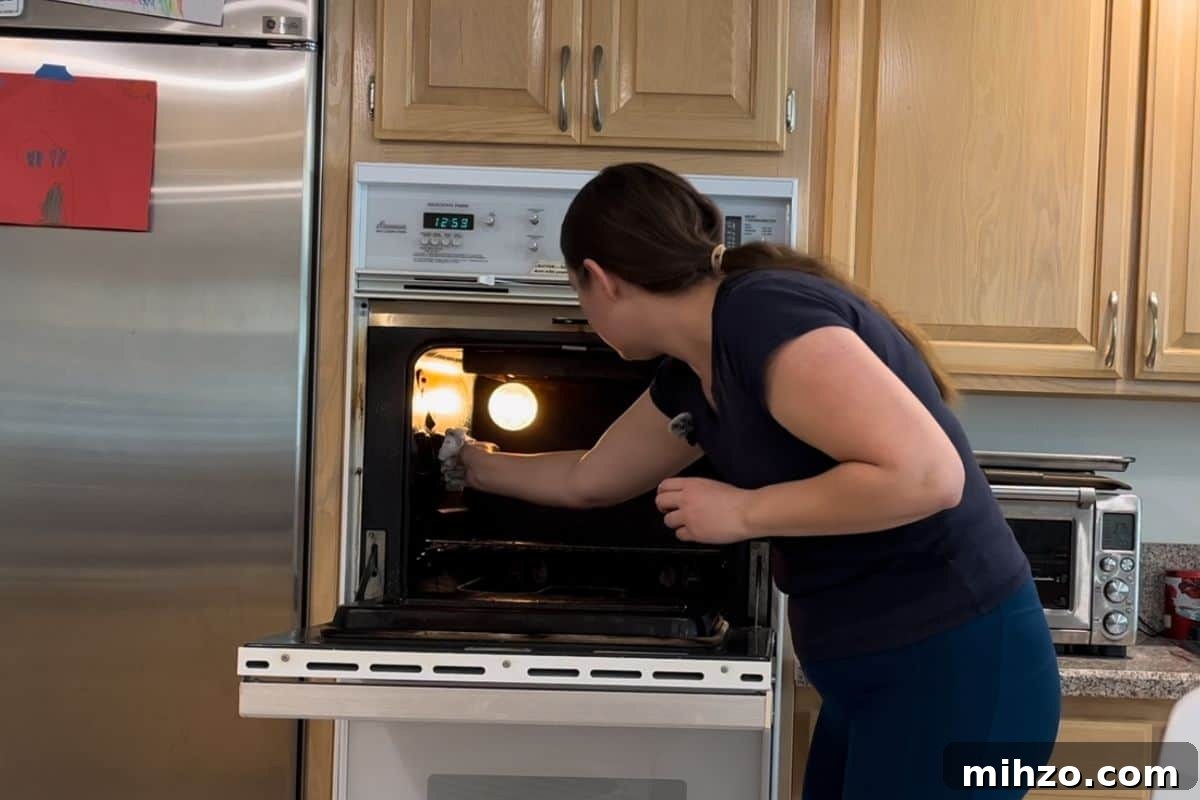
Take out all racks and set them aside. Wipe out large loose pieces with a damp rag or sponge. If your oven has a removable bottom panel, lift it gently only if it comes up without force.
Set Up the Steaming Pan
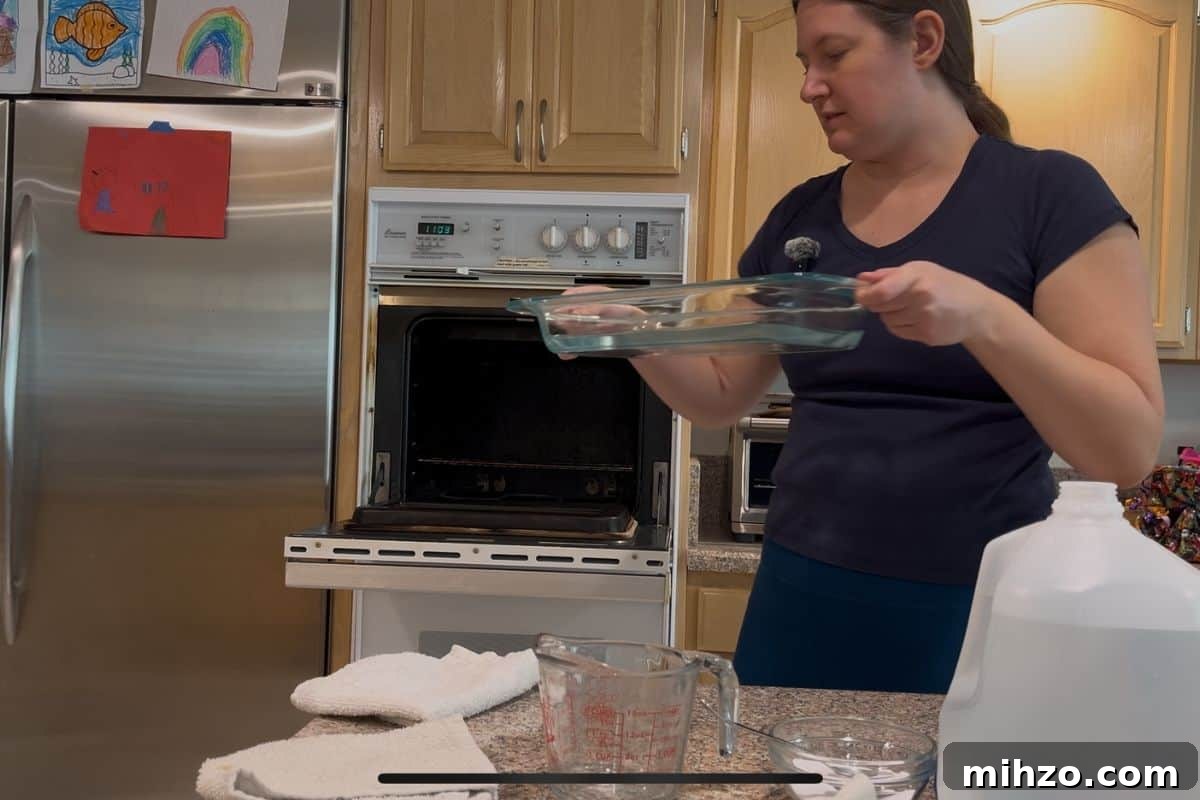
Place one rack back in the lowest position. Pour about 2 cups of distilled water into an oven-safe dish, keeping the level well below halfway. Place the dish on the lowest rack and close the door.
Run the Steam Cycle
The oven will generate steam that softens stuck-on food so it’s easier to remove. Most of the process is waiting for the steam to do its work.
Heat and Steam
Preheat the oven to 450°F. After it reaches temperature, let it run for an additional 15 to 20 minutes. The water will steam and loosen grime on walls, the floor, and the door. Keep the door closed the entire time.
Cool Down
Turn the oven off and keep the door closed for about 1 hour so the moisture continues to work while it cools to a safe handling temperature. In total, expect roughly 1.5 hours from start to when you can begin scrubbing, depending on preheat time.
Remove the pan carefully with a towel or mitt. If your oven is very dirty, you can repeat the steam cycle before scrubbing to further soften stubborn buildup.
Scrub — It’s Easier After Steaming
Steam does much of the work, but you’ll still need to scrub to remove remaining residue. The grime will be softened and easier to lift.
Baking Soda Paste
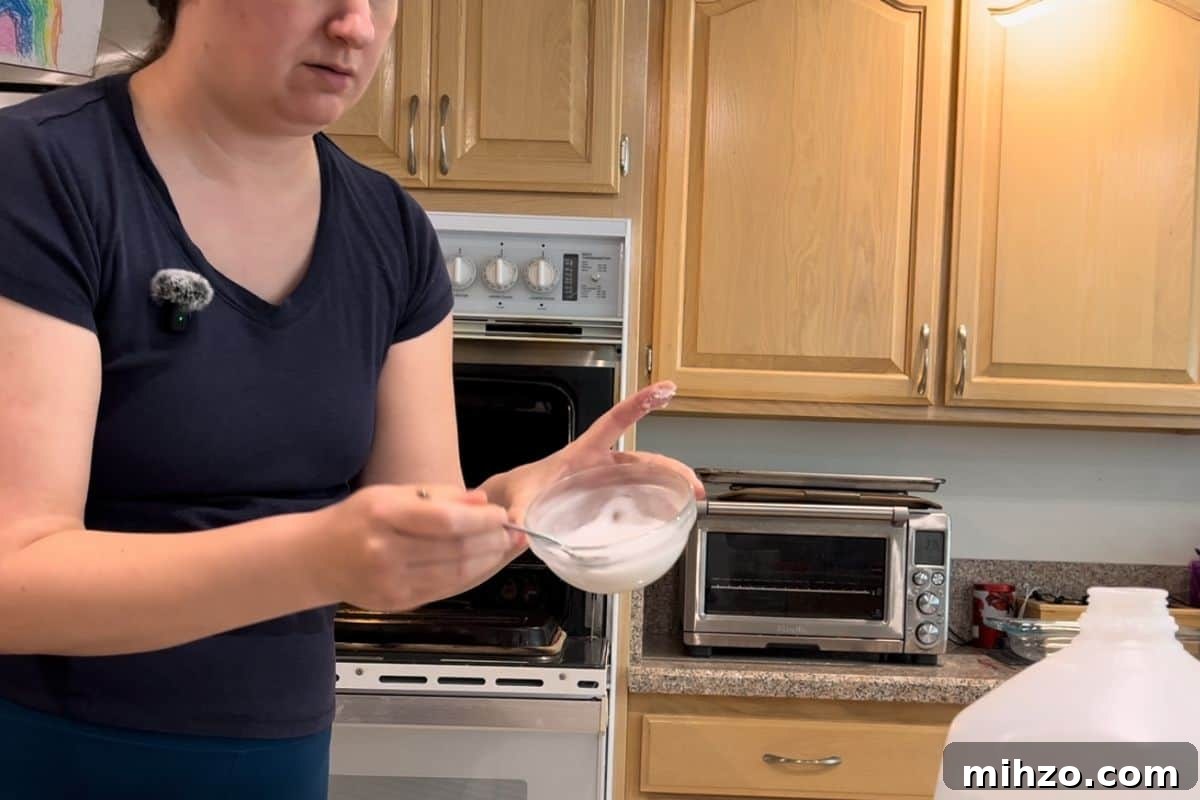
Mix baking soda with a small amount of water until you have a thick, spreadable paste — roughly the consistency of glue with some lumps. Add more baking soda if it’s too thin.
- Make a thick paste that holds its shape on a spoon.
- Spread it on the worst spots: the window, the oven floor, and areas with dark grease or buildup.
- Rub gently with a sponge or rag; the paste’s grit helps lift residue.
Let the paste sit briefly on stubborn areas, then scrub again.
Focus Areas and Safety Tips
Common target areas include the inner door window, the oven floor, and side walls. Be careful around the door gasket and avoid getting gritty paste into hinges or on any exposed sensors. Do not lean your full weight on the open door. Avoid looking directly at bright interior lights while cleaning.
Specks sealed between glass panes in the door usually can’t be removed from inside — that’s normal. If needed, run another steam cycle and spot-treat remaining stains with more paste.
Finish with a Vinegar Wipe
Wipe away as much paste as possible with a damp rag, rinsing and wringing frequently. If white residue or streaks remain, lightly dampen a microfiber cloth with vinegar and wipe surfaces — vinegar dissolves leftover baking soda and any fresh hard-water marks from rinsing.
Vinegar is food-safe in small amounts and helps remove chalky streaks. Clean up any dried bits that fall onto the floor with a quick sweep or vacuum.
Before and After: Real Results
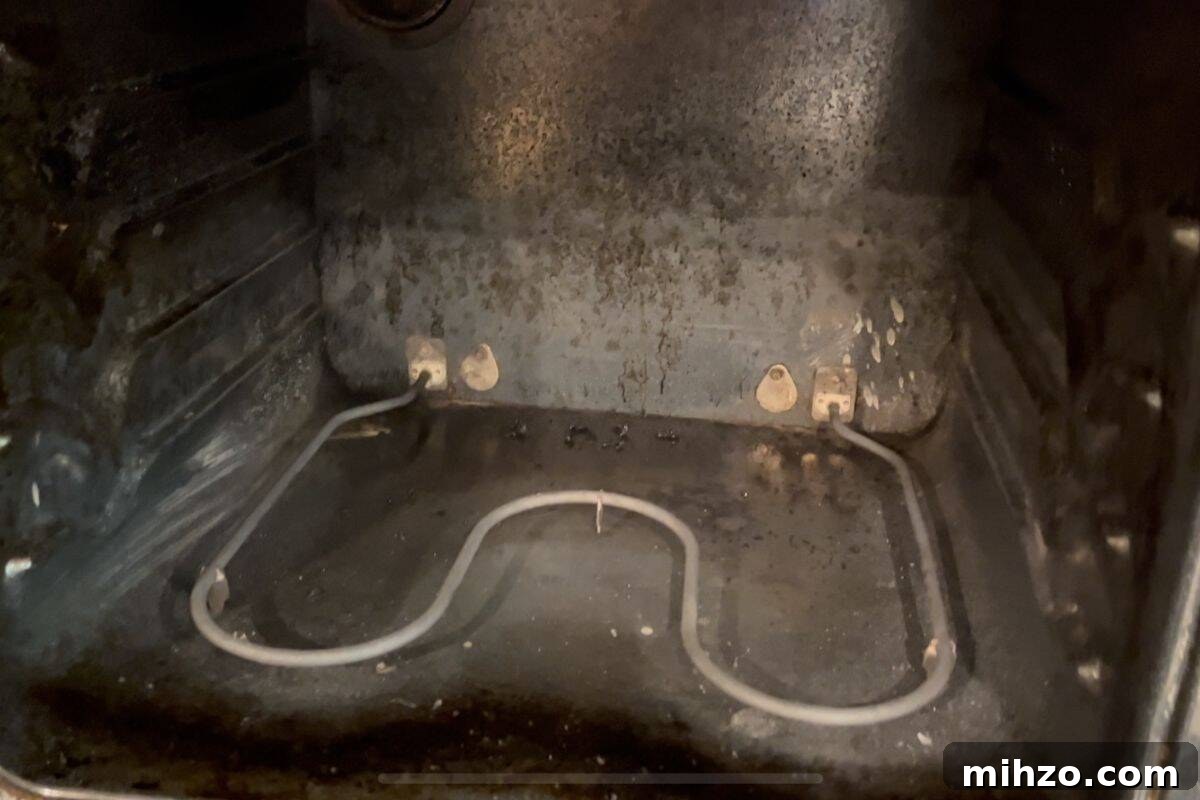
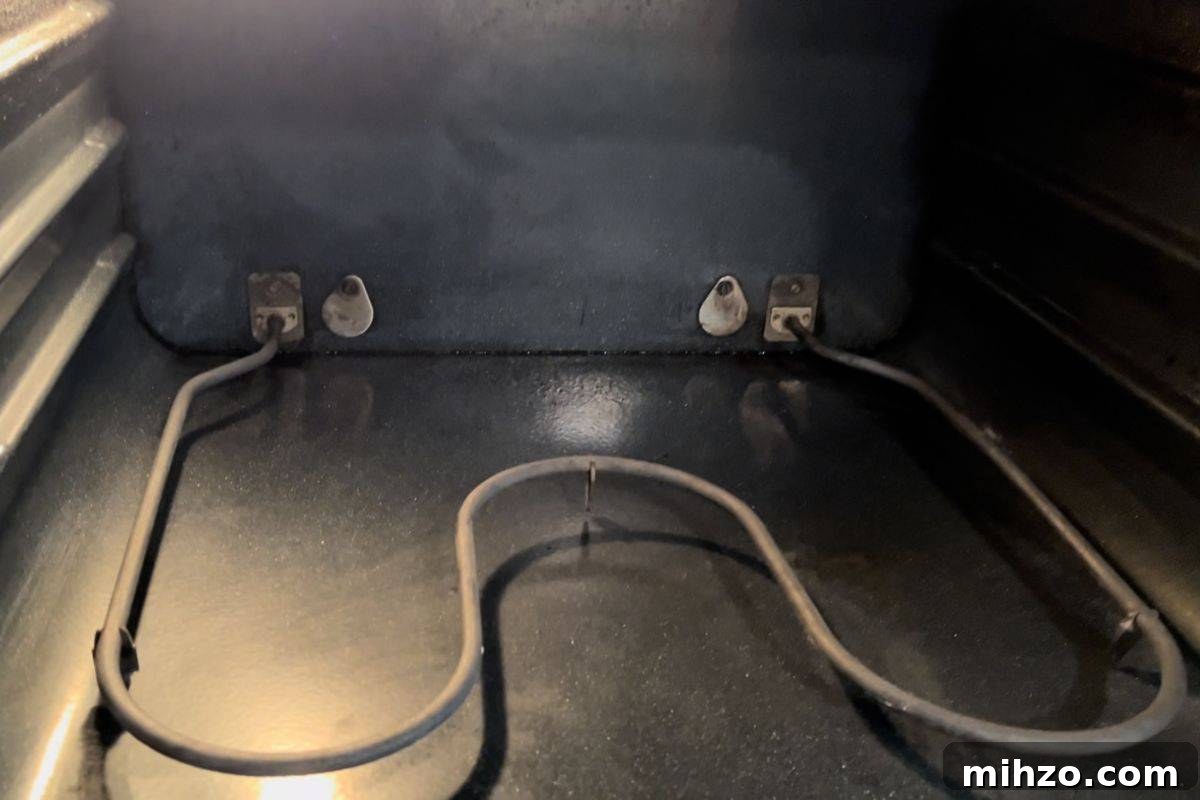
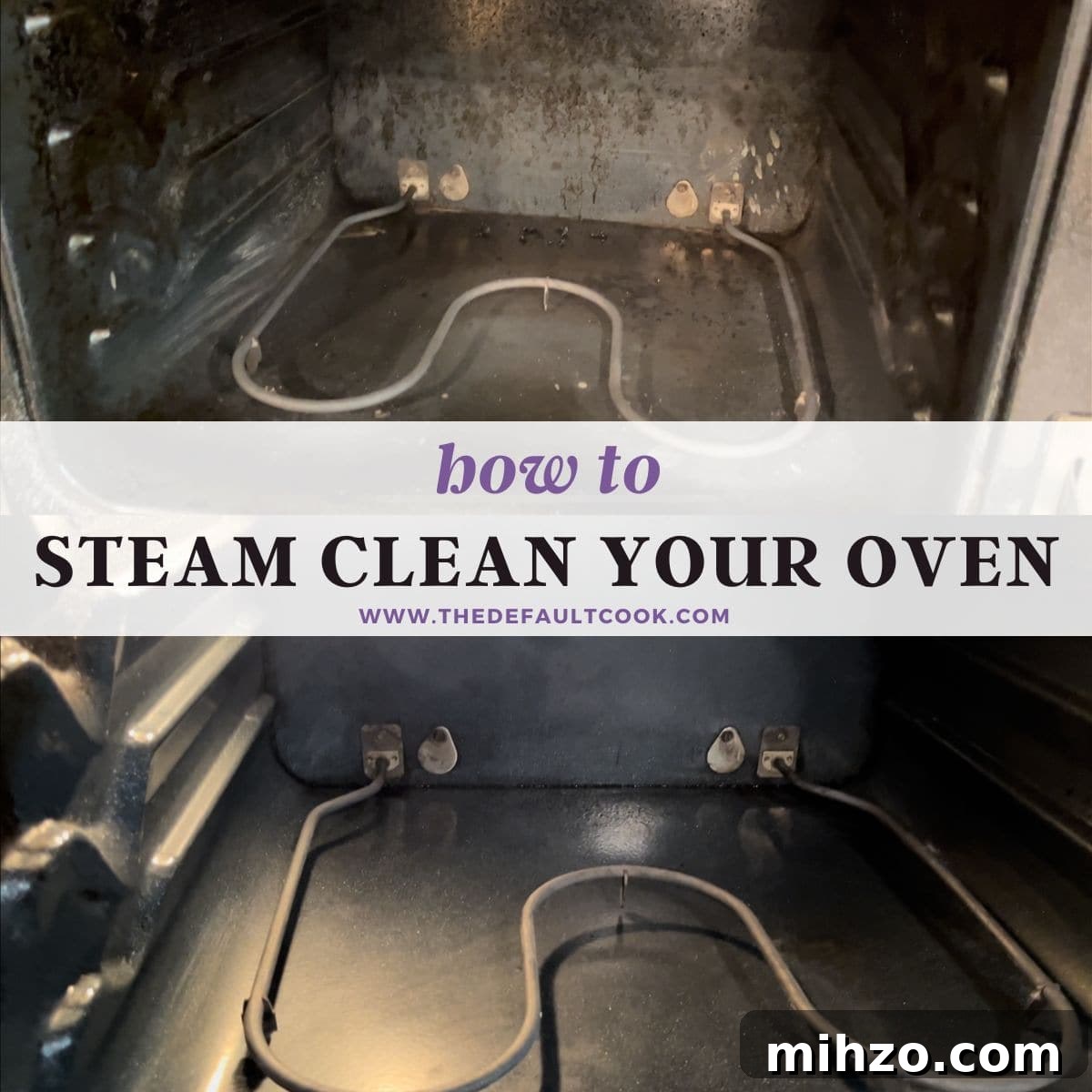
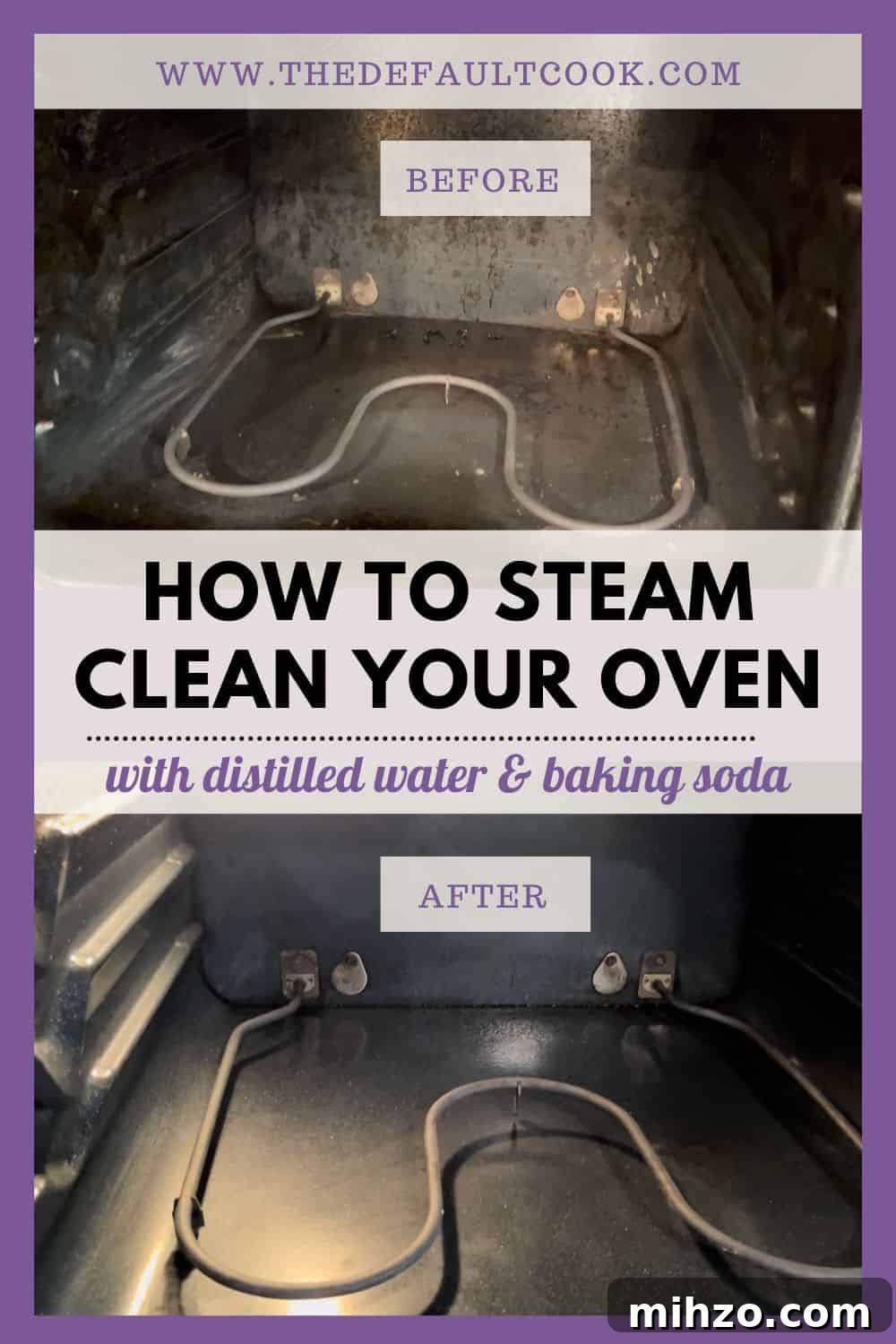
After one steam cycle and a solid scrub, the oven looked much better — not perfect, but fully usable and pleasant. Some baked-on spots and specks between door panes remained, but the main cooking area and window were dramatically improved without long periods of excessive heat.
See the Transformation
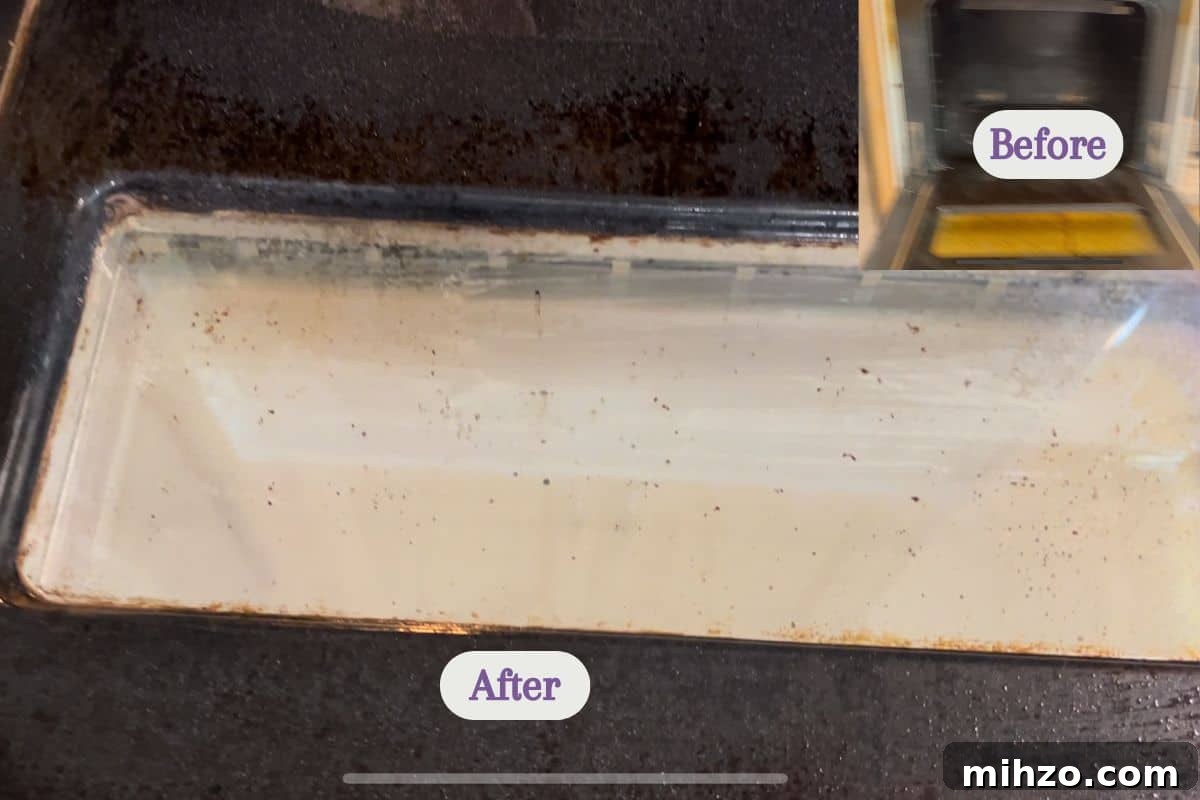
The window cleared up the most for me — I could actually see through to the racks again. Bottom and walls were much cleaner and felt smooth. For a deeper clean, repeat the cycle and target remaining spots with more baking soda paste.
Routine Maintenance
Make steam cleaning routine rather than a rare overhaul. Suggestions:
- Once a year for light use.
- Twice a year for frequent cooking or baking.
- One extra session before big holidays like Thanksgiving.
Frequent light maintenance reduces the effort needed each time: a single steam cycle, a quick baking soda touch-up on small spills, then wipe it clean.
A Cleaner Oven Without the Stress
Steam cleaning gives you a cleaner oven without the noise, intense heat, or worry of the self-clean cycle. Use distilled water and a baking dish to generate steam, follow up with baking soda paste and a vinegar wipe, and you’ll get a significantly cleaner oven that continues to improve with each session.
If you’re facing a grimy oven right now, consider this an easy, low-stress way to restore it to comfortable, safer cooking condition. You’ve got this.