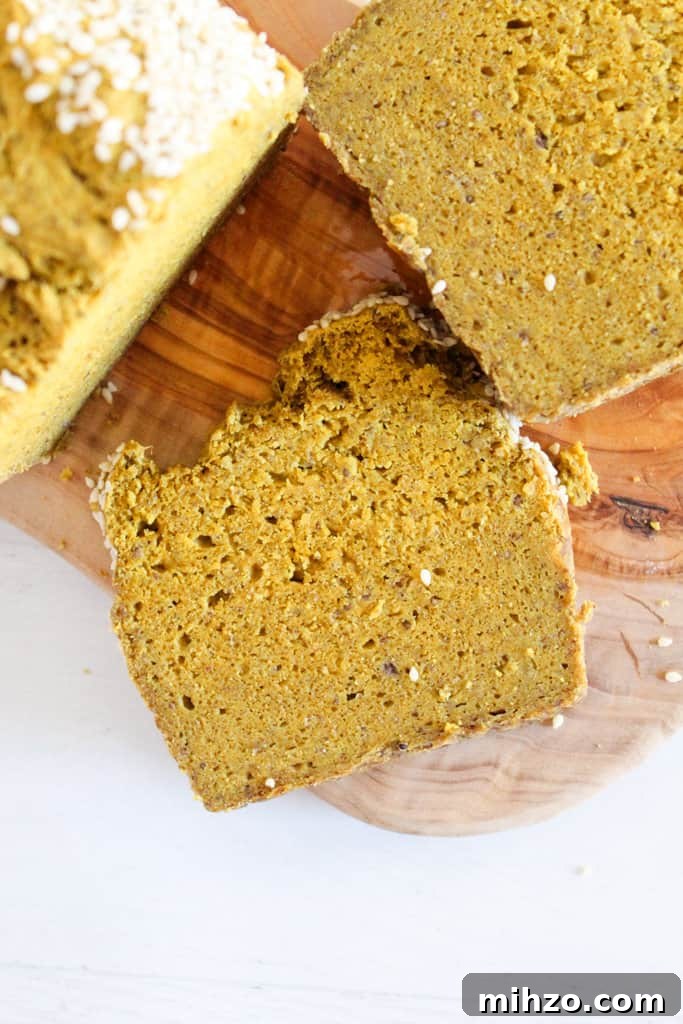
Gluten-free bread often feels complicated—long rises, special binders, or a mixer just to get one loaf. This chia seed bread keeps things straightforward: no yeast, no kneading, no dairy, no eggs, and no xanthan gum, guar gum, or psyllium husk.
Ground chia seeds form a thick gel that binds the loaf, while buckwheat flour gives it a hearty, nutty flavor and a sturdy crumb. The result is a sliceable gluten-free loaf perfect for toast, sandwiches, breakfast spreads, or savory meals.
Table of Contents
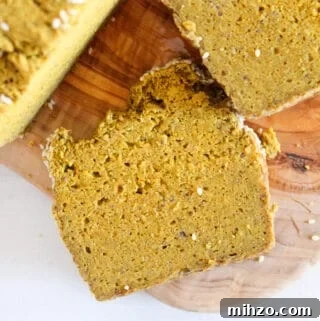
This isn’t a tall, fluffy white sandwich loaf. It’s a wholesome, quick-style bread with good structure and moisture that slices cleanly once fully cooled.
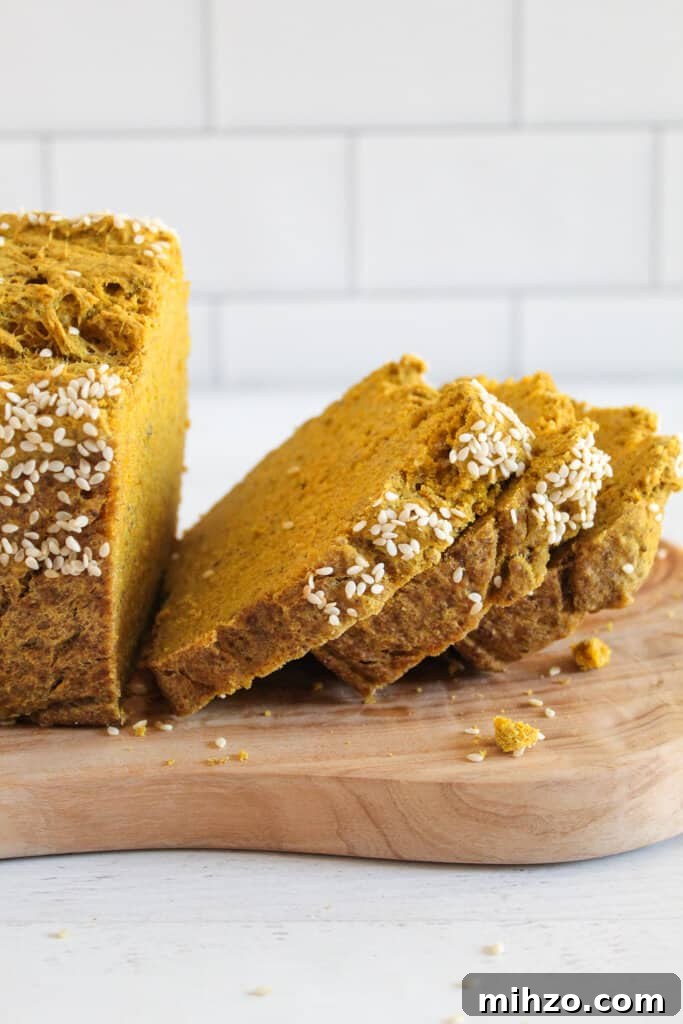
You can make this loaf in under two hours. It needs a short rest time but not a long rise. Made with buckwheat flour and generous ground chia seeds, this whole-grain loaf is rich in fiber, iron, antioxidants, and omega-3s.
Why You’ll Love This Chia Seed Bread
This recipe delivers a hearty, sliceable loaf without yeast, dairy, eggs, or common gluten-free gums. It’s practical for daily use and simple to prepare.
- No yeast or kneading: A quick bread—no kneading, proofing, or long rise.
- Gluten-free and vegan: Ground chia seeds bind the loaf without eggs or gums.
- Sliceable texture: Sturdy enough for toast, sandwiches, or freezing.
- Minimal equipment: Mixing bowls, a spoon, and a loaf pan—no mixer needed.
- Freezer-friendly: Slice after cooling, freeze slices, and toast as needed.
Chia seeds replace two common gluten-free additives while keeping the loaf vegan, making them the recipe’s essential ingredient.
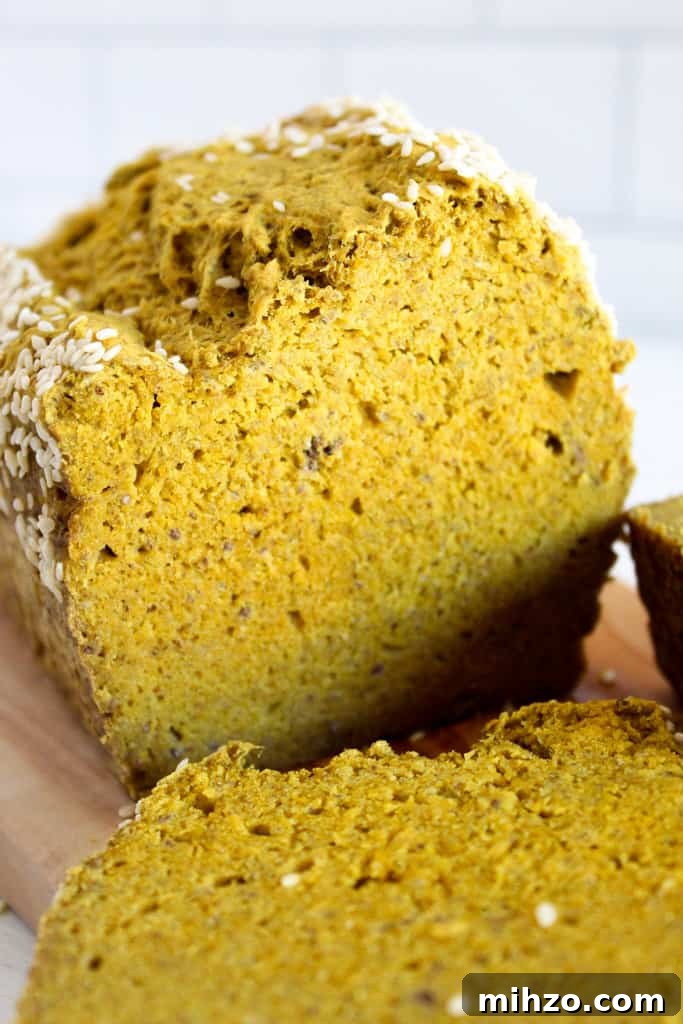
What Does Chia Seed Bread Taste Like?
The loaf tastes earthy and hearty from the buckwheat, with a mild nuttiness from the chia and sesame topping. The maple syrup balances the whole-grain flavor without making the bread sweet. Texture-wise it’s dense but moist and sliceable rather than airy.
Pro Tips
Follow these best practices to get the best texture, clean slices, and reliable results.
1. Use room-temperature ingredients
Room-temperature ingredients mix more evenly and support the chemical reactions that help the baking powder work properly.
2. Measure ingredients by weight
A digital scale ensures accuracy, especially for ground chia and buckwheat flour, and helps produce consistent texture.
3. Use ground chia seeds
Ground chia seeds are recommended because they form a gel that binds the loaf. If you only have whole chia seeds, grind them to a fine powder in a spice grinder or high-speed blender.
Equipment You’ll Need
A few simple tools make this easy:
- Digital scale
- Mixing bowls
- Fork and whisk
- Sturdy spoon
- 8″ x 4.5″ loaf pan
- Parchment paper
- Wire cooling rack and serrated bread knife
Ingredients for Quick Chia Seed Bread
Most ingredients are pantry staples. Here’s what you’ll need:
- Ground chia seeds
- Water
- Buckwheat flour
- Baking powder
- Salt
- Pure maple syrup
- Vegetable oil
- Sesame seeds
Key Ingredient Roles
Ground Chia Seeds
40 grams (about 1/2 cup) ground chia seeds
When mixed with water, ground chia forms a gel that mimics the binding properties of eggs and replaces common gluten-free gums, giving the loaf structure and stability.
Water
1 2/3 cup water, divided
Some water combines with the chia to form the gel; the remainder provides the moisture the dough needs to stay tender and not dry out.
Buckwheat Flour
300 grams (about 2 1/2 cups) buckwheat flour
A naturally gluten-free pseudo-grain, buckwheat adds a robust, earthy flavor and a sturdy crumb. Look for certified gluten-free packaging if you need strict cross-contamination control.
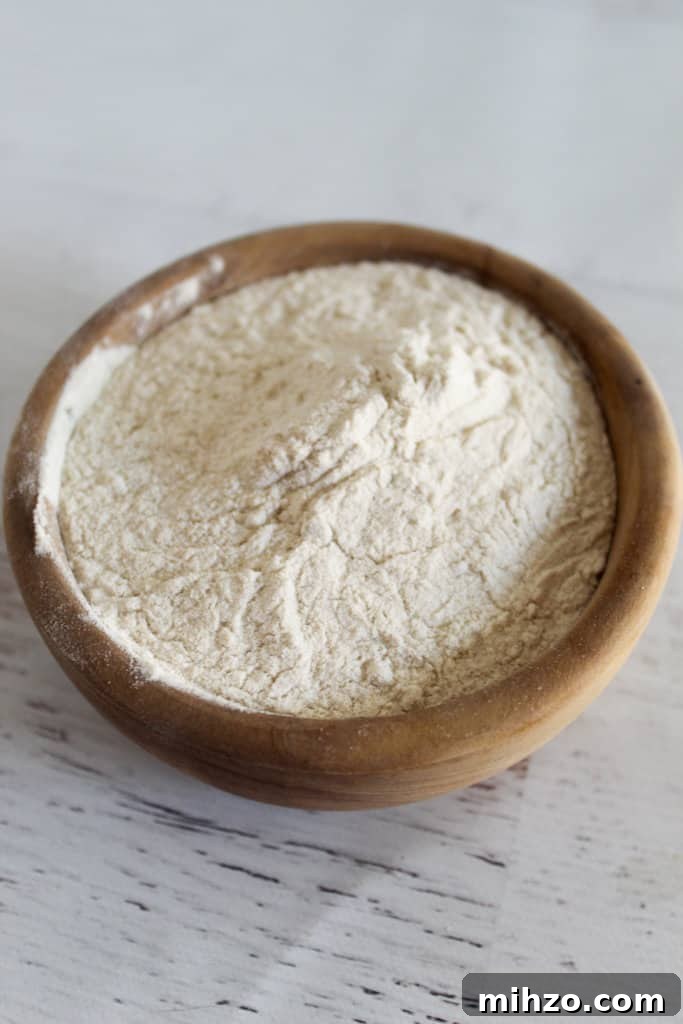
Baking Powder
3 teaspoons baking powder
This chemical leavener provides the lift and lightness appropriate for a quick bread. Test freshness by stirring a teaspoon into hot water—if it fizzes, it’s good.
Salt
3/4 teaspoon salt
Salt enhances flavor—measure separately to avoid accidentally adding too much.
Pure Maple Syrup
1/3 cup pure maple syrup
Maple adds depth—caramel and toffee notes—without making the loaf sweet. Avoid imitation syrups if you want that nuanced flavor.
Vegetable Oil
1/4 cup vegetable oil
Oil keeps the loaf tender and helps retain moisture.
Sesame Seeds
2 tablespoons sesame seeds
Sprinkled on top before baking, sesame seeds add a pleasant crunch and visual appeal.
Printable Hearty Chia Seed Bread Recipe Card
Ingredients
- 40 grams ground chia seeds (about 1/2 cup)
- 1 cup water (for chia gel)
- 300 grams buckwheat flour (about 2 1/2 cups)
- 3 teaspoons baking powder
- 3/4 teaspoon salt
- 2/3 cup water (additional)
- 1/3 cup pure maple syrup
- 1/4 cup vegetable oil
- 2 tablespoons sesame seeds
Instructions
- Bring all ingredients to room temperature for easier mixing.
- In a small bowl, combine the ground chia seeds with 1 cup water and mix with a fork until fully combined. Set aside to form a gel.
- In a large bowl, whisk together buckwheat flour, baking powder, and salt.
- Add the remaining 2/3 cup water, maple syrup, oil, and the chia gel to the dry ingredients. Mix with a sturdy spoon for about 30 seconds, scraping the bottom to incorporate any dry bits.
- Let the batter rest for 30 minutes to allow the flour and chia to hydrate and for the leavening to begin working.
- Meanwhile, prepare an 8″ x 4.5″ loaf pan: lightly spray, line with parchment, and allow the paper to overhang for easy removal.
- Preheat the oven to 350°F (176°C).
- Scrape the batter into the prepared pan and evenly sprinkle the sesame seeds on top.
- Bake for about 1 hour, checking starting at 50 minutes. A toothpick or cake tester should come out mostly clean; the internal temperature should read about 200–205°F (93–95°C) if you use a thermometer.
- Cool the loaf in the pan for 5 minutes, then transfer to a wire rack to cool completely before slicing.
Notes
- Measure ingredients by weight when provided for best accuracy.
- Let batter rest for the full 30 minutes before baking.
- Substitute oil with melted coconut oil or canola if desired.
- Maple syrup balances the flavor; substitute honey 1:1 or omit and use water if preferred.
- Slice the cooled loaf before freezing; separate slices with parchment so they don’t stick.
Nutrition
Enjoyed the recipe? Leave a review and rating below.
Method for Making This Hearty Chia Seed Bread
Before you start: Ensure ingredients are at room temperature to support even mixing and proper leavening.
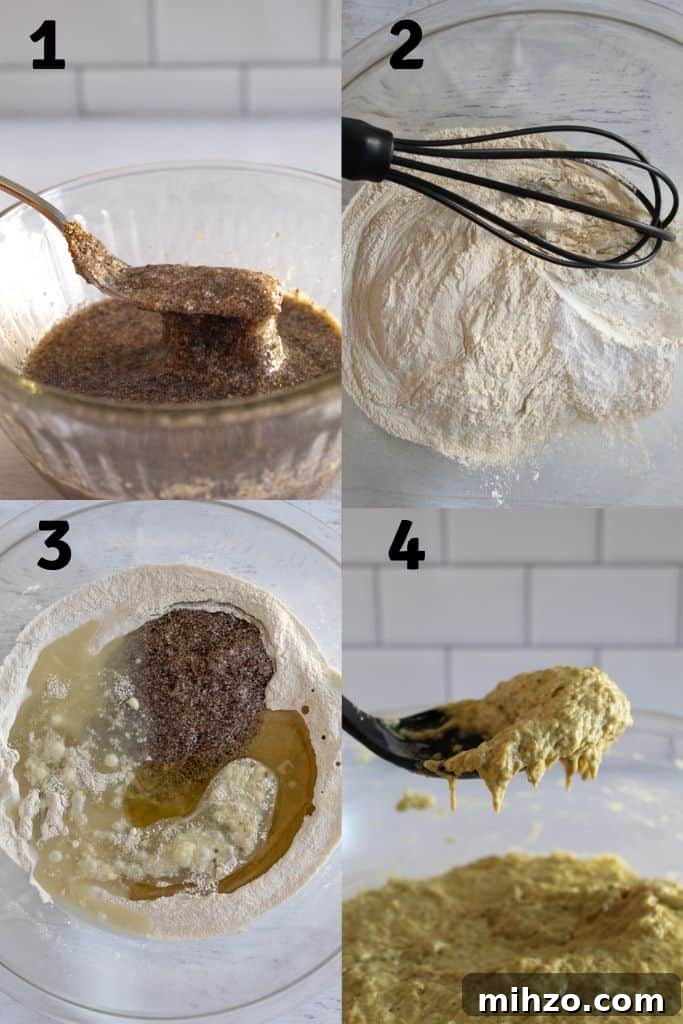
Step One: Mix Chia Seeds and Water
Combine ground chia seeds with 1 cup water in a small bowl and stir with a fork until evenly mixed. Set aside to thicken into a gel.
Step Two: Mix Dry Ingredients
Whisk buckwheat flour, baking powder, and salt together in a large bowl until uniform.
Step Three: Add Wet Ingredients and Chia Gel
Add the remaining water, maple syrup, oil, and the chia gel to the dry mix. Stir with a sturdy spoon for 30 seconds, scraping the bottom to incorporate all dry bits.
Step Four: Let the Batter Rest
Rest the batter for 30 minutes so the flour and chia hydrate and the leavening begins to work.
Step Five: Preheat Oven
Preheat to 350°F (176°C) while the batter rests.
Step Six: Prepare Pan
Spray an 8″ x 4.5″ loaf pan lightly with cooking spray, line with parchment, and let the paper overhang for easy removal.
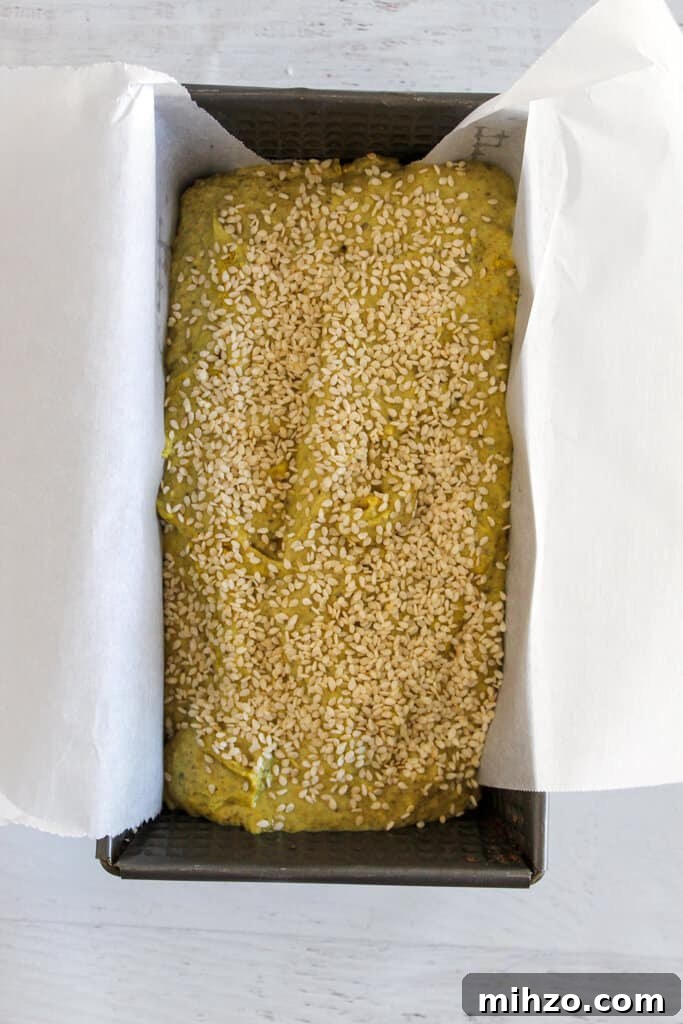
Step Seven: Transfer Dough to Loaf Pan
After resting, scrape the batter into the prepared pan and level the top so it bakes evenly.
Step Eight: Sprinkle Sesame Seeds On Top
Evenly scatter sesame seeds over the surface before baking.
Step Nine: Bake Bread
Bake for about 1 hour, checking at 50 minutes. A toothpick should come out mostly clean; a thermometer should read about 200–205°F (93–95°C).
Step Ten: Let Bread Cool
Cool the loaf in the pan for 5 minutes, then remove it to a wire rack and cool completely before slicing so the center finishes setting.
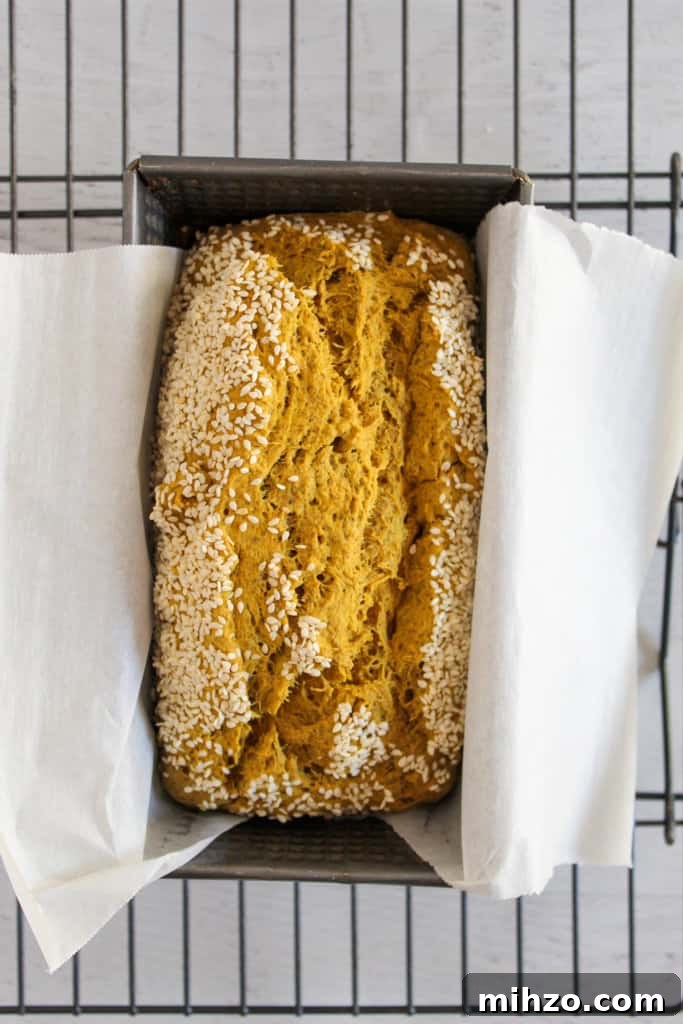
Step Eleven: Slice and Serve
Use a serrated knife to slice the cooled loaf into 12 slices (up to 15 thin slices). Serve with butter, spreads, or alongside a savory meal.
How to Store and Freeze Chia Seed Bread
Cool completely before storing. Warm loaves trap steam and can become gummy.
Room temperature storage in an airtight container is fine for up to 1 day. For longer storage, slice the loaf, separate slices with parchment, and freeze in a freezer-safe bag.
Reheat by toasting directly from frozen or warming in a toaster oven until edges are crisp. Toasting restores texture after freezing.
Storage guide:
- Room temperature: Up to 1 day
- Refrigerator: Not recommended—dries the loaf
- Freezer: Best—freeze sliced for easy reheating
- Best reheating: Toast from frozen until warm and crisp at the edges
Substitutions
Make substitutions carefully—this recipe depends on the balance of chia, flour, liquid, and leavening. Avoid changing too many elements at once.
- Flaxseed meal can replace ground chia 1:1 for binding. Small amounts of psyllium husk or xanthan gum will also work as binders, but use sparingly.
- Teff or sorghum flour can substitute for buckwheat at a 1:1 ratio if needed.
- Reduce salt if required for dietary reasons.
- Replace maple syrup with honey 1:1 or omit it and replace with water if preferred.
- Swap sesame seeds with poppy or sunflower seeds as a topping.
What Not to Substitute
- Don’t use whole chia seeds without grinding—they won’t distribute evenly.
- Avoid replacing buckwheat with almond or coconut flour; they absorb moisture differently and will change the loaf’s texture.
- Don’t skip the 30-minute rest; hydration is essential for structure.
Best Uses for This Bread
This hearty loaf is ideal for toast, open-faced sandwiches, breakfast slices, dipping with soup or stew, and savory spreads. For closed sandwiches, slice thin and toast first for added structure.
Ways to Serve Chia Seed Bread
Its mild nutty flavor pairs well with both sweet and savory toppings. Toasting crisps the edges and improves performance with spreads and toppings.
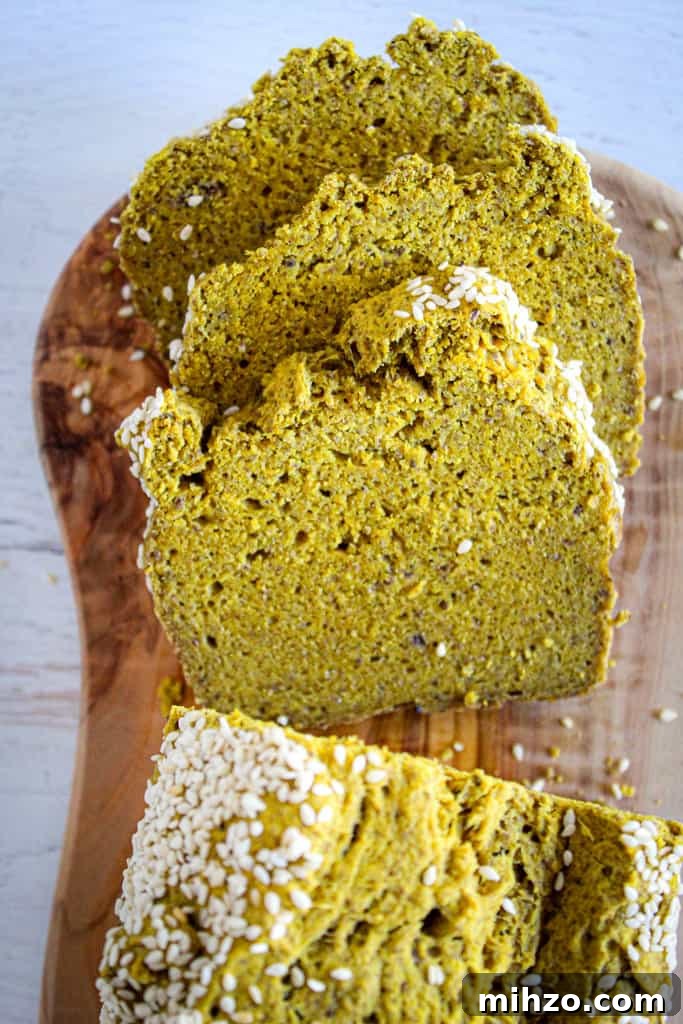
Try it with:
- Avocado toast: Lemon, salt, pepper, and red pepper flakes.
- Nut butter and jam: Simple and satisfying.
- Open-faced sandwiches: Hummus, roasted vegetables, or dairy-free spreads.
- Soup or stew: Toasted slices for dipping.
- Breakfast plates: With eggs, tofu scramble, or sautéed greens.
FAQ for Chia Seed Bread
Answers to common questions about texture, baking, and handling.
Why is my chia seed bread dense?
The loaf is naturally hearty due to buckwheat and chia. If it’s overly dense, the batter may not have rested long enough or the flour may have been over-measured. Weighing flour helps avoid packing in too much.
Why is my bread gummy in the middle?
A gummy center usually means it needed more oven time or more cooling time before slicing. If the top is browning too quickly, tent loosely with foil and continue baking until set.
Why did my bread crumble when I sliced it?
Slicing before the loaf has fully cooled or not allowing the batter to rest can cause crumbling. Let the bread cool completely and use a sharp serrated knife, slicing gently.
Why didn’t my bread rise much?
This is a quick bread, so it won’t rise like yeast bread. If it stayed very flat, check that the baking powder was fresh and that the batter was mixed evenly.
Can I use whole chia seeds instead of ground?
Ground chia is recommended for consistent binding. If you only have whole seeds, grind them first for best results.
Can I toast this bread?
Yes—toast improves texture, especially after freezing, by crisping the edges and warming the center.
Can I use this for sandwiches?
Yes. Slice thin and toast for better structure with heavier fillings, or use it for open-faced or lighter sandwiches.
Is this bread sweet?
No. The maple syrup balances the earthy flavor but does not make the loaf taste like a sweet quick bread. It’s savory-friendly and mildly nutty.
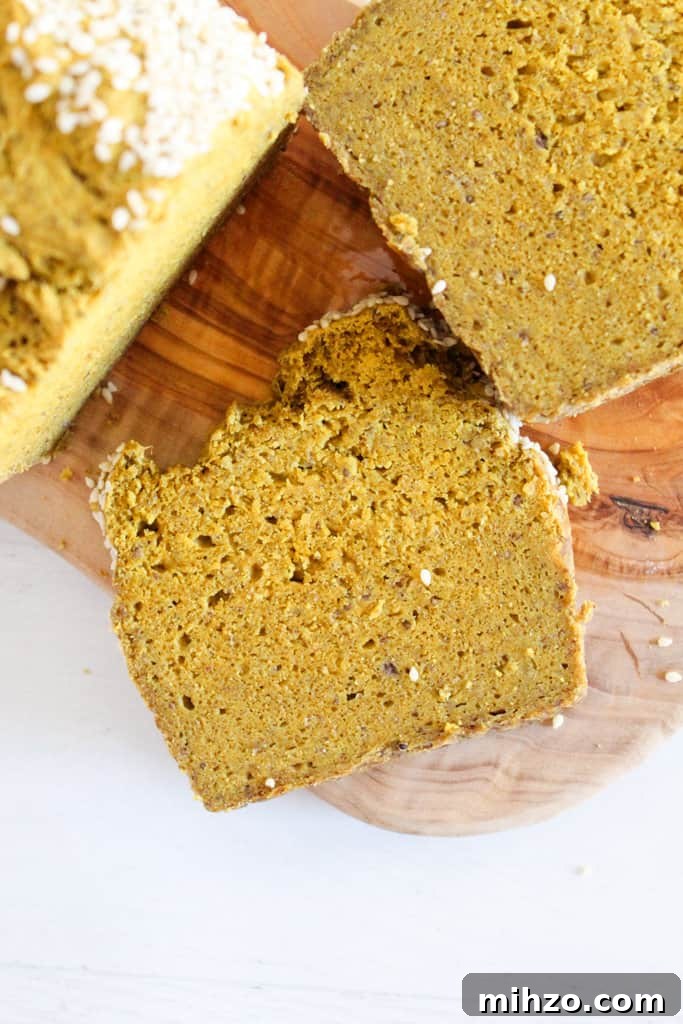
More Bread Recipes
If you enjoy this loaf, try other gluten-free bread recipes to build confidence and variety in your baking.
- Gluten-Free Cheddar Cheese Bread
- Gluten-Free Artisan Bread
- Gluten-Free White Bread
- Gluten-Free Easter Bread
- Flourless Cornbread
Share Your Chia Seed Bread Results
If you try this recipe, leave a comment to share how it turned out, what flour you used, and how you served it. Your feedback helps other bakers succeed.