
How to Create a Hydroponic Window Farm
When I first heard about a hydroponic window farm, I was intimidated by the technical-sounding name. In practice, a window farm is simply a way to grow a lot of fresh greens while using very little water. A Hydroponic Window Farm is easier to build than it sounds, and below I’ll walk you through how to create one yourself.

Why choose a window farm?
Window farms are ideal for anyone wanting a touch of nature in a small apartment or urban home. They bring fresh flavor to your cooking—homegrown herbs, leafy greens and even small fruiting plants like strawberries—at a fraction of the cost of store-bought produce. Plants also brighten indoor spaces and can improve air quality and well-being. Most importantly, hydroponics uses far less water than traditional soil gardening while producing higher yields in compact spaces.
Benefits of hydroponics
Hydroponic systems can use as little as 10% of the water required by soil-grown plants while delivering excellent growth and yields, which makes them perfect for limited spaces such as windowsills. Because hydroponics replaces soil with nutrient-rich water and an inert growing medium, you avoid the mess of potting soil and reduce pests and disease associated with dirt.
What you need to create a basic window farm
- Location: A window that gets plenty of direct sunlight.
- Pots or bottles: Recycled 1.5-liter plastic bottles work well for small builds.
- Net cups: A simple cup with holes (even a disposable cup with holes poked in it) that fits inside the bottle to support the plant.
- Liquid nutrients: Commercial hydroponic nutrient solutions provide the balanced minerals plants need. If you prefer DIY, you can make liquid fertilizer from compost tea or other recipes, but commercial mixes are straightforward and reliable.
- Inert medium: Clay pellets, stones, or gravel keep roots aerated and help prevent rot.
- Seeds or seedlings: Choose herbs and leafy greens to start; many seeds can be started on a damp sponge or in a seed tray and later moved into the net cups.
The design
The full reservoir-style window farm can be more efficient, but a very simple bottle-based setup will get you growing quickly. Start small to learn the basics and scale up later if you want greater capacity or automation.

The basic setup:
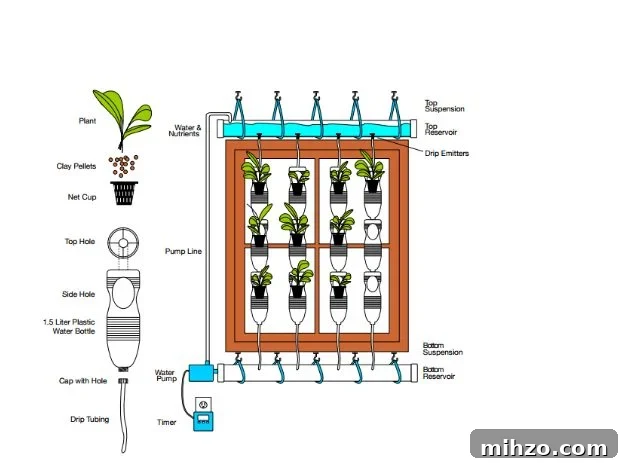
You can simplify the design to a single suspended bottle per plant or assemble multiple bottles in a vertical row. A top and bottom reservoir improves water and nutrient distribution, but a single suspended bottle is a great starting point.
- Cut an access hole in the side of a 1.5-liter plastic bottle so you can place and tend the plant.
- Fill a net cup with clay pellets or gravel, then set the cup into the bottle so the plant will sit above the bottle opening.
- Puncture a small hole in the bottle cap so excess water can drain. You can thread a short drip tube through the cap or simply place a dish or tray beneath the bottle to catch runoff.
- Wrap wire or twine around the top of the bottle and suspend it from the top of the window frame or a mounted support. Repeat for additional plants as needed.
Setting up your space
Choose a sunny windowsill with good unobstructed light. If blinds or curtains block light, move the system to a brighter window, or use a garage or sunroom where you can arrange multiple bottles or a vertical array on a wall near a window. Grouping plants together makes managing nutrients and watering easier and keeps related supplies—like nutrients, seeds and tools—close at hand.
Planting
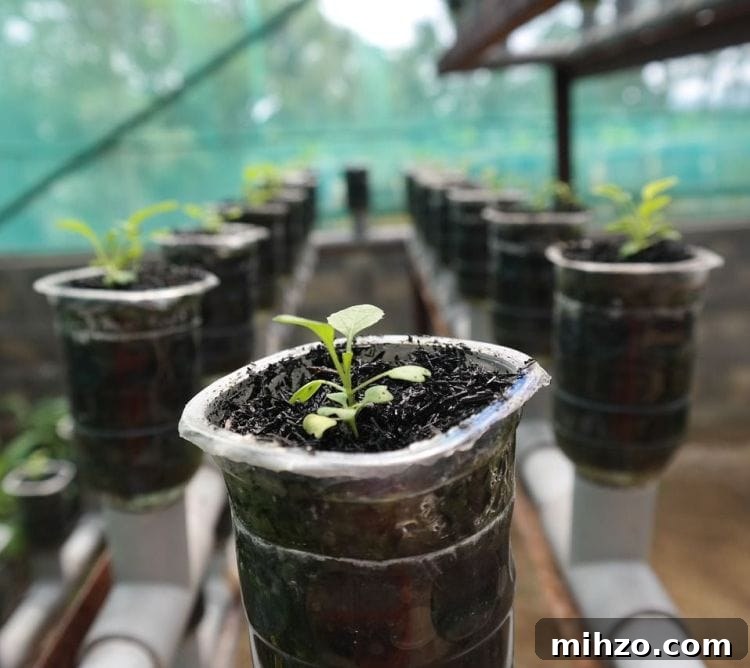
If you start seedlings on a sponge or in a tray, carefully place the young plant into the net cup over the inert medium. For purchased seedlings, rinse off potting soil gently and position the roots on top of the clay pellets or gravel. Keeping newly transplanted seedlings in a dimmer area for a short period can help them recover from shock and encourage root development.
The growing process
With the simple bottle setup, water and add the recommended dose of liquid nutrients daily. If you use a reservoir system, you can typically refill and dose every five to seven days. Most herbs and leafy greens will show noticeable growth within a few weeks when they receive sufficient light, nutrients and consistent moisture.
Starting a hydroponic window farm is an affordable, low-water way to grow fresh, organic produce year-round. With minimal space and effort you can enjoy homegrown basil, kale, lettuce and more—ready to harvest straight from your windowsill.