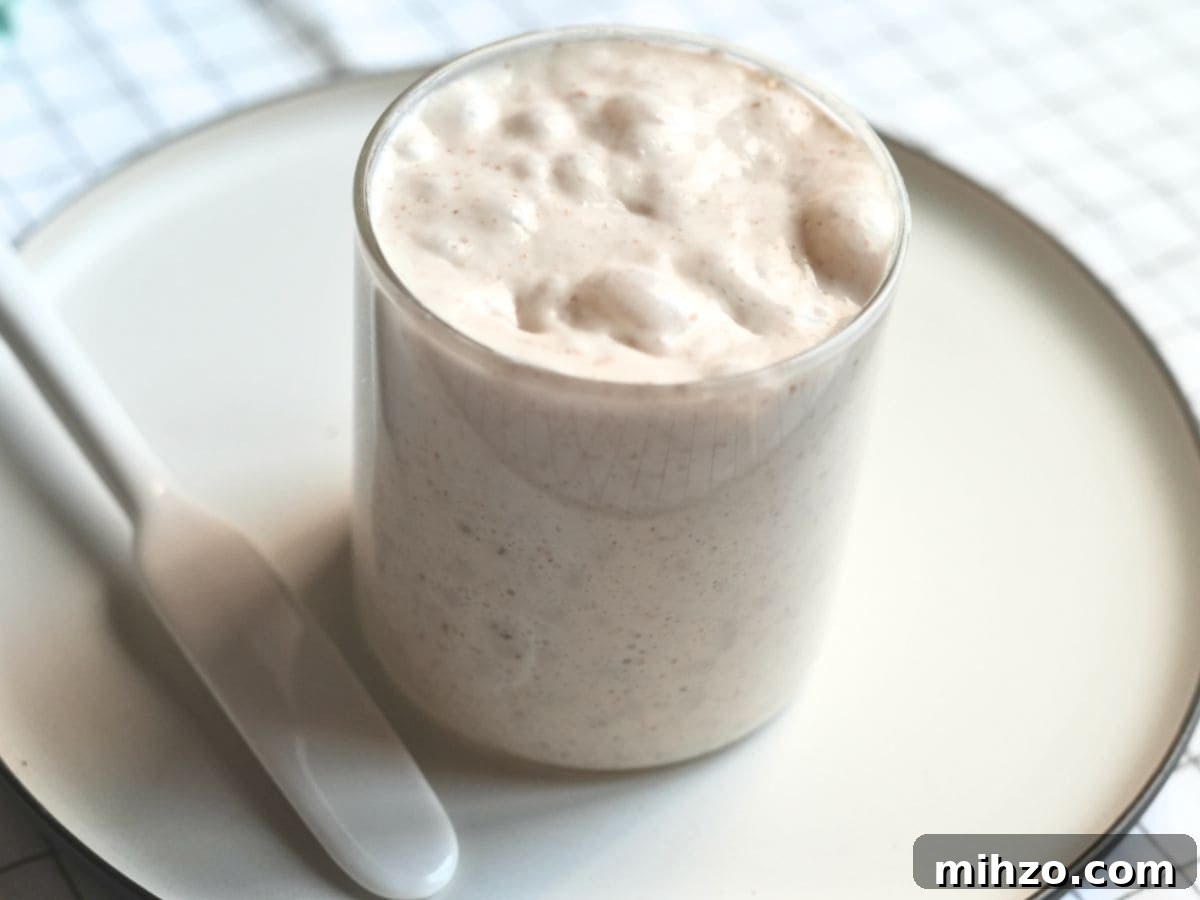
This easy sourdough starter guide for beginners will help you develop an active, bubbly starter quickly with minimal effort.
With only two ingredients — flour and water — plus a little patience, you’ll soon enjoy the mild tang and airy texture of homemade sourdough bread.

What is a sourdough starter
A sourdough starter is a simple mix of flour and water that captures wild yeasts and beneficial bacteria from the environment. Once active, it acts as a natural leavening agent for bread and contributes complex flavor and improved digestibility.
When a thick mixture of flour and water sits at room temperature, microorganisms from the air and the flour begin to ferment it. Over several days, the mixture changes physically, chemically, and biologically as yeast and bacteria establish a stable, balanced community.
We harness this natural fermentation to cultivate a starter that is active and dependable, ready to make delicious, healthy sourdough bread.
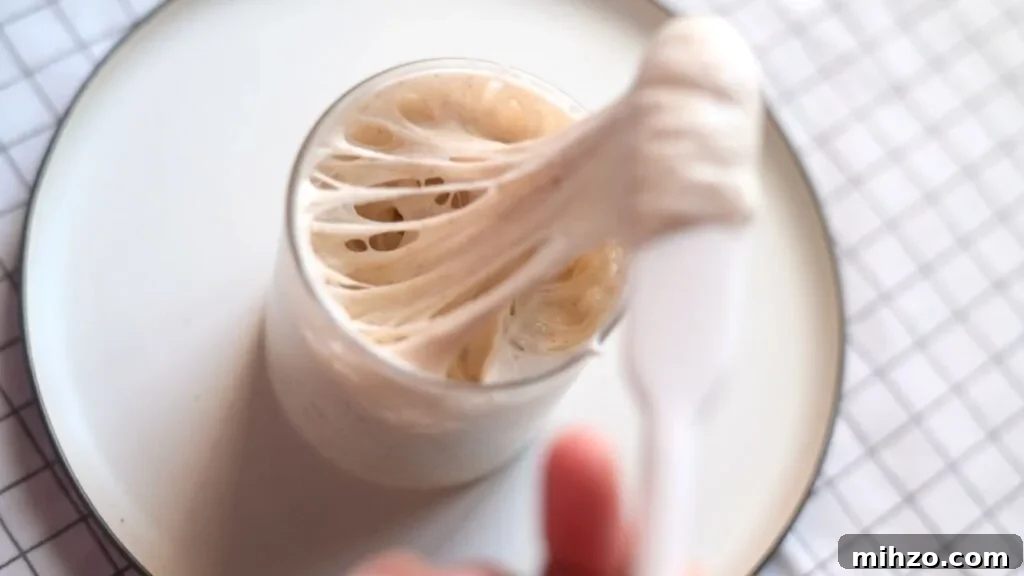
Ready to try making your own starter from scratch? It’s rewarding and straightforward. Follow the steps below to begin your sourdough journey.
Sourdough Starter For Beginners :Step by step Video
Ingredients For making Sourdough Starter
All you need is flour and water. Any flour will work, but a mix of bread flour with a small portion of whole-grain flour (whole wheat, rye, or spelt) gives a head start because whole grains carry more wild yeast and nutrients.
Example ratio used here: for every 250 g bread flour, add 50 g whole wheat (a 5:1 bread-to-whole grain ratio).
Sourdough starter for beginners :Step-by-Step Guide
There are many ways to create a starter; the basic principles are the same. Keep the process simple: combine flour and water, allow fermentation, and feed regularly until the culture is strong and active.
Day 1: Mixing Flour and Water
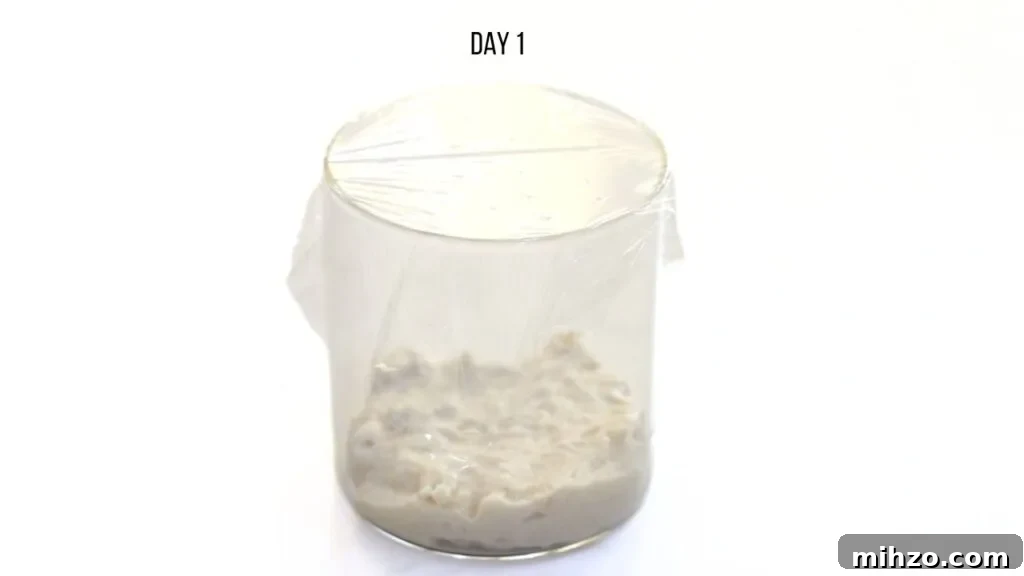
Mix equal parts flour and water in a small bowl until smooth. Transfer to a clean, straight-sided glass container and cover loosely with a lid or cling film. Prick the film with a toothpick if you want some airflow.
Leave the container at room temperature (around 70°F / 21°C) for 24 hours. This initial period lets fermentation begin.
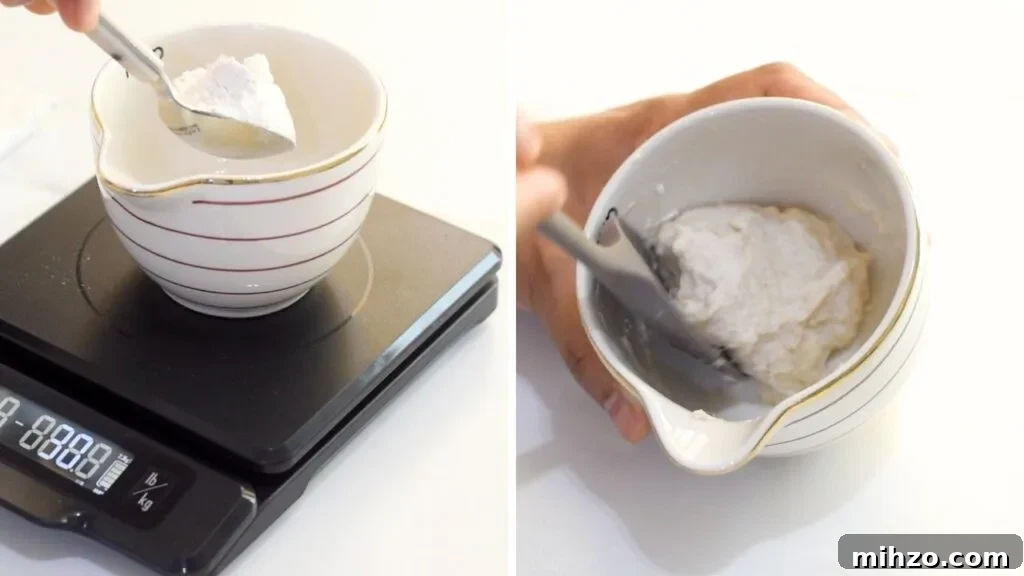
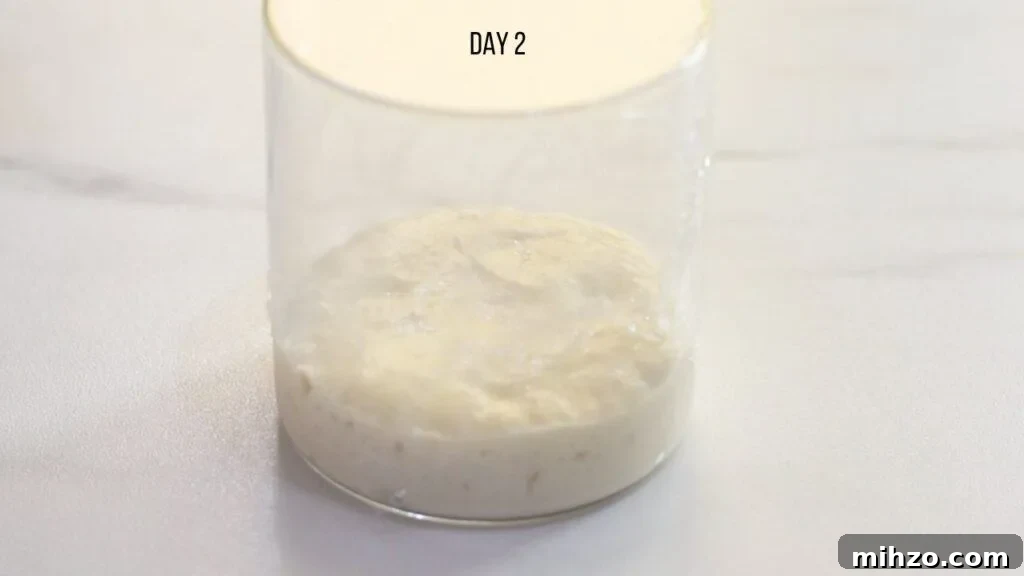
Day 2: Stir and Transfer
By the second day you may spot small air bubbles. Gently stir the mixture, then move it to a clean jar if desired. Cover and let it rest at room temperature for another 24 hours.
Days 3–7: Daily Feedings
From day 3 onward, feed the starter every 24 hours using a 1:1:1 ratio by weight: starter : water : flour. For example, mix 30 g starter with 30 g water and 30 g flour.
Cover and let the jar rest at room temperature for 24 hours after each feeding.
Day 3 often shows more activity and larger air bubbles, indicating that fermentation is progressing. Day 4 can be slower—this is normal. Don’t discard the starter; continue feeding it daily.
From about day 5 you should notice a clearer rise-and-fall pattern over each 24-hour period. By the end of day 7 you’ll have a developing starter; it may still be weak and will benefit from more consistent feedings.
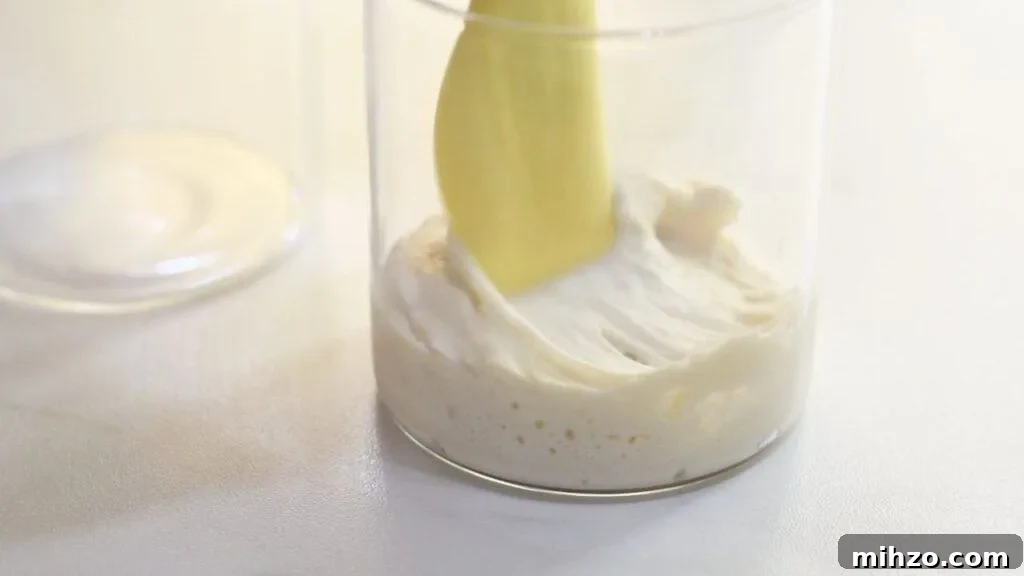
Days 8–10: Feed at Peak
Starting around day 8, begin feeding each time the starter reaches its peak (the highest rise). This frequent feeding builds strength and stability.
By day 10 the starter should be lively, fragrant with a pleasant yeast aroma and a mild sourness, full of airy bubbles. To check readiness, drop a spoonful of starter into a bowl of water—if it floats, it’s buoyant and ready to leaven bread.
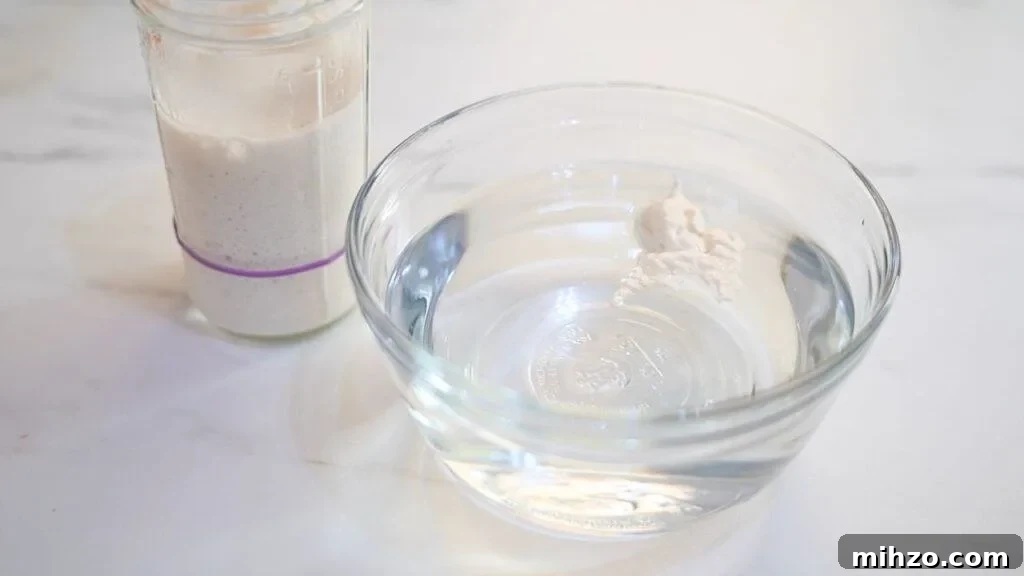
If it isn’t quite ready by day 10, continue feeding at regular intervals until it shows consistent rise, aroma, and bubbles.
After your starter is established, you can experiment with different flours, hydration levels, and feeding schedules to develop the flavor and activity you prefer. Sourdough is both art and science: each starter and loaf will tell its own story of time and care.
Gather your flour and water, and enjoy the alchemy of fermentation — your sourdough adventure awaits.

Print Recipe
How to make Sourdough Starter For Beginners
2 mins
1 min
10 d
10 d 3 mins
how to make sourdough starter for beginners, step by step starter guide, sourdough starter video
1 Sourdough starter culture
Bincy Chris
Equipment
-
Straight-sided glass container
-
Spatula
Ingredients
- 250 g Bread flour
- 50 g Whole wheat flour (or rye/spelt)
Instructions
-
What is a sourdough starter
A mix of flour and water that ferments to produce wild yeast and good bacteria used to leaven and flavor bread.
-
Day 1: Mixing
Mix equal parts flour and water until combined. Place in a glass container, cover loosely, and leave at room temperature (~70°F) for 24 hours.
-
Day 2: Stir and transfer
Look for small bubbles. Stir gently, transfer to a clean jar if needed, cover loosely, and rest another 24 hours.
-
Days 3–7: Daily feedings
Feed every 24 hours using equal weights of starter, water, and flour (1:1:1). For example, 30 g starter + 30 g water + 30 g flour. Cover and let rest at room temperature.
-
Expect variable activity: larger bubbles by day 3, a quiet day 4 is normal, then consistent rise and fall by day 5 onward.
-
Days 8–10: Feed at peak
When the starter reaches its peak height, feed it. Repeat this each time it peaks to build strength. By day 10 it should be active, bubbly, and slightly sour.
-
Readiness test: drop a spoonful of starter into a bowl of water—if it floats, it’s ready to leaven bread. If not, continue feeding until it shows consistent activity.